

- A contract compliance audit is a structured review that verifies whether all parties are meeting the financial, operational, and legal obligations specified in a contract. It covers payment accuracy, service delivery standards, regulatory requirements, and performance benchmarks.
- The five main steps in a compliance audit are: define audit scope and gather documents, review contract terms and obligations, compare actual performance against contractual requirements, document findings and recommend corrective actions, and implement changes with ongoing monitoring.
Contract authoring is the process of drafting, reviewing, and finalizing legally binding agreements between two or more parties. It covers everything from selecting the right template and clauses to routing the contract through internal approvals before it is ready to sign.
Legal teams that rely on manual contract authoring spend an average of two weeks per standard agreement. Automating the process with a CLM platform reduces that timeline by up to 80%, according to Forrester Research, while improving compliance and reducing errors across the entire contract portfolio.
Contracts are the foundation of business relationships. Minor oversights can lead to financial losses and legal complications.
Without a systematic approach to enforcing contract compliance, businesses risk costly disputes, missed opportunities, and potential penalties.
A contract compliance audit is the solution that helps you spot discrepancies, mitigate risks, and ensure alignment with business goals and regulations. Among the key benefits of compliance audit practices are better vendor accountability, reduced overbilling, and more substantial regulatory alignment.
Let’s dive into what a contract compliance audit is, its benefits and the entire process followed to protect businesses and improve partnerships.
What is a contract compliance audit?
A contract compliance audit is a structured review process where a business evaluates whether all parties are meeting the financial, operational, and legal obligations defined in a contract.
The audit examines payment accuracy, delivery timelines, quality benchmarks, and regulatory requirements. Organizations that conduct regular compliance audits recover 2 to 4% of the total transaction value audited through identified overbillings, missed discounts, and billing errors. This contract compliance process evaluates financial commitments, service delivery standards, legal requirements, and performance metrics.
The purpose? To protect your business from costly mistakes like overbilling, non-performance, or even breach of contract claims.
Contract compliance auditing is an ongoing discipline, not a one-time event. By involving a dedicated audit team and performing contract compliance audits periodically, you ensure that your business stays on track with internal goals and external business agreements.
The audit process is not just about finding problems, it’s about strengthening your operations and contractual relationships with vendors and partners.
If you are looking for practical steps to maintain adherence to contractual obligations, this guide to contract compliance provides actionable insights and strategies.
What are examples of a contract compliance audit?
Consider a scenario where your business contracts a vendor for software updates. Over time, you notice a few delays and even the support is not as responsive as promised.
Another common scenario involves marketing vendors who are contracted for a set number of campaigns per quarter. A compliance audit may reveal that only a portion of those deliverables were completed, allowing teams to renegotiate or take corrective action.
Contract compliance audits help you identify these gaps by comparing the vendor’s performance with the contract terms—these real-world contract compliance examples demonstrate how audits uncover overbilling, delayed services, or unmet deliverables.
What are the different types of contract compliance audits?
The 10 main types of contract compliance audits are financial audits, performance audits, regulatory compliance audits, operational audits, quality assurance audits, risk audits, supplier audits, environmental and safety audits, IT and data security audits, and legal and contractual audits. Each type targets a specific area of contract performance. Financial and performance audits are the most common, accounting for the majority of routine contract reviews.
Here is a table with a complete overview of the types of contract compliance audits.
| Types | Description | Purpose |
| Financial Audit | Examines financial aspects of a contract like cashflows, logs, and transactions. | Verified financial terms are adhered to and accurate. |
| Performance Audit | Assesses contract performance to ensure quality and efficiency. | Monitors deliverable quality, standards, and timelines. |
| Compliance Audit | Ensures contract complies with legal, regulatory, and internal policies. | Confirms adherence to legal, regulatory, and governance practices. |
| Operational Audit | Focuses on the operational processes related to contract execution and management. | Identifies areas for operational improvement and alignment with contract obligations. |
| Quality Assurance Audit | Ensures that contracted goods or services meet agreed quality standards. | Verifies product or service quality matches contract expectations. |
| Risk Audit | Analyzes potential risks in the contract and evaluates risk mitigation strategies. | Identifies and addresses risks that could impact contract fulfillment. |
| Supplier Audit | Reviews third-party suppliers or subcontractors’ compliance with contract terms. | Ensures subcontractors meet contract obligations. |
| Environmental and Safety Audit | Verifies compliance with environmental regulations and safety standards. | Confirms adherence to environmental laws and safety protocols. |
| IT and Data Security Audit | Ensures data protection and IT security align with contractual terms. | Protects data and IT infrastructure to meet contract requirements. |
| Legal and Contractual Audit | Checks for legal compliance and adherence to contractual obligations. | Ensures the contract is legally sound and obligations are met. |
What is the difference between a contract compliance audit and general contract audit?
| Factor | Contract compliance audit | General contract audit |
|---|---|---|
| Primary focus | Whether parties meet specific contractual obligations | Overall accuracy and completeness of contract records |
| Scope | Payment terms, SLAs, regulatory requirements, deliverables | Financial records, document integrity, administrative accuracy |
| Triggered by | Regulatory requirements, risk events, scheduled reviews | Year-end reviews, M&A activity, internal controls |
| Who conducts it | Internal compliance teams or third-party audit firms | Internal audit teams or external auditors |
| Key output | Non-compliance findings, corrective action plans, recovery amounts | Audit report, financial reconciliation, process recommendations |
| Typical recovery | 2 to 4% of transaction value | Varies based on audit scope |
Let’s check out the benefits of contractual audits next.
What are the key benefits of a contract compliance audit?
The six key benefits of a contract compliance audit are risk mitigation, cost reduction through billing accuracy, improved accountability, stronger vendor relationships, regulatory compliance assurance, and data-driven contract management decisions. Poor contract management costs organizations an average of 9.2% of annual revenue according to World Commerce & Contracting, making regular audits a direct path to recovering lost value.
Here are the key benefits of contract compliance audits.
1. Mitigates contract risks and liabilities
Conducting regular audits is important for effective third-party risk management. Businesses that do not regularly audit contracts risk violations that can lead to penalties, legal disputes, and damaged reputations. Contract compliance audits identify breaches early, allowing corrective actions before issues escalate. This approach helps avoid financial and legal pitfalls and secures your reputation with partners, clients, and regulatory bodies.
2. Reduces costs through billing accuracy and contract adherence
Well-executed contract compliance audits help you identify overpayments, billing errors, and hidden cost drains. For instance, the audit catches these discrepancies if a vendor unintentionally overcharges or fails to apply agreed discounts. Identifying such issues early saves your business from maverick spending and opportunity costs. Businesses improve cost savings and maximize value from every agreement by ensuring every transaction aligns with contract terms. Contract compliance audit teams typically recover 2 to 4% of the total transaction value audited. For a $10 million contract portfolio, that translates to $200,000 to $400,000 in recovered savings from overbillings, missed discounts, and billing errors.
3. Enhances accountability in contract obligations
Audits build accountability to ensure both parties meet their responsibilities. Such transparency reduces the chances of missed deadlines, neglected deliverables, or quality issues. Businesses meet every contract obligation by consistently holding internal teams and vendors accountable. This approach builds a culture of high standards and ensures all the parties are aligned with expectations.
4. Strengthens vendor relationships with compliance checks
A strong business relationship requires trust and clarity. Regular contract audits improve this trust by ensuring that each party meets their obligations. Vendors, clients, and partners feel secure knowing their contributions are valued, which promotes fair treatment and transparency. As a result, contract audits protect your interests and also strengthen partnerships.
5. Ensures regulatory and contractual compliance standards
Sectors like healthcare, finance, and construction have strict regulatory requirements. Contract audits ensure your contracts comply with these industry standards, which minimizes exposure to non-compliance penalties. Staying compliant also means that your business prevents legal troubles and remains trustworthy in front of the involved parties and the customers. Non-compliance adds measurable cost to every incident. Organizations that fail to comply with regulations pay a significantly higher cost per data breach compared to compliant counterparts, according to IBM’s 2024 Cost of a Data Breach Report.
6. Enables data-driven contract management decisions
Audits generate valuable information about vendor performance, cost savings, and contract value. With such in-depth information, businesses make informed decisions regarding reviewing contracts, adjusting terms, or selecting new vendors. Contract data guides decision-making. This ensures that your agreements align with broader business objectives, optimizing performance and minimizing operational risks.
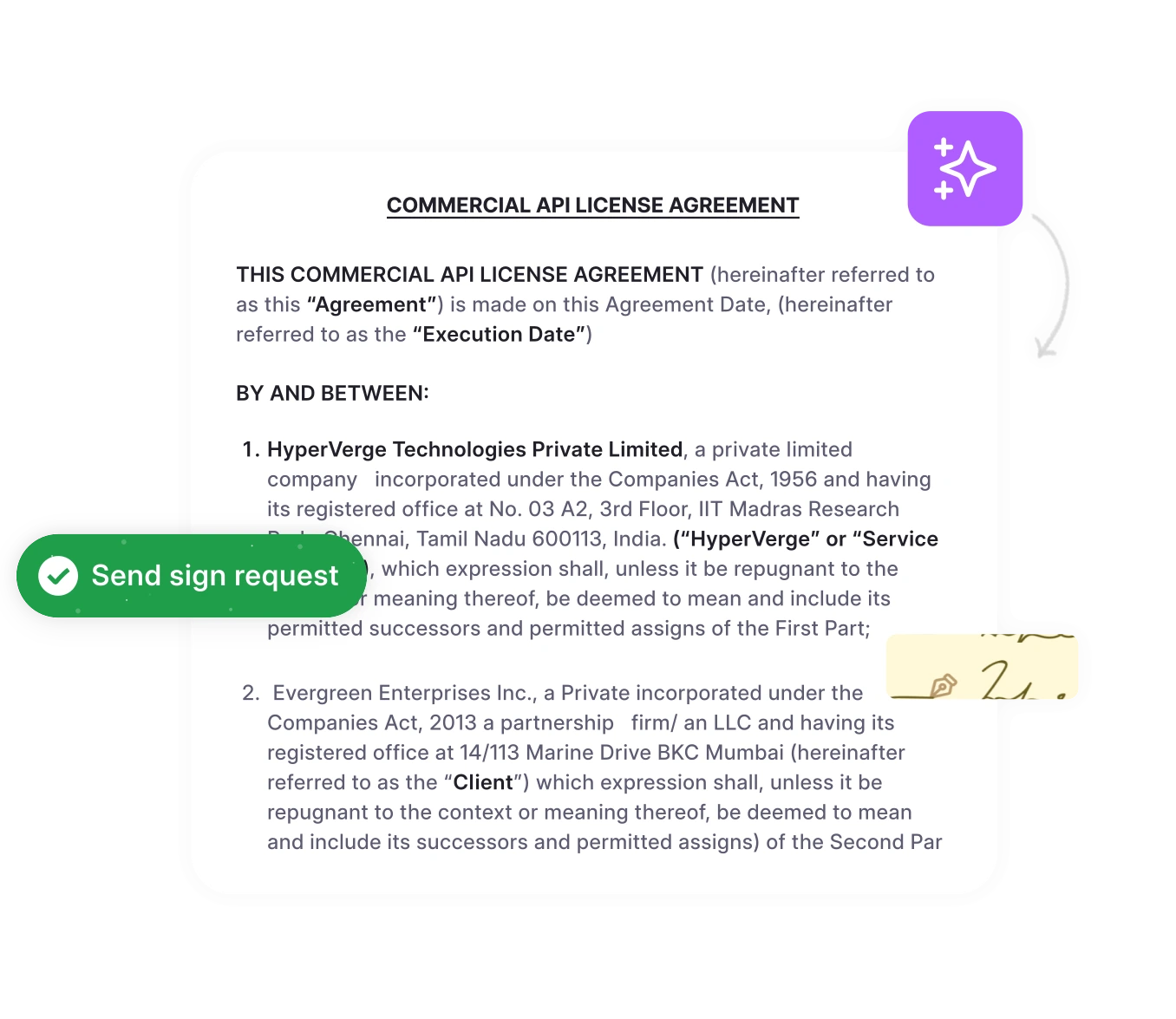
Streamline Contract Audits with HyperStart
HyperStart uses AI-powered automation to streamline the contract compliance audit process.
How do you conduct a contract compliance audit step by step?
A contract compliance audit follows five steps: define the audit scope and gather all contract documents, review every term and obligation in the agreement, compare actual performance against contractual requirements, document all findings and recommend corrective actions, and implement changes with a schedule for ongoing audits. Most organizations complete a single-contract audit in 2 to 4 weeks depending on contract complexity.
Here is the entire process of auditing contract compliance for your business.
Step 1. Define audit scope and gather documents
Clearly defining the scope of the audit ensures that your efforts are focused on the most relevant contracts and areas that require attention. Clearly defining the scope of the audit ensures that your efforts are focused on the most relevant contracts and areas that require attention. Before you audit contract compliance across your portfolio, identify which agreements carry the highest financial risk and prioritize those first.
Here are the key tasks to complete during this first step:
Include all relevant contracts and the necessary internal and external parties.
Collect financial records, payment invoices, and any email or letter correspondence related to the contract.
Set clear goals for the audit and define how much time you need to allocate to each step.
By gathering all relevant documentation and ensuring a clear audit scope, you ensure that you are prepared to proceed with the review process. This contract auditing helps businesses stay audit-ready throughout the year. Auditing contracts on a consistent schedule helps businesses stay audit-ready throughout the year.
HyperStart allows businesses to organize, store, and track all contract-related documents in one centralized location. This approach simplifies access to and the organization of contract data before an audit.
Step 2. Review contract terms and obligations
The core of the contract compliance audit process includes thoroughly reviewing the contract’s terms and obligations. This step helps ensure that all parties involved are aware of their responsibilities and that the agreed-upon terms are met. A detailed review of all clauses like delivery dates, quality standards, payment schedules, and penalties forms the basis for your performance evaluation.
This includes reviewing any amendments or revisions that impact performance. You also check for terms that influence compliance or results that make the agreement transparent and measurable.
A detailed review identifies inconsistencies that make it easy to assess compliance and pinpoint process improvements. Ensuring that all sensitive data and financial information are handled securely during this review is important for protecting privacy and maintaining regulatory compliance.
Step 3. Compare performance to contractual obligations
After reviewing contracts, compare actual performance with the agreed-upon obligations. After reviewing contracts, compare actual performance with the agreed-upon obligations. When you audit contract terms against real delivery data, discrepancies in billing, timelines, and service quality become measurable. This helps identify any deviations from the contract like missed deadlines, unfulfilled service levels, or discrepancies in billing. A performance record helps identify areas that require corrective action. Here are a few key performance indicators to assess.
Verify if deadlines and milestones were met according to the contract terms.
Compare payments with the invoiced amounts and contract terms to spot discrepancies.
Evaluate if the quality of goods or services meets the agreed standards.
Comparing actual performance with such key metrics helps you uncover any compliance gaps.
Step 4. Document findings and recommend actions
Documenting the findings from your audit is important for transparency and to develop a clear action plan. After identifying areas of non-compliance or discrepancies, make sure to offer recommendations for corrective actions. This documentation serves as a reference for existing and future contract compliance.
What to document:
Maintain a detailed record of any discrepancies or deviations from the contract terms.
Provide actionable recommendations on how to address any identified issues.
Suggest specific practices for ongoing monitoring to prevent future non-compliance.
Audit findings can be communicated to the relevant stakeholders for swift course correction.
This documentation not only supports decision-making but also contributes to contract compliance reporting, ensuring regulatory readiness and transparency with leadership.
Step 5. Implement corrective actions and plan for ongoing audits
After documenting the issues, it’s time to implement recommended corrective measures. Effective communication plays a key role in this phase, as internal and external communication strategies are important for maintaining trust and transparency between all contractual stakeholders.
Also, scheduling future audits to ensure ongoing compliance is important during this last stage. This helps identify and address any emerging compliance issues before escalating.
Implement corrective measures as quickly as possible to ensure both parties fulfill their obligation moving forward. Once these measures are taken, plan for ongoing audits to monitor future compliance. Setting up frequent proactive audits and promptly addressing issues creates a framework for ensuring compliance and minimizing future risks. A mature contract compliance audit program includes standardized checklists, defined audit frequency, assigned ownership, and continuous improvement based on prior audit findings.
Read more on Best Contract Compliance Management Software.
Ensure Complete Contract Compliance with HyperStart
Stay compliant and reduce risks with HyperStart’s proactive contract compliance solutions.
What should a contract compliance audit checklist include?
A contract compliance audit checklist should include eight core items: verification of payment terms and billing accuracy, confirmation that all deliverables meet quality standards, review of service level agreements (SLAs) against actual performance, regulatory compliance verification for the applicable industry, documentation of all contract amendments and change orders, assessment of vendor or supplier performance metrics, review of risk clauses and insurance requirements, and confirmation of data security and confidentiality obligations.
The checklist should be customized based on contract type and industry. Healthcare and financial services contracts require additional regulatory compliance checkpoints. Government contracts need verification against Federal Acquisition Regulation (FAR) requirements. IT contracts should include data protection and uptime performance reviews.
A well-structured checklist ensures that auditors do not overlook critical compliance areas. Organizations that use standardized checklists complete audits 30 to 40% faster than those relying on ad-hoc review processes
How often should you conduct a contract compliance audit?
Most organizations should conduct contract compliance audits at least once a year for standard agreements and quarterly for high-risk or heavily regulated contracts. Long-term contracts (3 or more years) benefit from semi-annual reviews. Audits should also be triggered by specific events such as mergers, vendor changes, regulatory updates, or when performance falls below agreed service levels.
How can software help automate contract compliance audits?
Contract management software automates compliance audits by extracting key terms from agreements, flagging deviations from contractual obligations, tracking performance against benchmarks, and generating audit-ready reports. AI-powered CLM platforms reduce manual review time by up to 80% and surface non-compliance issues that human reviewers miss. HyperStart’s CLM platform deploys in 4 weeks and uses AI with 94% accuracy to automate compliance tracking across the full contract lifecycle.
A comprehensive contract compliance audit is key to minimizing risk and optimizing performance. While conducting these audits becomes complex, using the right tools simplifies the process and improves efficiency.
HyperStart is an AI-powered software for contract management that makes the contract compliance audit process a breeze. A contract management audit evaluates how well your CLM processes, tools, and workflows support compliance. HyperStart’s platform provides audit-ready dashboards and automated compliance tracking across the full contract portfolio.
With automated tracking, customizable checklists, and advanced reporting functionalities, HyperStart helps businesses reduce errors, save time, and maintain compliance with all contractual obligations. It’s a powerful way to ensure smoother workflows and learn how to ensure contract compliance across internal and external teams.
LeadSquared chose HyperStart to optimize its overall contract management process. This B2B SaaS company that automates lead capture, marketing, sales CRM, reporting, and analytics requires a way to manage its growing contract and ensure compliance. Using HyperStart, the company improved its efficiency with a 60% reduction in contract creation time and 92% faster contract reporting.
We took demos of around 5 CLM vendors and chose to go with HyperStart. They were the only CLM vendor who had SOC2 compliance and met the criteria of around 22 parameters which we had evaluated them on.

Om Prakash Pandey
Head of Legal at LeadSquared
If it is time for a thorough contract compliance audit at your organization, HyperStart is the perfect solution. Book your demo today.