



- Improving contract management requires standardized templates, centralized storage, automated obligation tracking, AI-powered review, defined KPIs, data-driven decisions, electronic signatures, and analytics to identify bottlenecks across the contract lifecycle.
- The most effective improvements come from automation: organizations that implement CLM software reduce contract turnaround time by up to 90% and eliminate manual tracking errors that cause missed renewals and compliance gaps.
Improving contract management starts with replacing manual processes with structured, automated workflows. Organizations that standardize templates, centralize contract storage, and automate obligation tracking reduce turnaround times by up to 90% and cut revenue leakage caused by missed renewals and compliance gaps.
The eight strategies below cover every stage of the contract lifecycle, from drafting and negotiation to execution, renewal, and analytics. Each one addresses a specific bottleneck that slows contract processing and increases legal and financial risk for legal, procurement, and operations teams.
Wondering how to improve contract management and make contracting simple and efficient? Here are 8 proven tips and best practices:
- Standardize contracts through templates
- Store contracts in a centralized, secure location
- Set up obligations and renewals for auto-reminder
- Use a contract management system for automation
- Establish clear, achievable KPIs
- Use contract data for decision-making
- Implement electronic signatures for signing
- Identify and eliminate bottlenecks with analytics
In this blog, we will explore each of these tips in detail and how each approach contributes to CLM efficiency. Let’s get started.
Enhance your contract management efficiency with AI
HyperStart CLM helps automate mundane contracting tasks, giving you more time to focus on value generation and less time managing contracts.
1. Standardize contracts through templates
Standardized contract templates improve contract management by eliminating repetitive drafting, reducing human error, and enforcing approved legal language across every agreement. Legal teams that use pre-approved templates cut contract creation time by 50% or more because each new contract starts from a vetted baseline instead of a blank page. Templates also ensure compliance with organizational policies and reduce the risk of missing critical clauses.
Drafting each contract from scratch is not only time-consuming but also prone to human errors and oversights. Contract writers are likely to miss out on essential clauses when generating high volumes of contracts, leading to expensive and risky legal loopholes.
Standardized contract templates with approved legal language and verified clauses solve this challenge. These ready-to-use templates replace from-scratch drafting while using approved language ensures legal safety. This helps speed up contract generation while ensuring stakeholder interests are met.
2. Store contracts in a centralized, secure location
Centralized contract storage improves efficiency by giving legal, procurement, sales, and operations teams one searchable location to find any agreement. According to research from Juro and CLOC, 9 out of 10 organizations struggle to locate specific contracts when storage is spread across email, shared drives, and filing cabinets. A centralized repository eliminates time wasted on searching and reduces the risk of working with outdated versions.
Scattered contract storage makes it hard to retrieve contracts when required. When legal documents are stored at multiple locations, business teams lose visibility over contracts and spend excessive time trying to retrieve information.
Centralized contract storage helps make contracts more visible and easily retrievable. When all contracts are stored centrally, teams like legal, sales, HR, procurement, and operations can locate, analyze, and track contracts when needed. Additionally, implementing access control helps secure contracts and safeguards them from unauthorized access.
3. Set up obligations and renewals for auto-reminder
Automated reminders prevent missed contract obligations by triggering alerts at predefined milestones (30, 60, 90, or 180 days before key dates). Without automation, contract managers rely on manual calendar entries and spreadsheets, which fail at scale. Automated obligation tracking ensures that renewal deadlines, payment milestones, and compliance requirements are flagged before they become costly oversights.
Better managed contracts start with proactive deadline tracking rather than reactive firefighting when a renewal date passes unnoticed. Missed obligations are one of the major challenges in contract management. At the same time, tracking contractual obligations across multiple contracts is difficult for teams like finance, legal, and compliance due to the complexity and high volumes of contracts.
Utilizing automated alerts for obligation tracking and renewal management helps you stay on top of contractual commitments. You can use any generic reminder tool or even a specialized contract reminder solution to auto-track contract renewals without manual effort. This helps ensure no obligation goes unnoticed—reducing the chances of contract breaches.
4. Use AI-based tools for contracting automation
AI-powered automation improves contract management by handling repetitive tasks that drain legal team resources, including contract creation, clause review, risk flagging, and compliance checking. AI contract review tools analyze a standard NDA in approximately 26 seconds compared to 92 minutes for manual human review, according to SuperLegal.ai. Automation frees legal teams to focus on negotiation strategy and high-value advisory work instead of administrative processing.
Contract management can be repetitive. Activities like drafting, reviewing, tracking, and analyzing contracts take up valuable legal time. This leads to inefficiencies in the CLM process and increases TAT.
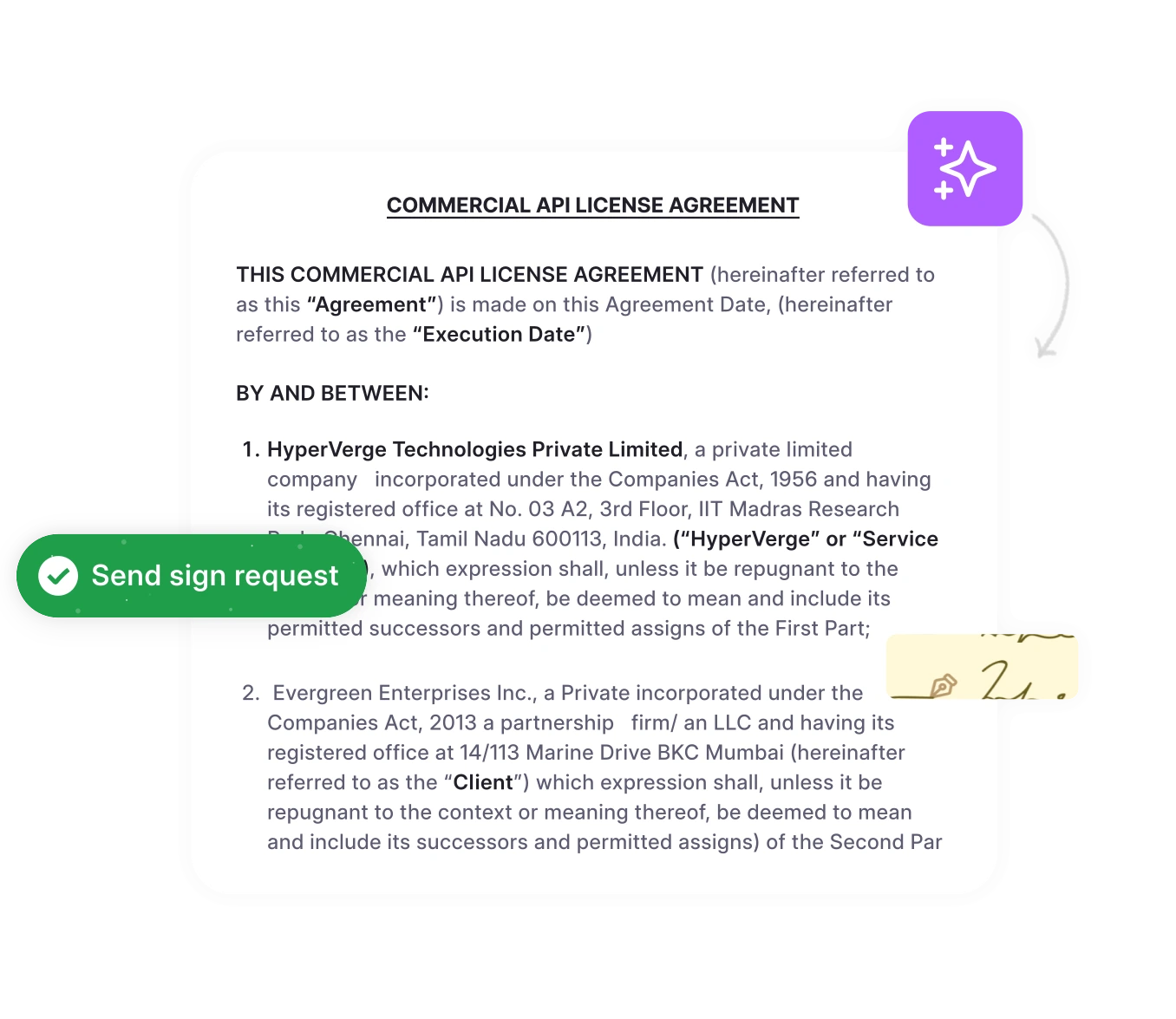
AI-powered contract management software like HyperStart CLM helps automate repetitive contract management tasks like contract creation, legal review, negotiation, obligation tracking, and contract compliance management. This helps speed up contract TAT and reduce contract administration time.
One of HyperStart’s clients in the Consumer Goods industry streamlined its contract workflows using HyperStart CLM. Implementing AI-based automation reduced contract turnaround time by 90% and eliminated manual tracking errors.
5. Establish clear, achievable KPIs
The most important contract management KPIs to track are contract cycle time (days from request to execution), contract renewal rate, time-to-signature, clause deviation frequency, and contract value leakage.
Most organizations lack parameters for measuring contractual success. Without defined performance metrics, your contract management processes will likely go in the wrong direction, leading to missed obligations and inefficiencies.
Establishing clear and achievable contract management KPIs can set the right benchmark for CLM performance in your organization. These KPIs can range from ideal contract turnaround time to faster reviews, less time to sign, or improved risk management. This ultimately helps improve your organization’s contractual performance.
6. Use contract data for decision-making
Contract data drives better business decisions by revealing patterns in negotiation outcomes, vendor performance, renewal rates, and cost trends that intuition alone cannot detect. Organizations that analyze contract data before negotiations secure more favorable terms because they can benchmark against historical agreements. Data analysis also exposes contract value leakage, which World Commerce & Contracting estimates at up to 9.2% of annual revenue.
Many organizations make contract-related decisions based on intuition rather than data. This can lead to settling for less favorable contract terms, missed cost-saving opportunities, and increased regulatory compliance risks.
Organizations can extract contract data from previous agreements and use this data for decision-making. This data helps to understand trends and identify patterns. Some of the most common uses of contract data are in contract negotiation, where legal teams use previous contracts to secure better terms and financial value and improve favorability.
7. Implement electronic signatures for signing
Electronic signatures speed up contract execution by eliminating the delays of printing, mailing, and wet-ink signing. A contract that takes 5 to 7 business days to sign manually can be executed in under 24 hours with e-signatures. E-signatures are legally recognized in the United States under the ESIGN Act (2000) and in over 60 countries worldwide, making them suitable for both domestic and international agreements.
Traditional contract signing methods, such as physical or wet-ink signatures, slow down the contract lifecycle, increase manual effort, and are inefficient overall. Additionally, wet-ink signatures aren’t the most secure and reliable way of signing contracts.
Electronic signatures make the job easy by offering convenient, secure methods to sign contracts. With eSignatures and digital signatures, business teams can collect consent to contracts anytime, anywhere. Not just this, the security and legal recognition of eSignatures make them a highly effective way of signing contracts.
8. Identify and eliminate bottlenecks with analytics
Contract analytics identify bottlenecks by measuring time spent at each lifecycle stage and flagging where delays occur. Common bottlenecks include prolonged legal review (averaging 3 to 4 weeks for complex contracts), slow approvals routed through too many stakeholders, and version control confusion during redlining. Analytics dashboards make these delays visible so teams can target specific process improvements instead of guessing.
Many contract workflows suffer from bottlenecks, such as prolonged approval cycles, inefficient collaboration, and lack of transparency. Without visibility into these inefficiencies, organizations struggle to address the root causes of delays.
Analytics helps identify and eliminate CLM bottlenecks, improving contracting efficiency and team productivity. It also helps identify the most underperforming areas of the contract lifecycle—be it high signature times or lengthy creations—enabling better, efficient contracting.
Secure, scalable, and smart contract management
Enhance collaboration, minimize risk, and speed up approvals with HyperStart CLM. Discover how it can transform your contract workflow.
How can you reduce contract turnaround time?
Reducing contract turnaround time requires eliminating delays at each lifecycle stage: drafting, review, approval, and execution. Organizations that automate these stages reduce turnaround time by up to 90%, according to CLM implementation data. The most common delays are manual drafting from scratch (solved by templates), sequential rather than parallel review workflows, and slow signature collection (solved by e-signatures).
5 steps to cut contract cycle time
The five most effective steps to cut contract cycle time are:
(1) use pre-approved templates for 80% of agreements
(2) set up parallel review workflows so legal, finance, and business teams review simultaneously
(3) automate approval routing based on contract value and risk level
(4) implement e-signatures to eliminate mailing delays
(5) track cycle time by stage so bottlenecks are visible and measurable.
What is the difference between manual and automated contract management?
| Factor | Manual contract management | Automated contract management (CLM) |
|---|---|---|
| Contract creation time | 2 to 5 days per contract | Under 1 hour using templates |
| NDA review speed | 92 minutes average (SuperLegal.ai) | 26 seconds with AI review |
| Deadline tracking | Manual calendar entries, prone to error | Automated alerts at 30, 60, 90 days |
| Contract storage | Scattered across email, drives, cabinets | Centralized, searchable repository |
| Signature collection | 5 to 7 business days (print, mail, sign) | Under 24 hours with e-signatures |
| Visibility | Limited to whoever has the file | Role-based access for all teams |
| Revenue leakage risk | Up to 9.2% of annual revenue (WorldCC) | Reduced through automated compliance |
| Reporting | Manual spreadsheet compilation | Real-time dashboards and analytics |
How can CLM software streamline your entire contract lifecycle?
CLM (contract lifecycle management) software streamlines the entire contract lifecycle by connecting drafting, negotiation, approval, execution, obligation tracking, and renewal into a single automated platform. Organizations using CLM software report up to 90% reduction in contract turnaround time and 80% fewer manual processing steps. HyperStart CLM deploys in 4 weeks and centralizes workflows for legal, HR, sales, procurement, and finance teams.
Effective contract management is essential for improving business efficiency. Yet manual and repetitive contracting tasks often drain valuable legal time, leading to delays, compliance risks, and operational inefficiencies. Learn how to build a compelling business case for contract management software to demonstrate the ROI and secure leadership buy-in for your CLM investment.
HyperStart CLM streamlines contracting by centralizing and automating every stage of the process on a single AI-powered contract management software. Whether it’s contract creation, legal review, negotiation, approval, storage, analysis, or tracking, HyperStart CLM empowers teams—legal, HR, sales, procurement, and finance—to work faster and smarter.
With HyperStart CLM, you can:
- Accelerate contract workflows by up to 80%
- Reduce risks and compliance
- Enhance collaboration across legal, HR, sales, and procurement
Ready to transform your contract management processes? Book a demo today and experience HyperStart CLM in action.