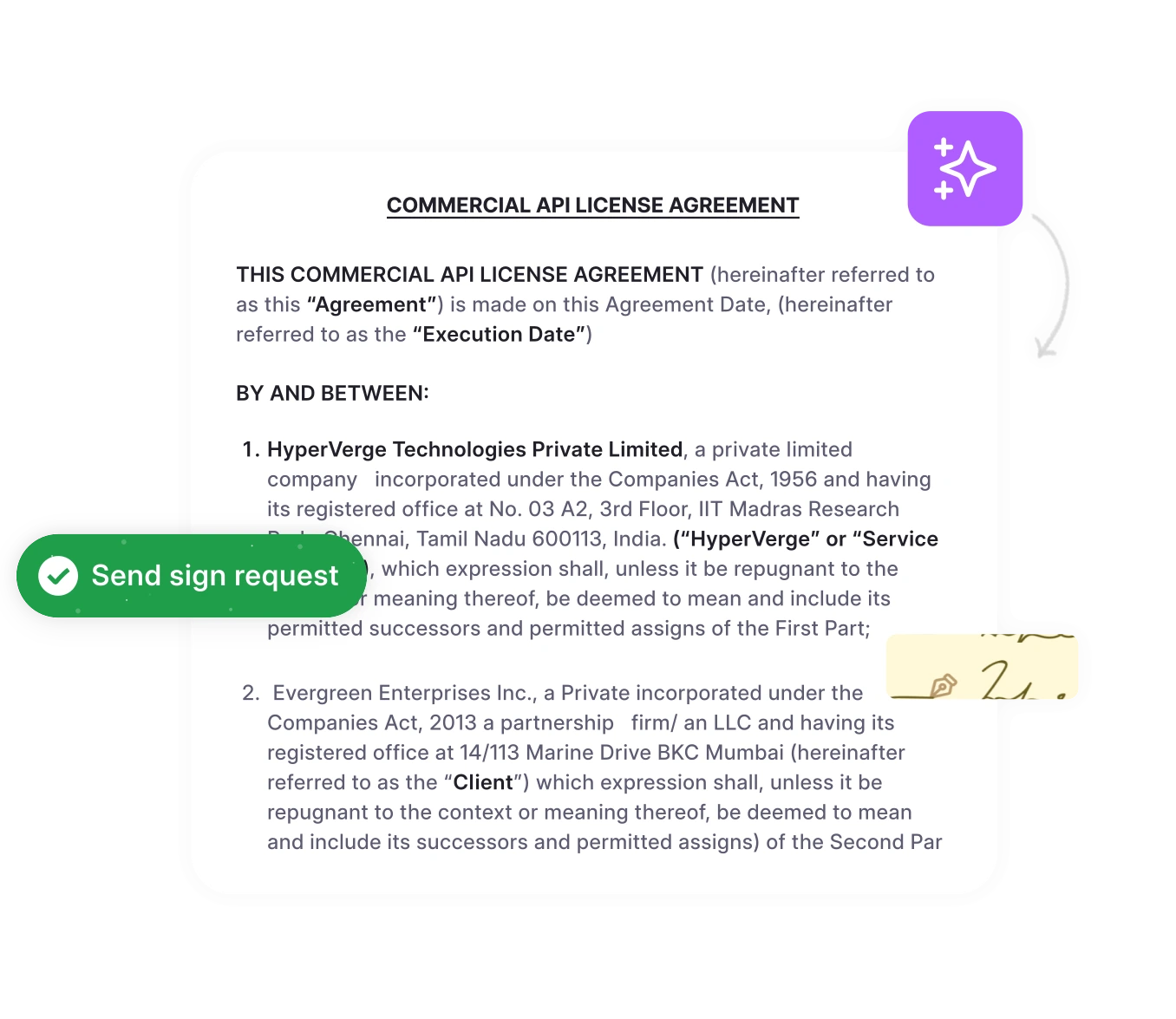




- A consulting agreement is a legally binding contract between a client and an independent consultant that defines the scope of services, payment structure, confidentiality obligations, and intellectual property ownership for the engagement.
- The five main types of consulting agreements are project-based, retainer, time and materials, fixed-fee, and objective-based. Each suits a different engagement model depending on how clearly the scope can be defined upfront.
- The US management consulting industry employs approximately 894,000 professionals and generates $399.3 billion in annual revenue (Statista, 2024), making clearly documented agreements essential for every engagement.
A consulting agreement is a legally binding contract that defines what a consultant will deliver, how they will be paid, and what either party can do to exit the engagement. Also called a consultancy agreement in UK and Commonwealth contexts, this document protects both the client and the consultant by establishing expectations before work begins.
This guide covers every element a consulting agreement requires: scope of services, timeline and milestones, payment structures, confidentiality provisions, intellectual property rights, and termination conditions. Whether you are a startup bringing in your first strategy consultant, a legal operations team using contract management software to manage thirty or more active consulting contracts across the business, or an independent consultant protecting your deliverables and getting paid on time, the framework below helps you structure agreements that hold up before disputes arise.
What is a consultancy agreement? [Definition]
A consulting agreement is a legally binding contract between a client and an independent consultant that defines the scope of services, compensation structure, confidentiality obligations, and intellectual property ownership for the engagement. It establishes the consultant’s status as self-employed rather than an employee, and creates a documented record of expectations, deliverables, and responsibilities for both parties. The terms “consulting agreement,” “consultant agreement,” “consulting contract,” and “consulting services agreement” are used interchangeably in the US; “consultancy agreement” is the standard term in the UK, Australia, and other Commonwealth countries.
This agreement establishes that the consultant is not an employee of the client, outlines the scope of work including deliverables and timelines, and specifies the payment terms including fees, milestones, and expenses. The primary purpose is to protect both parties by creating a clear record of expectations, responsibilities, and deliverables.
Whether you are drafting a business consulting contract or working from a freelance consultant contract template, the core components remain consistent. A service agreement may also be used interchangeably, though consulting agreements often involve higher-level strategic work with more complex IP and confidentiality provisions than standard service contracts.
What are the types of consulting agreements?
The five main types of consulting agreements are project-based, retainer, time and materials, fixed-fee, and objective-based arrangements. The right type depends on how clearly the scope can be defined upfront and whether the engagement is a one-time project or an ongoing relationship. Choosing the wrong agreement structure is one of the most common causes of scope disputes and delayed payments. For a broader look at how consulting agreements fit into the wider landscape of business contracts, see our guide to types of contracts.
Project-based consulting agreement
A project-based consulting agreement covers a specific, defined piece of work with a clear scope and a fixed endpoint. Deliverables, acceptance criteria, and deadlines are all written into the agreement before work starts. Payment is typically tied to project milestones or final delivery. This structure works best when both parties can fully define the scope before the engagement begins. Common examples include strategy audits, market research, system implementations, and financial due diligence.
Retainer consulting agreement
A retainer agreement gives the client ongoing access to the consultant for a set number of hours per month, billed on a recurring basis. This model suits advisory relationships where the client needs regular input but cannot predict exactly when or how much help they will need. Retainers provide revenue predictability for the consultant and guaranteed availability for the client. The agreement should define minimum monthly hours, rollover policies for unused hours, and termination notice periods. Learn more about how retainer agreements are structured.
Time and materials consulting agreement
A time and materials agreement bills the client for actual hours worked plus approved expenses, with no fixed project total. This structure is the most flexible option and is common when the scope is uncertain or likely to evolve. The agreement should specify hourly or daily rates, expense reimbursement limits, and reporting requirements so the client can track spend. Also called a consulting contract or T&M agreement, this type requires active monitoring to prevent budget overruns. See our detailed guide on time and materials contracts for structuring T&M terms correctly.
Fixed-fee consulting agreement
A fixed-fee agreement sets a single total payment for the entire engagement, regardless of how long the work takes. This gives the client complete budget certainty and rewards the consultant for working efficiently. Fixed-fee structures require a precise scope of work. Any change to the agreed scope should trigger a formal change order and a separate fee discussion. Without clear scope boundaries, fixed-fee agreements tend to favor the client at the consultant’s expense.
Objective-based consulting agreement
An objective-based agreement ties compensation to specific outcomes or performance metrics rather than hours worked or tasks completed. For example, a sales consultant might be paid based on a percentage of new revenue generated. This model aligns incentives between both parties but adds complexity around how success is measured and when payment is triggered. Use objective-based structures only when the outcome is clearly measurable and both parties agree on the measurement method before work begins.
| Type | Best for | Payment structure | Key risk |
| Project-based | One-time, defined deliverables | Milestone or completion | Scope creep if deliverables are vague |
| Retainer | Ongoing advisory, fractional roles | Monthly recurring | Hours going unused or over-commitment |
| Time and materials | Uncertain or evolving scope | Hourly plus expenses | Budget overruns without active tracking |
| Fixed-fee | Well-defined, bounded projects | Single total payment | Scope disputes if boundaries are unclear |
| Objective-based | Results-driven engagements | Performance-linked | Disputes over how to measure success |
Managing consulting agreements across multiple clients?
HyperStart’s AI-powered contract management software centralizes all consulting contracts, automates renewal alerts, and extracts key obligations with 94% accuracy. Go live in 4 weeks.
Book a DemoWhat is the difference between a consulting agreement and a contractor agreement?
A consulting agreement focuses on delivering expert advice, strategic analysis, or specialized knowledge to help a client solve a business problem. A contractor agreement is broader and applies to any self-employed professional providing execution-focused services, from software development to construction. The key distinction is the deliverable: consulting produces intellectual output such as reports, strategies, and recommendations, while contracting typically produces tangible work product such as code, physical installations, or finished goods.
Both documents establish an independent contractor relationship rather than employment, which means neither consultants nor contractors receive employee benefits, and both are responsible for their own taxes. The difference lies in the depth of professional expertise assumed, the complexity of IP and confidentiality provisions, and the typical fee structure. Consulting agreements tend to involve higher-level strategic work with sophisticated IP clauses that specify who owns proprietary frameworks and methodologies. Contractor agreements focus more on specifications, acceptance testing, and warranty obligations for physical or technical deliverables. See our guide to independent contractor agreements for how IC status is documented in both types.
When deciding which document type to use, consider what the engagement produces. If you are hiring someone to audit your contract management process and recommend a new system, that is a consulting engagement. If you are hiring a developer to build and deploy the system, that is a contractor engagement. Many complex projects involve both. A master services agreement can serve as an umbrella document with separate statements of work specifying consulting or contracting terms for each phase. Using contract drafting software with pre-built templates for both agreement types reduces the time to get the right document structured correctly.
| Factor | Consulting agreement | Contractor agreement |
| Nature of work | Expert advice, strategy, analysis | Execution of defined tasks or deliverables |
| Output type | Intellectual (reports, recommendations, frameworks) | Tangible (code, construction, physical product) |
| IP provisions | Complex (proprietary methodologies, pre-existing IP) | Simpler (work-for-hire language typically sufficient) |
| Confidentiality | Extensive (access to strategic and financial data) | Standard (project specifications and client data) |
| Fee structure | Retainer, fixed-fee, or performance-based | Hourly, milestone, or fixed bid |
| Employment status | Independent contractor (not an employee) | Independent contractor (not an employee) |
| Acceptance criteria | Defined by review and approval process | Defined by specifications and testing requirements |
What should a consulting agreement include?
A consulting agreement should include six core elements: scope of services with specific deliverables, project timeline and milestones, compensation structure and payment schedule, confidentiality and non-disclosure provisions, intellectual property ownership, and termination conditions with notice requirements. Missing any one of these creates legal exposure for both parties. According to the Deltek 2025 Professional Services Benchmarks report, project overruns reached 11.3% in 2024, up from 9.6% in 2023, with vague scope definitions cited as a leading driver. If you are working from a consulting agreement template, use these six sections as a checklist to ensure nothing is missing before signing.
Scope of services and deliverables
The scope section forms the foundation of any consulting agreement. It defines what work the consultant will perform, what the final deliverables will look like, and what is not included. Without a well-defined scope, you risk scope creep, missed expectations, and payment disputes later in the project.
Start with a detailed description of services. Avoid vague terms like “marketing services.” Instead, specify whether the consultant will handle market research, campaign strategy, content creation, or performance analytics. The more specific your scope, the less room there is for misunderstandings.
Scope creep — the gradual expansion of deliverables beyond the original agreement without additional payment — is the single most common cause of consulting disputes. The fix is defining exclusions as precisely as inclusions. A clause stating “This engagement does not include software implementation, employee training, or post-project support unless agreed in a separate statement of work” protects both parties as much as any other provision in the contract.
For example, a marketing consulting agreement should outline whether deliverables include campaign design or execution, while a financial consulting contract might define whether the consultant provides only analysis and recommendations or also implements changes.
According to the Government of Singapore’s Building and Construction Authority (Standard Consultancy Agreement, September 2024), incomplete or vague scope definitions are a leading cause of project disputes and additional expenses, making detailed written deliverables a non-negotiable requirement in any consulting contract.
A statement of work typically accompanies consulting contracts to provide more detailed information on deliverables, acceptance criteria, and dependencies. Always tie deliverables to your project milestones so both parties can assess progress at defined checkpoints before moving forward.
What to include in your scope definition:
- Specific tasks and activities the consultant will perform
- Concrete deliverables with formats and specifications
- Dependencies or client responsibilities required for completion
- Explicit exclusions to prevent scope expansion
- Review and approval processes for deliverables
- Resources or access that the consultant needs from the client
Project timeline and milestones
Setting clear timelines is essential to avoid one of the most common causes of breakdown in consulting relationships: misaligned expectations about when work should be completed. Your consulting agreement should not only specify the start and end dates but also break the engagement into manageable milestones.
Milestone-based structures work exceptionally well for consulting projects because they let both parties review progress before significant resources are invested. For example, a three-month strategic consulting project might be structured as follows: Month 1 for discovery and analysis, Month 2 for strategy development, and Month 3 for the implementation roadmap. Each milestone should have defined deliverables and acceptance criteria.
Use contract tracking software to monitor milestone completion and payment triggers across all active consulting agreements. Manual tracking of dozens of milestone dates across multiple contracts is where obligations most frequently fall through the cracks.
The agreement should also specify how performance will be measured. Define metrics and benchmarks before work begins, not after problems arise. The structure you choose depends on the nature of the consulting engagement, but milestone-based approaches generally offer the best balance of flexibility and accountability.
| Timeline structure | Best for | Key advantage | Potential drawback |
| Fixed duration | Defined projects with clear endpoints | Budget certainty and planning | Less flexibility for scope changes |
| Milestone-based | Complex multi-phase engagements | Progress checkpoints and payment alignment | Requires detailed upfront planning |
| Rolling/ongoing | Advisory relationships without fixed end dates | Flexibility and long-term partnerships | Can lack urgency or clear deliverables |
Compensation and payment terms
Getting paid correctly and on time starts with clear payment terms in your consulting agreement. This section should leave no ambiguity about how much will be paid, when payments are due, and what happens if they are late. For consultants managing multiple clients, standardized payment terms also reduce administrative overhead and prevent confusion.
Consulting agreements can adopt several different fee models, each suited to different types of work. Hourly rates work best for ongoing or advisory work where time commitment is unpredictable. Fixed-price contracts are ideal for projects with clearly defined scope and deliverables. Retainer arrangements ensure ongoing consultant availability and are typically billed monthly. Performance-based fees link compensation directly to outcomes or results achieved, though this model adds complexity around measurement and risk-sharing.
Read Precisely Alternatives for risk data management
Payment schedules should mirror your project milestones. A common structure is 30% upfront to initiate the project, 40% at the mid-project milestone, and 30% upon completion. This structure protects both sides: it gives the consultant sufficient working capital while ensuring the client retains leverage until final delivery.
Before locking in payment terms, review key principles of contract negotiation to protect your position on rate structures and expense reimbursement policies.
| Fee structure | When to use | Consultant advantage | Client advantage |
| Hourly rate | Unpredictable time requirements or ongoing advisory | Paid for all time invested | Only pay for actual work performed |
| Fixed price | Well-defined deliverables and scope | Revenue certainty for efficient work | Budget predictability and no surprises |
| Retainer | Ongoing access and support needed | Predictable monthly revenue | Guaranteed consultant availability |
| Performance-based | Results-driven engagements with measurable outcomes | Higher potential earnings for strong results | Payment tied directly to value delivered |
Expense policies should be clearly defined. Specify whether the consultant can bill for travel and accommodation, software subscriptions or tools, or research materials. Set reimbursement limits and require receipts or pre-approval for expenses over a specified amount. Address tax responsibilities explicitly: as independent contractors, consultants are typically responsible for their own tax filings and withholdings, and should receive a 1099 form (in the US) rather than a W-2. Protect against late payments by including an interest clause of 1.5% per month or the maximum legal rate, and the consultant’s right to pause work if payment is delayed beyond 30 days.
Confidentiality and non-disclosure provisions
Consultants frequently access sensitive business information including financial data, strategic plans, customer lists, proprietary processes, and trade secrets. Without confidentiality protections, you risk compromising your competitive advantage. A robust consulting agreement includes clear definitions of what constitutes confidential information, typically any non-public information shared with the consultant whether verbally, in writing, or through system access. Be specific: financial statements, marketing strategies, customer databases, product roadmaps, and business plans should all be explicitly listed.
The duration of confidentiality obligations should extend beyond the consulting engagement itself. Most consulting agreements specify that obligations continue for two to five years after the agreement ends, though truly sensitive trade secrets may warrant longer protection. For a detailed breakdown of how NDA provisions work in professional services, see our guide to non-disclosure agreements.
| Confidentiality aspect | Typical requirement | Why it matters |
| Duration after agreement ends | 2-5 years (trade secrets may be longer) | Protects information beyond the engagement period |
| Covered information types | All non-public business data and materials | Prevents selective disclosure arguments |
| Exception for public information | Standard exclusion for publicly available data | Maintains reasonable restrictions only |
| Breach notification | Immediate disclosure of any compromise | Enables damage control and legal action |
Data security requirements are increasingly important as consultants access client systems remotely. Your agreement should specify security practices: password requirements, encryption standards, restrictions on data storage locations, and protocols if a breach occurs. Require that the consultant notify you immediately if confidential information is compromised. Consequences of breach should be clearly stated, specifying that injunctive relief is available and that the breaching party will be liable for any losses resulting from unauthorized disclosure.
Intellectual property rights
Who owns the work product created during a consulting engagement? This question causes significant disputes when not addressed upfront in your consulting contract. Under US copyright law (17 U.S.C. § 101), the default rule is that copyright vests in the author, meaning consultants own work they create unless the contract explicitly assigns ownership to the client or the work qualifies as “work made for hire.” Without proper IP clauses, a consultant could theoretically reuse strategies, frameworks, or deliverables developed for your engagement with your competitors.
Most clients require complete ownership transfer through work-for-hire provisions or assignment clauses. The consulting agreement should state that all work product created during the engagement becomes the exclusive property of the client upon payment. This includes not just final deliverables but also draft materials, research, and any derivative works. For a deeper look at how IP ownership is structured in professional engagements, see our guide to intellectual property contracts.
| IP approach | Ownership | Best for | Key consideration |
| Work-for-hire | Client owns everything created | Custom deliverables specific to client needs | Requires explicit contract language |
| Assignment clause | Consultant creates, then transfers ownership | Most consulting engagements | Transfer happens upon payment |
| License grant | Consultant retains ownership, client gets usage rights | When a consultant uses proprietary methodologies | Define the scope and duration of the license |
| Joint ownership | Both parties share rights | Collaborative development projects | Requires a detailed usage rights agreement |
Protect the consultant’s pre-existing intellectual property separately. If a consultant brings established frameworks, methodologies, or tools to the engagement, they should retain ownership of these pre-existing materials. The agreement might grant the client a license to use these materials for the specific project without transferring ownership.
Termination and modification clauses
Even the best consulting relationships sometimes need to end early. Your consulting services agreement should outline exactly how and when either party can exit the engagement. Termination for convenience allows either party to end the agreement without citing a specific cause, typically with 30 days’ advance notice. Termination for cause happens when one party materially breaches the agreement, such as failure to deliver work as specified, missed payment deadlines, or confidentiality breaches. For cause termination typically allows immediate exit, though including a short cure period of five to ten days prevents relationships from ending over easily correctable mistakes.
Notice requirements protect both parties from abrupt disruption. Contract termination provisions should specify how notice must be delivered: email, certified mail, or other methods. Written notice creates a clear record and prevents disputes about whether termination was properly communicated. Final payment upon termination needs clear terms covering completed milestones plus prorated amounts for partially completed work.
Steps in proper contract termination:
- Review termination provisions in your agreement to confirm notice requirements and process
- Provide written notice via the specified communication method, with an effective termination date
- Document all completed work and deliverables through the termination date
- Calculate the final payment based on completed milestones and any agreed partial completion amounts
- Arrange return or destruction of confidential materials, and revoke system access
- Execute any transition responsibilities and knowledge transfer specified in the agreement
Amendment and modification procedures specify how the agreement can be changed after signing. Most consulting contracts require that all amendments be in writing and signed by both parties, preventing misunderstandings where one party claims terms changed based on verbal conversations or email exchanges. Dispute resolution mechanisms should also be addressed: many consulting agreements require mediation before either party can file a lawsuit, with arbitration as the next step if mediation fails. For a comprehensive framework for managing all contract provisions through their lifecycle, see our guide on contract management best practices.
Beyond these six core sections, high-value or longer-term consulting agreements should address four additional provisions. An indemnification clause specifies whether the consultant will defend and compensate the client for third-party claims arising from the consultant’s work, such as IP infringement or professional errors. A limitation of liability clause caps the consultant’s total financial exposure — typically at the total fees paid under the agreement — protecting independent consultants who do not carry enterprise-level professional indemnity insurance. A non-solicitation clause prevents either party from recruiting the other’s employees or clients, typically for 12 to 24 months after the engagement ends. Courts enforce non-solicitation clauses more consistently than non-compete clauses, which are restricted or unenforceable in California, Minnesota, Oklahoma, and several other US states. A governing law clause designates which state or country’s law governs any disputes, which is essential when client and consultant are based in different jurisdictions or countries.can file a lawsuit, with arbitration as the next step if mediation fails. For a comprehensive framework for managing all contract provisions through their lifecycle, see our guide on contract management best practices.
Stop tracking consulting agreements manually
Legal teams using HyperStart reduce contract admin time by 93% and turn around contracts 70% faster. Setup takes 4 weeks, not months.
Book a DemoConsulting agreement template
The template below provides a working skeleton for a standard consulting agreement covering all six core elements plus the four additional protective provisions. Replace every bracketed placeholder before signing. For complex, long-term, or high-value engagements, have legal counsel review the final document.
Consulting Agreement
This Consulting Agreement (“Agreement”) is entered into as of [EFFECTIVE DATE] between:
Client: [CLIENT COMPANY NAME], a [STATE] [corporation / LLC], with its principal place of business at [CLIENT ADDRESS] (“Client”)
Consultant: [CONSULTANT NAME / COMPANY], a [sole proprietor / STATE LLC / corporation], with its principal place of business at [CONSULTANT ADDRESS] (“Consultant”)
Independent Contractor Status: Consultant is an independent contractor, not an employee of Client. Consultant is responsible for all taxes, withholdings, and business expenses. Client will issue a Form 1099 (US) where required.
1. Scope of Services
Consultant agrees to perform the following services: [Describe specific deliverables and activities in detail — e.g., “Conduct a competitive market analysis and deliver a 20-page written report with strategic recommendations.”]
Excluded from this engagement: [List explicit exclusions — e.g., “Software implementation, employee training, and ongoing support are not included unless agreed in a separate statement of work.”] Any changes to the agreed scope require a written change order signed by both parties.
2. Term and Milestones
Start Date: [DATE] | End Date: [DATE]
Milestone Deliverables Due Date Payment Trigger Milestone 1 [DESCRIPTION] [DATE] $[AMOUNT] Milestone 2 [DESCRIPTION] [DATE] $[AMOUNT] Final delivery [DESCRIPTION] [DATE] $[AMOUNT] 3. Compensation and Payment
Fee: [Hourly rate of $[AMOUNT]/hr | Fixed project fee of $[AMOUNT] | Monthly retainer of $[AMOUNT]]
Payment schedule: [30% upon signing / 40% at Milestone 2 / 30% upon final delivery]. Invoices are due within [14 / 30] days. Unpaid invoices accrue interest at 1.5% per month after the due date. Consultant may suspend work after 30 days of non-payment.
Expenses: Client will reimburse pre-approved expenses up to $[MONTHLY LIMIT] per month with receipts submitted within 30 days.
4. Confidentiality
Consultant will keep all non-public information received from Client strictly confidential during and for [2 / 3 / 5] years after this Agreement ends. Confidential information includes financial data, strategic plans, customer lists, proprietary processes, and trade secrets. Standard exceptions apply for information that is publicly available or independently developed.
5. Intellectual Property
All work product created by Consultant under this Agreement is assigned to Client upon receipt of full payment. Consultant retains ownership of pre-existing tools, frameworks, and methodologies and grants Client a non-exclusive license to use them solely for the purposes of this engagement.
6. Termination
Either party may terminate this Agreement with [30] days written notice (termination for convenience). Either party may terminate immediately for material breach, provided the breaching party receives written notice and [7] days to cure before termination takes effect. Upon termination, Client will pay for all work completed through the termination date.
7. Additional Provisions
Indemnification: Consultant will indemnify Client against third-party claims arising directly from Consultant’s negligence or wilful misconduct.
Limitation of Liability: Consultant’s total liability under this Agreement shall not exceed the total fees paid by Client in the [3] months preceding the claim.
Non-Solicitation: For [12 / 24] months after this Agreement ends, neither party will recruit or hire the other party’s employees or contractors without prior written consent.
Governing Law: This Agreement is governed by the laws of [STATE / COUNTRY]. Disputes will first be submitted to mediation; if unresolved, to binding arbitration in [CITY, STATE].
Entire Agreement: This Agreement constitutes the entire agreement between the parties and supersedes all prior discussions. Amendments require written signature from both parties.
Signatures
Client
Signature: ___________________________
Name: [NAME]
Title: [TITLE]
Company: [COMPANY NAME]
Date: ___________________________Consultant
Signature: ___________________________
Name: [NAME]
Title: [TITLE]
Company: [COMPANY NAME]
Date: ___________________________
Streamline consulting agreement management with HyperStart
Managing consulting agreements effectively requires tracking execution status, milestone completion, payment schedules, renewal dates, and compliance obligations. For legal and operations teams handling dozens of consultant contracts, manual tracking creates risk and inefficiency.
HyperStart, an AI-powered contract lifecycle management platform, transforms how you handle consulting contracts at scale. Automated alerts notify you before key dates and obligations are due, while centralized contract repository software with AI-powered search enables you to find any clause instantly. Built with SOC 2 Type 2 certification and enterprise-grade security, HyperStart delivers the automation legal teams need with the control they require.
AI contract review identifies missing clauses, risky terms, and compliance gaps before signing, so consulting agreements leave your desk complete and enforceable. HyperStart deploys in 4 weeks with 94% AI accuracy for contract review and data extraction.