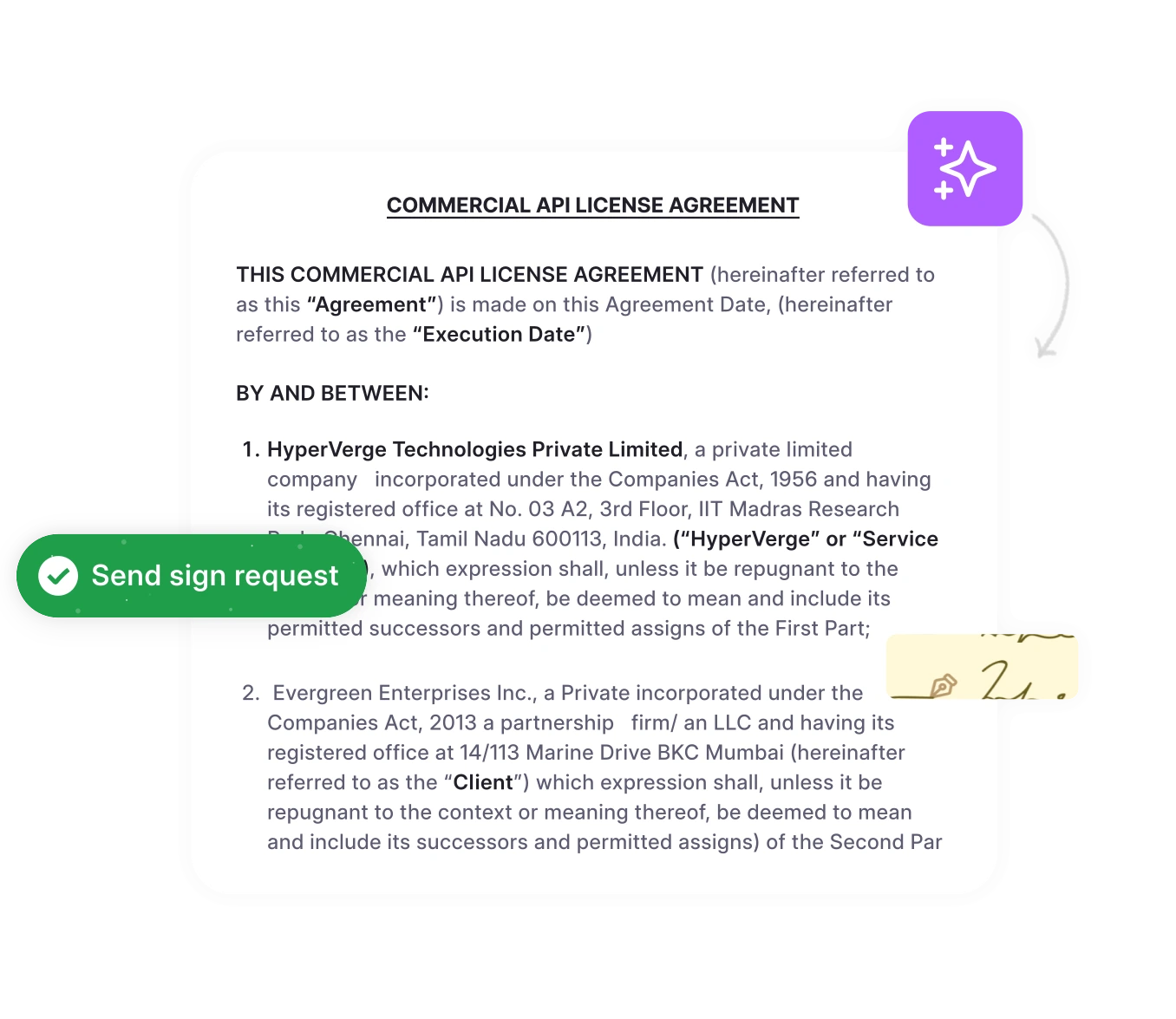


- A contracting party is any individual, organization, or legal entity that enters into a legally binding agreement and accepts the obligations, rights, and responsibilities outlined in the contract.
- The two main types of contracting parties are the promisor (the party making commitments) and the promisee (the party receiving benefits), though contracts can also involve guarantors, subcontractors, licensors, and government entities.
A contracting party is any individual, organization, or legal entity that enters into a legally binding agreement and accepts the obligations, rights, and responsibilities outlined in the contract. The two primary types are the promisor (the party making commitments) and the promisee (the party receiving benefits).
Accurate contracting party identification is the foundation of every enforceable agreement. Naming errors, unauthorized signatories, and missing entity documentation create compliance gaps, reduce enforceability, and expose organizations to unnecessary legal risk. This guide covers what a contracting party is, the different types, identification requirements, rights and obligations, and common mistakes that void contracts.
Despite its importance, contracting party management remains one of the most under-addressed areas in contract operations. Inaccuracies can lead to compliance gaps, reduced enforceability, and unnecessary legal exposure.
As contract volumes grow and cross-functional teams rely more on automation workflows and collaboration tools, consistency, accuracy, speed, and legal integrity is paramount across agreements.
This guide offers a detailed explanation of what a contracting party is, its different types, the rights and obligations of a contracting party, and common challenges and solutions.
What is a contracting party?
A contracting party is any individual, organization, or legal entity that enters into a legally binding agreement and accepts the obligations, rights, and responsibilities outlined in the contract. A contracting party must possess legal capacity to contract, meaning they must be of legal age (18 or older in most jurisdictions), mentally competent, and legally authorized to represent their organization. Both written and verbal agreements create contracting parties.
But this basic contracting meaning extends far beyond simple participation. In legal terms, contracting parties are the foundation of contract enforceability. Each party must have the legal capacity to contract, which means they must be:
- Of legal age (18 years or older in most jurisdictions)
- Mentally competent to understand the agreement’s terms
- Legally authorized to represent their organization(if applicable)
- Not under duress when entering the contract
The legal framework: What makes someone a contracting party
6 essential elements of every contract:
- Offer: One party proposes specific terms or actions
- Acceptance: All parties agree to the terms, creating mutual assent
- Stakeholder awareness: The level of stakeholder understanding around rights, obligations, and potential risks
- Consideration: Something of value is exchanged(money, services, goods, or promises)
- Contractual capacity: The legal ability of parties in enter into covenant determined by legal age, mental competence, and state of mind
- Contract legality: to ensure the contract’s subject matter, terms, and execution are compliant
Anyone involved in any of these stages becomes a contracting party, regardless of whether the agreement is written or verbal. Nearly one-third of the entire workforce is involved in some aspect of contract management, yet in 40% of organizations, it remains unclear who is responsible for which contract tasks, according to IACCM research.
Important note: Certain contracts—such as real estate transactions or agreements lasting more than one year—must be in writing under the Statute of Frauds.
Understanding these party relationships is crucial, but clear identification requires following specific legal requirements to ensure enforceability.
| Category | Definition | Examples |
| Contracting Parties | Individuals or entities who are legally bound by the terms of the agreement. | – Primary signatories with legal obligations- Authorized representatives acting on behalf of entities- Successor entities that assume contractual duties |
| Non-Contracting Parties | Individuals or entities mentioned in the contract but not legally bound by it. | – Third-party beneficiaries (unless specifically intended)- Witnesses to the contract signing- Advisors or consultants mentioned but not obligated (unlike intended beneficiaries) |
Also read How Third-Party Contract Management Works
De-bottleneck contract approvals
Configure multi-level approval workflows that adapt to your business rules, reduce cycle times, and maintain organizational compliance.
Book a DemoNow that you understand who qualifies as a contracting party, let’s explore the different roles and structures these parties can take on in real-world legal agreements.
Who are the two parties to a contract?
The two parties to a contract are the promisor and the promisee. The promisor is the party that makes commitments and agrees to perform specific actions, deliver goods, or provide services. The promisee is the party that receives the benefits of those commitments and accepts performance, makes payments, or enforces terms.
| actor | Promisor | Promisee |
|---|---|---|
| Role | Makes commitments in the contract | Receives the benefits of those commitments |
| Primary action | Performs specific actions, delivers goods, or provides services | Accepts performance, makes payments, or enforces terms |
| Obligation | Must fulfill all promised actions by specified deadlines | Must provide consideration (payment, reciprocal promises) |
| Breach risk | Non-performance or substandard delivery | Non-payment or failure to accept conforming performance |
| Legal remedy if breached | Specific performance, damages, or contract termination | Withholding payment, rejection with proper notice, damages |
| Example | A software vendor delivering a product per specifications | A client paying license fees and complying with usage terms |
In practice, many contracts involve more than two parties. Multi-party agreements can include guarantors (who secure obligations if a primary party defaults), subcontractors (who perform specialized portions of the work), licensors and licensees (who grant and receive intellectual property rights), and government entities (which require procurement compliance and public bidding). Each party type carries distinct rights, obligations, and liability exposure within the contract.
What is a contracting entity?
A contracting entity is any business organization (corporation, LLC, partnership, or government body) that has the legal capacity to enter into binding agreements. The term “contracting entity” is used to distinguish organizational parties from individual contracting parties, because entities require additional documentation such as articles of incorporation, board resolutions, and authorized signatory verification.
Identifying a contracting entity accurately is critical for enforceability. Courts require the exact registered legal name, not a trade name or abbreviation. In the 2013 Derek Hodd Limited v Climate Change Capital Limited case, a claimant mistakenly named a dormant group company instead of the operating entity. The court ultimately enforced the contract based on intent, but the naming error created significant legal costs and delays.
What are the different types of contracting parties?
The main types of contracting parties are promisors, promisees, buyers, sellers, guarantors, service providers, subcontractors, licensors, licensees, corporations, LLCs, partnerships, and government entities. Each type carries different rights, obligations, and levels of liability. Corporations require board authorization and formal governance, while partnerships operate under mutual consent and shared authority.
Modern contracts involve various party structures that legal teams encounter regularly. Understanding these relationships helps ensure proper contract drafting and risk management.
Here is a detailed table showcasing different types of contracting parties:
| Party Type | Primary Role | Key Responsibilities |
| Promisor | Makes commitments | Perform specific actions, deliver goods/services |
| Promisee | Receives benefits | Accept performance, make payments, and enforce contract terms |
| Buyer | Purchases goods/services | Payment obligations, specification compliance |
| Seller | Provides goods/services | Deliver per contract standards, warranty compliance |
| Guarantor | Secures obligations | Backup payment/performance responsibility |
| Service Provider | Delivers core services | Manage performance, coordinate subcontractors |
| Subcontractor | Specialized services | Perform portions under primary oversight |
| Licensor | Grants rights | Provide IP access, retain ownership |
| Licensee | Receives rights | Pay legal fees, comply with usage restrictions |
| Corporation | Limited liability | Board authorization, formal governance |
| LLC | Flexible structure | Member/manager authorization |
| Partnership | Joint liability | Mutual consent, shared authority |
| Government | Public entity | Procurement compliance, public bidding |
Also read 20 Essential Types of Contracts Explained
Go from request to approval in hours, not weeks
Eliminate email chains and manual follow-ups with centralized approval tracking and secure role-based access.
Book a DemoRecognizing party types is only the first step. Legal teams must also accurately identify each contracting party to ensure enforceability and reduce legal exposure.
What are the rights and obligations of contracting parties?
Contracting parties have three categories of rights (good faith and fair dealing protection, performance and payment security, and information and communication access) and three categories of obligations (performance obligations, payment and compensation obligations, and compliance and regulatory obligations). Every contract contains an implied covenant requiring parties to act honestly, avoid undermining each other’s benefits, and provide reasonable cooperation for fulfillment.
Accurate party identification forms the legal foundation of every enforceable contract. Missing or incorrect party information can result in invalid contracts and create significant liability exposure.
Here are the 5 critical identification requirements every legal professional should follow:
1. Establish comprehensive individual party identification
Individual contracting parties require comprehensive documentation:
- Full legal names(avoiding nicknames or informal names)
- Current addresses for legal notices
- Date of birth for capacity verification
- Government-issued ID numbers(Social Security Number, passport number)
- Professional titles when acting in a business capacity
The Claimant mistakenly named a dormant group company instead of the Defendant, the main operating company, as the contracting party. Despite the error, evidence showed both parties intended the Defendant to be bound. The Defendant argued no contract existed due to the misidentification, but the Court disagreed. The Court considered the contract’s background and context, not just its wording.
This ruling highlights the importance of accurate party identification while confirming that clear intent can override naming errors.
Courts reject contracts that lack adequate individual identification. Documentation is essential for enforceability.
2. Ensure complete business entity documentation
Corporate entities require comprehensive identification, including legal business names exactly as registered, entity types (Corporation, LLC, Partnership), state or country of incorporation, Federal Tax ID or company’s registration number, registered office addresses, and authorized signatories with titles and authority verification. Professional service firms need additional details like professional license numbers, regulatory authority oversight, and professional liability insurance information.
3. Strengthen international party compliance
Cross-border agreements require additional identification elements, including country of incorporation or residence, local registration numbers, tax identification in relevant jurisdictions, authorized representatives in applicable countries, and governing law specifications. International contracts with incomplete party identification face enforcement challenges across multiple jurisdictions.
4. Establish proper signatory authority verification
Contracting parties must provide clear documentation of signatory authority, including corporate resolutions authorizing specific individuals to sign, power of attorney documents for authorized representatives, board minutes confirming executive signing authority, and partnership agreements defining partner signing rights. Without proper authority verification, contracts may be unenforceable against the intended party, creating significant legal and business risks for two or more parties contracting.
5. Implement comprehensive documentation standards
Complete party identification requires maintaining original or certified copies of all identification documents, regular updates when party information changes, secure storage systems for sensitive identification data, and verification procedures to confirm document authenticity. Documentation gaps are widespread. Research shows that 9 in 10 contract professionals find locating specific contracts challenging, and nearly half of businesses lack a defined process for storing contract documents. These gaps directly increase the risk of party identification errors going undetected.
Legal professionals must establish systematic processes for collecting, verifying, and updating party identification information to ensure ongoing contract validity and enforceability throughout the agreement lifecycle.
Once you’ve correctly identified the contracting parties, the next priority is to define and document their respective obligations and duties to maintain a balanced and enforceable agreement.
Quick contracting party verification checklist
For Individuals:
For Business Entities:
Also read A Guide to Commercial Contracts
What mistakes do contracting parties make that void contracts?
The five most common contracting party mistakes that void contracts are: using a “Doing Business As” name instead of the registered legal entity name, missing signatory authority verification, listing outdated business information, using informal individual identification (nicknames instead of full legal names), and submitting incomplete international party documentation. Each of these errors can make a contract unenforceable in court.
Understanding the rights and obligations of all parties to contract terms forms the foundation of effective contract management and risk mitigation in today’s complex business environment.
Fundamental rights of contracting parties
Contract rights establish the legal framework for business relationships, ensuring both parties can pursue their legitimate interests while maintaining fair-dealing standards. Here are the core rights every contracting party possesses:
1. Enable good faith and fair dealing protection
Every contract contains an implied covenant requiring both parties to act honestly in performance, avoid undermining the other party’s contract benefits, provide reasonable cooperation for fulfillment, and refrain from conduct that frustrates contract purposes. This foundational right ensures ethical business conduct throughout the contract lifecycle.
2. Ensure performance and payment security
Contracting parties are entitled to receive promised goods, services, or payments according to specifications, demand performance that meets contract standards, reject non-conforming performance with proper notice, and seek legal remedies for breach of contract. These rights protect parties from substandard delivery and financial losses.
3. Strengthen information and communication access
Modern contracts typically grant parties rights to receive timely updates on performance status, access relevant documentation and records, inspect work progress or quality standards, and participate in dispute resolution procedures. This transparency prevents misunderstandings and enables proactive contract management.
Essential obligations of contracting parties
Contract obligations define the specific duties each party must fulfill to maintain legal compliance and business relationships. Understanding these obligations prevents costly disputes and ensures smooth contract execution.
1. Performance obligations
Each party must complete all promised actions by specified deadlines, meet quality standards outlined in the contract, provide necessary resources for contract fulfillment, and maintain professional standards and competency levels. Performance failures can result in breach claims and financial penalties.
Contracts should be fair and reasonable for both parties, as well as clear and specific to reduce the potential for disputes. When expectations are well-defined, it’s easier to measure performance and address issues if either party fails to meet their commitments.
2. Payment and compensation obligations
For teams who are financially responsible, these include approving payments according to agreed schedules, covering specified expenses and cost reimbursements, providing accurate invoicing and financial documentation, and maintaining appropriate insurance coverage. Late payments often trigger penalty clauses and damage business relationships.
3. Compliance and regulatory obligations
Parties must ensure adherence to applicable contract ƒlaws and regulations, maintenance of required licenses and certifications, implementation of specified security and privacy measures, and compliance with industry standards and best practices. Non-compliance can void contracts and create legal liability.
Compliance and regulatory risk are seen as major threats to company growth. Specifically, 35% of risk executives identified these risks as the greatest threats to their company’s ability to drive growth. Similarly, another 35% cited cyber or information risk as a significant threat. These insights reflect the pervasive impact of compliance and regulatory issues on organizational strategy and success.
The interplay between rights and obligations creates the foundation for successful contract relationships. When parties understand both their entitlements and duties, contracts become strategic business enablers rather than administrative burdens.
Approval workflows that enforce compliance
Built-in controls ensure proper authorization levels and maintain org policy and industry requirements.
Book a DemoDespite clear roles and obligations, organizations often face recurring challenges in contracting party management. Here’s how to anticipate and resolve those issues before they escalate.
What are the common pitfalls a contracting party makes and how to avoid them?
Legal operations teams encounter recurring challenges in contracting party management that can lead to costly mistakes and process delays. Understanding these issues helps prevent disputes and streamlines contract processes.
Here are the 3 key challenges in contracting party management and ways to overcome them:
1. Ambiguous party identification and naming confusion
Many businesses struggle with unclear naming conventions that create enforcement difficulties and legal contract disputes. Companies often use informal business names, abbreviations, or outdated entity references instead of complete legal identifications.
How to tackle it: Always use complete legal entity names with proper jurisdiction and entity type designations. Build a master database of approved entity information and verify entity status with the Secretary of State databases before contract execution.
AI-powered contract management software can automatically verify entity information and maintain standardized naming conventions across all your contracts. The financial impact of these naming errors is significant. Organizations lose an average of 9.2% of their annual revenue due to poor contract management, including party identification mistakes, missed deadlines, and compliance gaps, according to World Commerce & Contracting (formerly IACCM).
2. Unauthorized signatories and authority gaps
Corporate officers may exceed board-authorized limits, employees sign without proper delegation, partnership agreements lack partner consent, or government contracts proceed without procurement authority. These authority gaps create unenforceable agreements and significant legal risks for all contract parties involved.
How to tackle it: Implement signature authority verification procedures from day one. Require board resolutions for significant corporate agreements and maintain updated signature authority matrices for all entity types.
Contract lifecycle management systems offer built-in authority checks with clear approval workflows, so only authorized parties can sign. Resolving authority disputes is costly and slow. Contract disputes account for 64% of cases in U.S. state courts, and the average contract dispute takes 62 days to resolve as per Gartner. Businesses collectively spend $870 billion annually on contract dispute resolution worldwide.
3. How do you manage contracts with multiple contracting parties?
Managing deals and relationships with multiple contractual parties creates confusion about responsibilities, communication channels, and performance oversight.
How to tackle it: Create detailed responsibility matrices that clearly define each party’s obligations and communication protocols. Establish primary communication points for each contracting party and implement centralized contract administration systems. Use contract management platforms with multi-party oversight capabilities and automated notification systems.
5 Critical contracting party mistakes that void contracts
1. Using “Doing Business As” instead of the legal entity name
Risk: If a contract lists only the DBA name rather than the registered legal entity name, the agreement may be unenforceable against the actual business entity. This mistake can lead to confusion about which entity holds the contractual obligations, especially if the business operates under multiple trade names.
2. Missing signatory authority verification
Risk: If the person signing the contract does not have legal authority to bind the organization, the contract may be invalid. Without documented proof of authority, such as board resolutions or corporate officer titles, the other party can later claim that the agreement was unauthorized.
3. Outdated business information
Risk: Contracts with incorrect addresses, registration numbers, or contact details can cause legal notices and critical communications to be misdirected. This not only delays dispute resolution but can also invalidate certain notice provisions within the contract.
4. Informal individual identification
Risk: Listing only nicknames, incomplete names, or vague identifiers can make it difficult to prove the contracting party’s identity in legal disputes. Full legal names, official identification numbers, and supporting documents should be used to avoid ambiguity.
5. Incomplete international party documentation
Risk: Missing key documents like certificates of incorporation, proof of registered address, or tax identification numbers can lead to serious cross-border enforcement issues. International contracts require extra diligence to meet both local and foreign legal requirements.
Mastering contracting party management
Understanding contracting parties is just the start. For legal operations managing complex contract portfolios, effective party management, AI-powered automation, and systematic processes deliver measurable business impact.
Companies using AI-powered contract management have seen a 35% improvement in contract review accuracy, reducing party identification errors, naming inconsistencies, and authority verification gaps (SuperLegal.ai). By leveraging intelligent tools designed to streamline data accuracy and automate key workflows, teams can reduce manual errors, improve compliance, and speed up contract cycles.
Platforms like HyperStart enable this transformation by integrating AI-driven insights and process automation, helping legal teams maintain clarity and control over contracting parties throughout the contract lifecycle.
This approach not only minimizes risks but also enhances operational efficiency, turning contracting party management into a strategic advantage.