



- AI cuts review time drastically. Automated redlining handles the first-pass clause review, so legal teams spend time on decisions rather thanmarkup.
- Playbook compliance is a manual failure point. Most legal teams fail to enforce contract playbooks consistently when redlining manually. Software closes this gap through a pre-approved clause library and AI-powered suggestions on every flagged clause.
- CLM-native redlining outperforms standalone tools. When redlining is built into a full CLM, the audit trail flows through creation, negotiation, approval, and signing without manual handoffs between tools. The right tool depends on your scale. HyperStart CLM suits mid-market and enterprise teams needing a full CLM. Aline fits playbook-focused legal teams. Ironclad and Sirion serve large enterprise operations.
- Ask this before choosing any vendor. Does the AI suggest pre-approved fallback language, or does it only flag issues? That single answer separates platforms that enforce your playbook from those that simply highlight problems.
- Deployment timeline directly affects time to value. Teams that deploy faster start recovering manual process costs sooner.
Contract review bottlenecks can cost drastically which can result lost productivity. Yet most legal and operations teams are still emailing redlined documents back and forth, losing track of which version is current, and manually checking every clause against a playbook nobody consistently follows.
Contract redlining software eliminates this entirely. It automates markups, enforces pre-approved language, tracks every change with a timestamped audit trail, and lets all parties negotiate in a shared workspace rather than across email attachments.
This guide covers what contract redlining software does, the challenges it solves, how automated redlining works step by step, the top tools in 2026 compared side by side, and the five questions to answer before you choose one.
What is contract redlining software?
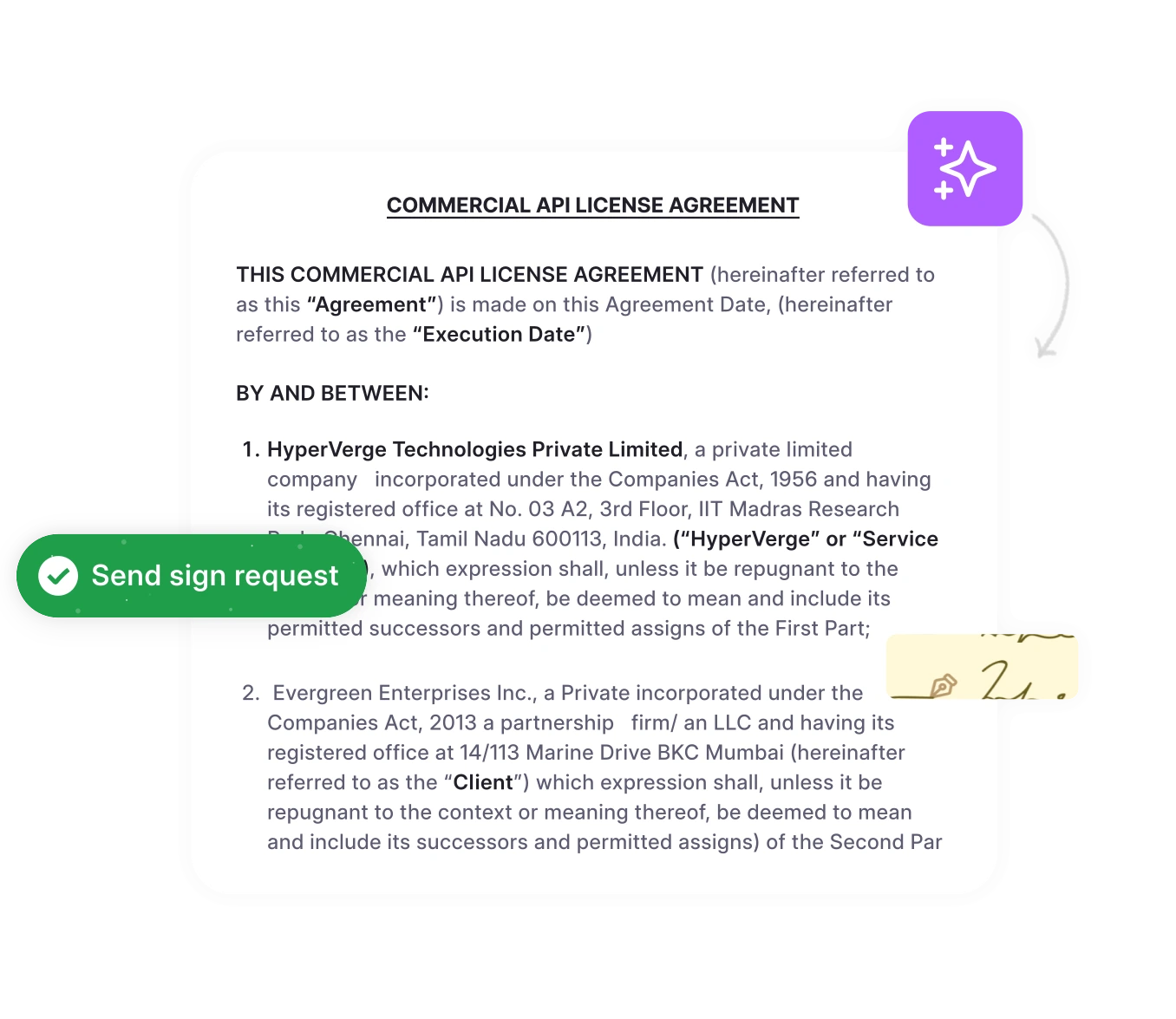
Contract redlining software is a platform that automates the markup, negotiation, and tracking of contract changes. It replaces the email-attachment workflow with a shared workspace where legal teams, counterparties, and business stakeholders review, propose, and approve edits in real time, with AI handling the first-pass review.
Contract redlining is the process of marking up a contract to propose changes, push back on clauses, and negotiate terms before the document goes to signature. Redlining a contract, or choosing to redline a contract through a dedicated platform rather than manually in Word, is the difference between a structured negotiation record and an uncontrolled email chain. Traditionally, this happens in Microsoft Word using track changes, which creates a manageable workflow for two parties but breaks down quickly once multiple reviewers, departments, or counterparties are involved.
Contract redlining software, also called contract redline software or redline software, replaces the email-attachment workflow with a centralised negotiation platform. It lets legal teams, business stakeholders, and counterparties review, mark up, and negotiate contracts in a single environment. AI handles the first-pass review and suggests pre-approved alternatives for non-standard clauses. Every change is tracked automatically, attributed to the correct party, and preserved in a full version history.
The practical outcome is faster contract cycles, stronger playbook compliance, and a complete audit record without any manual documentation effort. For mid-market and enterprise teams managing high contract volumes, these are not marginal gains. Research from BCG shows that AI-assisted contract review can compress review time from two days to 20 minutes.
Why does manual contract redlining slow your business down?
Manual contract redlining slows businesses down because every round of edits creates a new file version, review depends on email handoffs, and there is no real-time visibility into what changed or why. Research shows the average contract approval takes 3.4 weeks; a significant portion of that time is idle wait time, not active review.
Before evaluating any tool, it is worth understanding the cost of the current process. The problems below affect most legal and operations teams working without dedicated contract automation software.
1. Version chaos across email and shared drives
When a contract travels by email, each round of edits produces a new file. Within a few days, your team is working from document with no reliable way to confirm it reflects the latest agreed position. Reviewers spend the first 30 minutes of every review session reconciling versions rather than reviewing content. When a dispute arises later, there is no single authoritative record of what was agreed and when.
2. Slow counterparty review cycles
The average contract approval takes 3.4 weeks from kickoff to execution. A significant portion of that time is waiting, not reviewing. Without a shared workspace, every round of redlines requires a new exported document, a new email thread, and another manual check to confirm the counterparty received the right version. Each handoff adds days to the cycle and increases the risk of a version mismatch.
3. No audit trail or change visibility
Legal and compliance teams are frequently asked to demonstrate what was negotiated, what was accepted, and who approved it. Email chains are an unreliable and incomplete record for this purpose. Manual redlining leaves no structured history of which clauses were changed, why alternatives were offered, or whether approved fallback language was actually used. In regulated industries, this gap creates meaningful compliance exposure.
4. Low contract playbook compliance
Research from EY Law found that only 31% of legal teams consistently follow their contract playbooks during negotiation. 71% have no process for monitoring deviations from approved positions, and 75% do not have pre-approved fallback terms ready when a counterparty pushes back on standard language. The result is inconsistent risk exposure across every contract the business signs, with no systematic way to improve it.
How does automated contract redlining software work?
Automated contract redlining software works by scanning incoming contracts against your legal playbook, flagging non-standard clauses, and suggesting pre-approved alternatives from your clause library. Every accepted change, rejected suggestion, and manual edit is recorded automatically without any manual version tracking.
Modern contract redlining software handles the review and negotiation process in three stages. Each stage reduces manual effort and improves accuracy compared to a human-only workflow.
Step 1: AI identifies and flags high-risk clauses
When a third-party contract is uploaded, the AI scans every clause against your legal playbook. It identifies non-standard terms, missing clauses, and language that deviates from your approved positions. This first-pass analysis happens in seconds. The ability to automate MSA redlining is one of the most common reasons legal teams switch platforms: a master service agreement that previously required four to six hours of manual review now takes under a minute. LeadSquared achieved exactly this after deploying HyperStart CLM.
Step 2: Suggested pre-approved language replaces risky terms
Rather than flagging a problem and leaving the reviewer to find a fix, the AI suggests pre-approved fallback language directly alongside the flagged clause. Reviewers see what the current language says, why it is flagged, and what the approved alternative is. They can accept the suggestion, modify it, or override it with a custom response. This mechanism raises playbook compliance from the 31% EY Law found in manual processes toward near-universal enforcement.
Step 3: Contract redlining automation software records every change automatically
Every accepted change, rejected suggestion, manual edit, and counterparty response is timestamped and attributed to the reviewer. All parties work within the same document, so no version gets orphaned in an email thread. When the contract reaches execution, the complete negotiation history is preserved automatically. Legal and compliance teams can export a full audit record and a shareable contract summary without any additional documentation work.
What are the key features of contract redlining software?
The key features of contract redlining software are AI-assisted markups, real-time multi-party collaboration, a pre-approved clause library, version control with a full audit trail, and native CLM integration. Together, these replace the manual email review cycle with a structured, auditable negotiation workflow.
These five features separate platforms that genuinely accelerate contract negotiation from tools that simply move the email workflow into a browser.
1. AI contract redlining software: automated markups and first-pass clause review
The platform should analyse incoming contracts and generate redlines automatically against your playbook, not just flag clauses for manual review. For AI contract review software, the quality of suggestions depends heavily on the size and domain of the training data. Platforms built on large document datasets produce more reliable, legally coherent suggestions than general-purpose AI tools applied to contracts. Look for vendors who publish accuracy benchmarks for their AI output.
2. Real-time collaboration for multi-party negotiations
Legal teams, business stakeholders, and counterparties should be able to work on the same contract simultaneously with changes visible to all parties in real time. This eliminates the version conflict problem entirely. It also reduces cycle time by enabling counterparty responses within the same session rather than across separate email rounds. Legal redlining software should support both internal review rounds and external counterparty access with appropriate permission controls for each. Collaborative redlining tools for legal teams must distinguish between what internal reviewers see and what counterparties can access.
3. Pre-approved clause library and playbook enforcement
The platform should let legal teams build a clause library of approved clauses, fallback positions, and standard language variants. During redlining, the AI references this library automatically when suggesting alternatives. The clause library is what transforms AI flagging into genuine compliance enforcement. Without it, the AI can only identify deviations. With it, the AI can propose the correct approved response every time, consistently across all reviewers and all contract types.
4. Version control with complete audit trail
Every change must be timestamped, attributed to the correct party, and stored in a recoverable version history. Each redlined version of the document should be accessible, comparable, and revertible at any point in the negotiation. The audit trail should capture accepted AI suggestions, manual overrides, reviewer comments, and counterparty responses in a single structured record. This is not only a legal compliance requirement in many industries. It is also the primary tool for identifying bottlenecks in your negotiation process and improving cycle times over time.
5. Native CLM and workflow integration
Redlining should connect directly to the rest of the contract lifecycle. The redlined contract should move automatically into an approval workflow, then to signature, then into the repository, with all negotiation metadata intact. Platforms where redlining is a native CLM module handle this by default. Standalone redlining tools that integrate with external CLMs via API create data handoff gaps at each stage. For legal teams managing high contract volumes, these gaps accumulate into significant manual overhead.
Still reviewing contracts over email?
HyperStart CLM’s AI reviews and redlines third-party contracts with 94% accuracy. LeadSquared reduced their MSA review from 4 to 6 hours down to under one minute. See how it works for your team.
Book a DemoWhat is the best contract redlining software in 2026?
The best contract redlining software in 2026 depends on your team’s size, workflow, and whether you need standalone redlining or a full CLM. HyperStart CLM, Aline, Juro, Ironclad, and Sirion are the strongest options in the category, each serving a distinct buyer profile from scaleup legal teams to enterprise legal operations.
The tools below represent the strongest options available for teams evaluating contract redlining software in 2026. Each serves a different buyer profile. Use the comparison table to shortlist, then read the detail on the tools that fit your scale and workflow.
| Tool | Best for | AI redlining | Full CLM included | Deployment time |
|---|---|---|---|---|
| HyperStart CLM | Mid-market and enterprise teams needing CLM-native redlining | Yes, 94% accuracy | Yes, native | 4 weeks |
| Aline | Legal teams focused on AI playbook enforcement | Yes, AI Playbooks | Yes | Not published |
| Juro | Scaleups and growing legal teams | Yes, agentic AI | Yes, native | Not published |
| Ironclad | Enterprise legal operations teams | Yes | Yes, native | Several months |
| Sirion | Large enterprises, complex multi-party negotiations | Yes | Yes, native | Enterprise timeline |
HyperStart CLM: best for teams that need redlining inside a full CLM
HyperStart CLM is an AI-powered contract lifecycle management platform with redlining built natively into every stage of the workflow. It handles contract creation, negotiation, redlining, approval, signature, and repository management in a single platform, with no data handoffs between tools.
The AI redlining module is trained on over one billion processed documents. It identifies non-standard clauses, surfaces deviations from your playbook, and suggests pre-approved fallback language directly within the review interface. All of this works natively inside Microsoft Word for teams that prefer to stay in a familiar editing environment, with full CLM functionality active in the background.
Security is enterprise-grade. HyperStart carries both ISO 27001 and SOC Type 2 certifications, which matters for legal, finance, and procurement teams with regulatory compliance obligations. The platform deploys in 4 weeks with a 100% implementation success rate, compared to an industry average of 3 to 6 months for enterprise CLMs. For teams that need a complete redlining software solution that connects directly to approval and signing workflows without integration complexity, HyperStart is the most operationally complete option.
Aline: best for AI playbook-driven contract review
Aline is built around AI Playbooks, a system that lets legal teams define their review standards and have Aline’s AI enforce them automatically across every incoming contract. The platform supports the full contract lifecycle and has strong multi-party collaboration. One customer reduced MNDA redlining from 45 minutes to under 2 minutes after deploying Aline.
Aline is a strong fit for legal operations teams whose primary challenge is scaling playbook-consistent review across high volumes of third-party contracts. Teams that also need end-to-end CLM capabilities, including contract creation, approval routing, and repository management, should evaluate whether Aline’s CLM coverage meets their full requirements before committing.
Juro: best for counterparty collaboration at scale
Juro positions itself as a 2026-ready redlining platform with an emphasis on agentic AI, where the AI autonomously reviews contracts and suggests redlines without requiring a human to initiate the first pass. The platform also dedicates significant development focus to counterparty experience, making the external review process smoother for the parties receiving contracts from Juro users.
Juro powers over 2.5 million contracts globally and has a strong install base among scaleup and mid-market legal teams. It is particularly well suited to companies with high counterparty volumes where the speed and quality of the external collaboration experience directly affects deal cycle time. Juro also links directly from its redlining guides to how-to resources on redlining in Word and Google Docs, which reflects its focus on teams transitioning from document-based workflows.
Ironclad: best for enterprise legal operations
Ironclad is one of the most established enterprise CLM platforms on the market. Its AI-powered contract review product handles redlining as part of a broader legal operations system that includes deep workflow customisation, role-based access controls, and robust analytics. It is used by large enterprise legal and procurement teams that need high configurability and deep integration with existing enterprise systems.
Implementation is more complex and time-intensive than mid-market tools, which makes Ironclad best suited to organisations with the internal resources to manage a multi-month deployment. Teams comparing the two platforms can see a full feature comparison on HyperStart’s Ironclad alternative page.
Sirion: best for multi-party enterprise negotiations
Sirion is built for large enterprises managing complex, multi-party contract negotiations across extensive vendor and counterparty portfolios. Its AI surfaces risk across supplier relationships at scale and supports the intricate negotiation workflows found in Fortune 500 procurement, legal operations, and vendor management departments.
Sirion operates at enterprise scale in terms of both capability and implementation complexity. Teams at the lower end of enterprise scale, or those without a dedicated contract operations function, typically find that mid-market CLMs with strong AI capabilities are a more practical and cost-effective fit.
How does contract redlining software integrate with CLM platforms?
Contract redlining software integrates with CLM platforms either as a standalone tool connected via API or as a native module within a full CLM system. CLM-native redlining is the more reliable architecture because it eliminates manual data handoffs and preserves the complete audit trail across every contract lifecycle stage.
There are two architectures for deploying contract redlining software: a standalone tool that connects to your existing systems via integration, and a CLM platform with redlining built in natively. The difference matters significantly for teams managing high contract volumes.
Standalone redlining tools solve one stage of the contract process. The redlined document still needs to move into an approval workflow, then to an eSignature tool, then into a repository with all metadata preserved. Each handoff is a potential gap in the audit trail and a point where manual intervention can introduce errors or delays.
CLM-native redlining eliminates these gaps by design. The negotiated contract moves automatically from the redlining stage into the configured approval workflow. Once approved, it routes to signature, then archives into the repository with the complete version history and all extracted metadata intact. There is no re-entry of data and no manual file transfer between tools.
This integration requirement is reflected directly in search data. Queries like “CLM software with redlining and negotiation features,” “redlining tools for CLM platforms,” and “redlining tools that integrate with CLM platforms” have grown significantly in volume and represent enterprise buyers who have already decided they need integration, not just a new tool. They are looking specifically for a single platform answer.
For enterprise contract redlining software, the additional requirement is that the CLM platform handles high concurrent contract volumes, complex multi-stakeholder approval chains, and the audit documentation standards required by legal and compliance functions. Contract lifecycle management platforms that include redlining as a native module satisfy all of these requirements without requiring a separate integration layer.
How do you choose the right contract redlining software for your team?
Choose contract redlining software by evaluating five areas: integration with your existing tools, whether redlining is part of a full CLM, how the AI handles clause deviations and fallback language, the completeness of the audit trail, and the implementation timeline. Gaps in any of these areas create friction that offsets the efficiency gains the platform is meant to deliver.
These five questions should drive your evaluation process. They address the most common points of failure in contract redlining software implementations.
1. Does it integrate with how your team already works?
Your legal team reviews in Word. Your sales team lives in Salesforce or HubSpot. Approvals surface in Slack or Teams. The redlining platform needs to fit into these existing workflows rather than requiring a parallel new system that the team has to maintain alongside their current tools. Before shortlisting, confirm native Word add-in availability, CRM integration depth, and whether the platform can push approval notifications to your existing communication channels.
2. Is redlining part of a full CLM or a standalone point solution?
If you also need contract creation, approval routing, eSignature, repository management, and renewal tracking, a standalone contracts redlining tool means three to five separate systems and the integration overhead that comes with them. A CLM with native redlining collapses this into a single platform and eliminates both the data handoff risk and the cost of maintaining multiple vendor relationships. Most mid-market and enterprise teams evaluating this category today are asking for the CLM-native answer.
3. How does the AI handle clause deviations and fallback language?
Ask vendors to walk through a live demonstration of how the AI responds to a non-standard limitation of liability clause. Does it flag the deviation? Does it suggest an approved alternative from your clause library? Does the reviewer see context on why the change is being recommended? The quality of AI assistance at this granular level is the single biggest differentiator between platforms that genuinely accelerate review and those that simply digitise the manual process.
4. What does the audit trail look like for compliance teams?
Legal and compliance teams need a complete, exportable record of every negotiation event: counterparty changes, internal comments, rejected AI suggestions, manual overrides, and approver decisions. Check that the audit log is structured and exportable rather than stored as a raw activity feed. In regulated industries including healthcare, financial services, and government contracting, an incomplete audit trail is a material compliance gap that any contract redlining tool should close, not create.
5. How long is the implementation timeline?
Enterprise CLMs built a decade ago frequently required six to twelve months to deploy. That model is no longer the standard for modern platforms. HyperStart CLM deploys in 4 weeks with a 100% implementation success rate, compared to an industry average of 3 to 6 months. Implementation timeline directly determines how quickly the platform generates return on investment. A tool that takes eight months to deploy has already cost the business eight months of continued manual process overhead before it delivers a single efficiency gain.
Ready to replace email redlining with AI?
HyperStart CLM deploys in 4 weeks, reviews contracts with 94% AI accuracy, and connects redlining directly to your approval and signing workflows. No six-month implementation. No data handoffs between tools.
Book a Demo



![A Guide to Contract Redlining [Challenges + Solutions + Top Software Tools]](https://www.hyperstart.com/wp-content/uploads/2024/07/Blog-82-purple-scaled.webp)