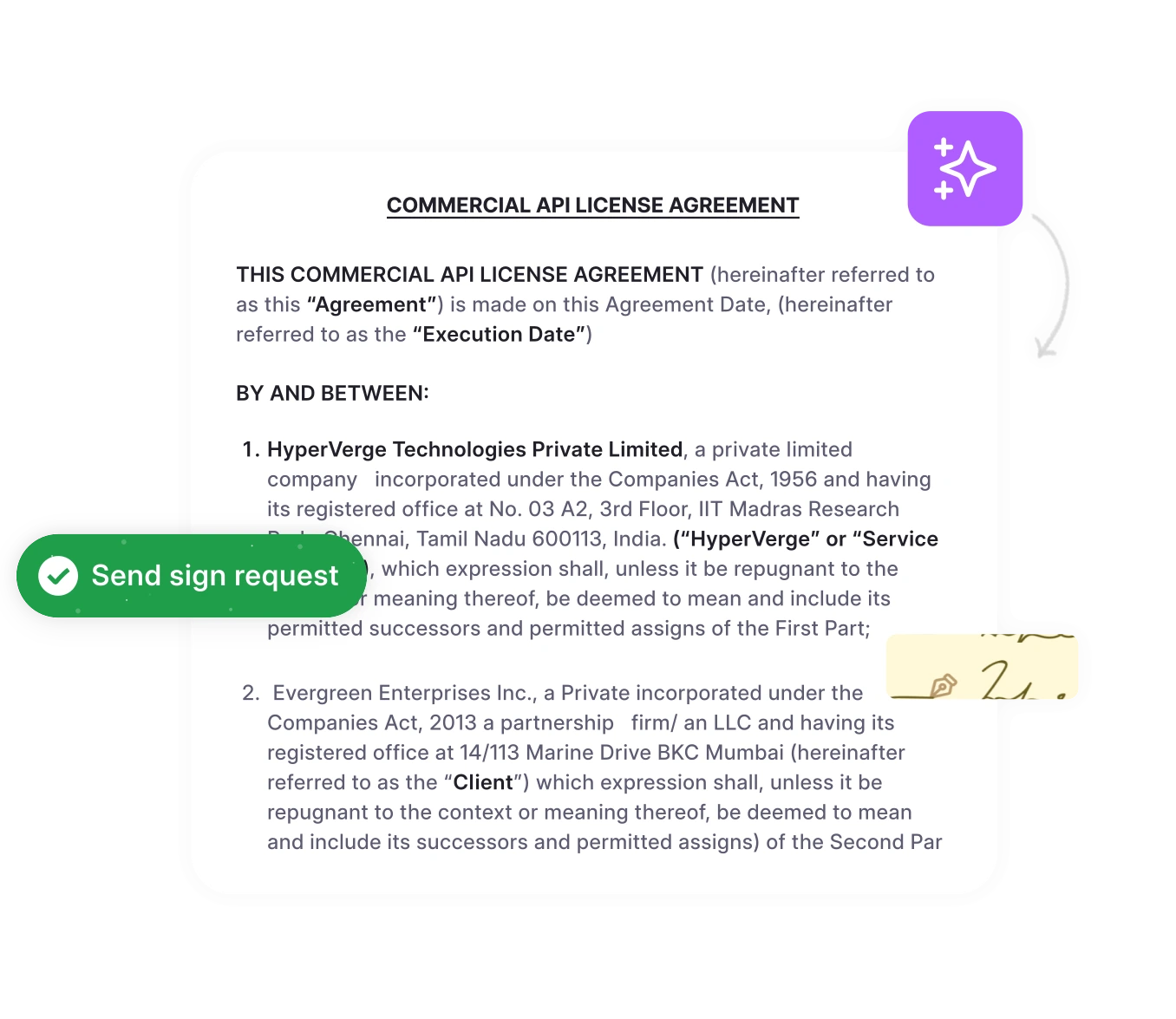



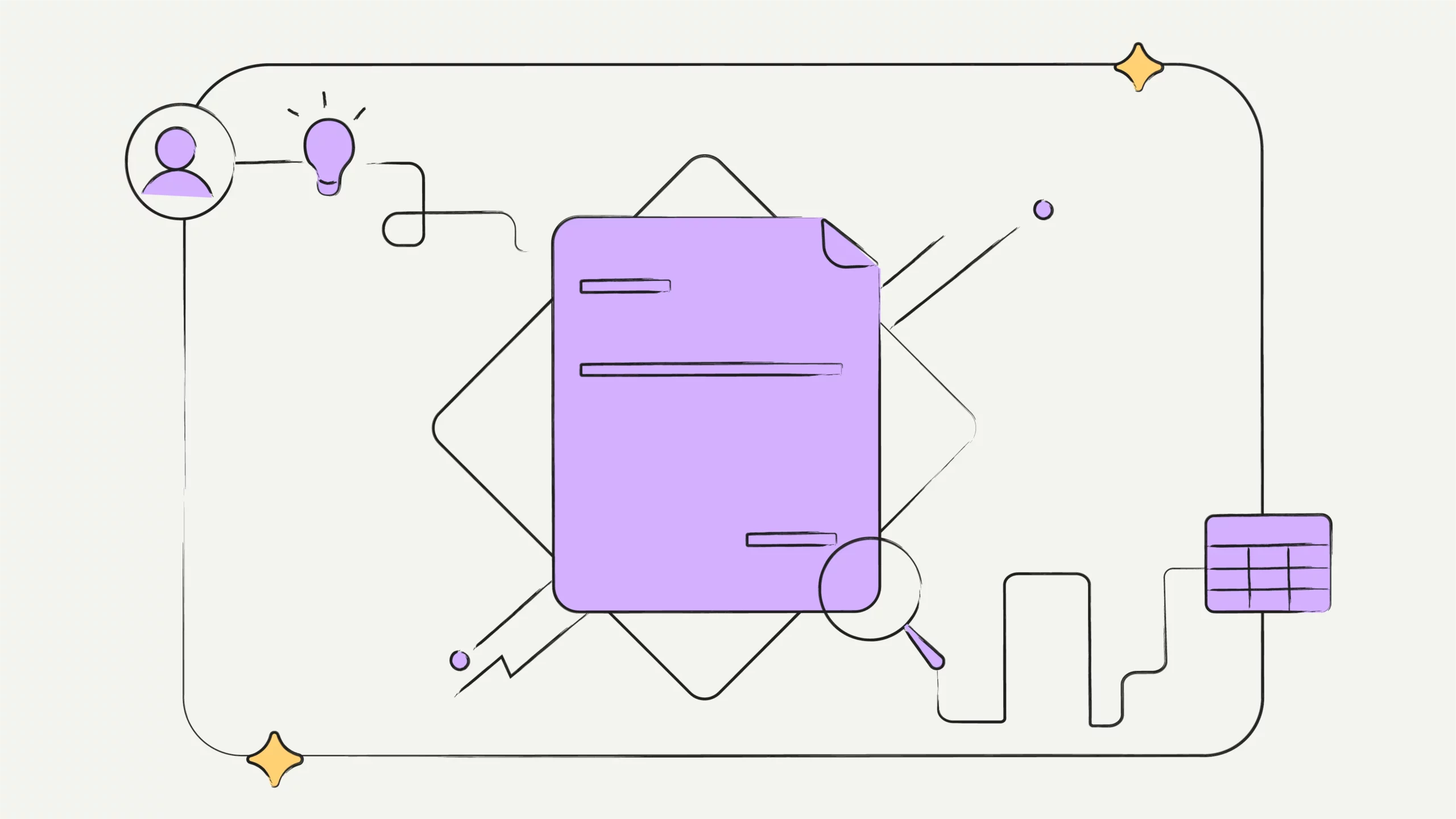
- Contract authoring is the process of creating legally binding agreements, from initial request through final approved draft. It covers clause selection, template management, stakeholder collaboration, and compliance checks before a contract is ready to sign.
- The three stages of contract authoring are drafting (using templates and clause libraries), negotiation and redlining (collaborative review across parties), and approval routing (internal sign-off before execution).
Contract authoring is the process of drafting, reviewing, and finalizing legally binding agreements between two or more parties. It covers everything from selecting the right template and clauses to routing the contract through internal approvals before it is ready to sign.
Legal teams that rely on manual contract authoring spend an average of two weeks per standard agreement. Automating the process with a CLM platform reduces that timeline by up to 80%, according to Forrester Research, while improving compliance and reducing errors across the entire contract portfolio.
As business moves at digital speed, contract authoring is getting smarter. The traditional in-house legal professional spent two weeks authoring a standard contract with fragmented templates, inconsistent clauses, and manual workflows. Today, it can be done in a few minutes with contract drafting software.
Getting CLM right at the contract authoring stage sets the stage for compliance, consistency, speed, and effective contract management reporting.
This blog examines:
- How the process was done traditionally and
- How AI-forward legal teams are streamlining
- How to reduce contract TAT significantly while improving accuracy and compliance.
What is contract authoring?
Contract authoring is the process of creating legally binding agreements, from initial request through final approved draft. Contract authoring covers clause selection, template management, stakeholder collaboration, compliance checks, and approval routing. The average Fortune 2000 company manages 20,000 to 40,000 active contracts at any given time, according to ProcurementTactics, making a structured authoring process essential for legal and procurement teams.
The contract authoring meaning is straightforward: it encompasses the complete process of creating legally binding agreements, from initial request through final approved draft. It translates business objectives agreed upon terms into enforceable legally binding documents while maintaining compliance, managing risk, and enabling commerce.
It aims to achieve three critical objectives:
1. Speed without sacrifice: Legal teams must match business velocity without compromising the organizational legal position.
2. Consistency at scale: Agreement must reflect current organizational policies, comply with legal regulations, and protect organizational interests.
3. Empowerment through self-service Business teams need autonomy in the contract creation process without legal bottlenecks or compliance risks.
What does the traditional contract authoring process look like?
The traditional contract authoring process follows three stages: drafting the initial agreement from templates or scratch, negotiating terms through manual redlining and email exchanges, and routing the contract through internal approval chains. Without automation, legal teams spend an average of two weeks per standard agreement. Each stage introduces version control risks, clause inconsistencies, and compliance gaps that compound as contract volume grows.
The manual contract authoring process creates inefficiencies that compound over time. It requires hours of repetitive drafting tasks. Understanding the contract authoring process step by step reveals where the biggest time losses occur and where automation delivers the fastest ROI.
Consider this scenario: A sales team needs a standard NDA for a prospect meeting. Without automated authoring sales emails legal with the request. Legal takes at least 30 minutes to locate the template. Manual review and approval process with involved parties begins on email chains and multiple versions. The final signature takes days, if not weeks.
Businesses with 1000 employees spend $2.5 to $3.5 million annually searching for lost contract documents or getting them redrafted
- Delayed deals from slow contract creation turnaround
- Increased errors on important contract data
- Compliance gaps from outdated contract templates
- Opportunity costs as lawyers handle routine work
This can further expose organizations to risk from version chaos, the lack of comprehensive documentation, and inconsistent positions.
Accelerate Your Contract Lifecycle
See how HyperStart empowers non-legal teams to expedite approvals with smarter workflow templates and greater control.
Book a DemoHow does automated contract authoring work?
| Factor | Manual contract authoring | Automated contract authoring |
|---|---|---|
| Drafting time | 1 to 2 weeks per standard agreement | Minutes using pre-approved templates |
| Clause management | Scattered across email, shared drives, and local files | Centralized clause library with version control |
| Compliance checks | Manual review by legal counsel | Automated checks embedded in workflow |
| Version control | Filename-based (“Contract_v3_FINAL_v2.docx”) | Automatic version tracking with audit trail |
| Approval routing | Email chains with manual follow-up | Configurable approval workflows with escalation rules |
| Error rate | Higher (inconsistent clauses, outdated terms) | Lower (standardized templates, AI risk flagging) |
| Annual cost (1,000 employees) | $2.5M to $3.5M in rework and search time | Fraction of manual cost with CLM platform |
Key components of effective centralization include:
- Pre-determined intake forms
- No code approval workflows
- Conditional rules for routing workflows
- Version control and comparison
- Intelligent contract authoring features like AI-suggested fallback positions for faster negotiation outcomes
- Compliance checks against playbooks
- Bulk self-serve contract generation capabilities
- Comprehensive audit trails for context
Workflow automation turns sequential bottlenecks into parallel processing streams. You can further track process metrics and optimize contract performance for increased deal velocity.
How does AI improve contract authoring?
AI transforms the contract authoring process from mundane drafting to proactive value creation.
4 legal counsels and 1 General Counsel manage a monthly workload of 180–250 contracts. With HyperStart’s workflow builder and AI-review capabilities, they could get comprehensive contract reviews highlighting 20 critical items in less than one minute, compared to the 4-6 hours previously required for manual review.
Building effective automated workflows:
| Approval Workflows | Traditional Process | Automated Process |
| Initial Request | Email to legal | Self-service intake form |
| Template Selection | Manual search | Pick from your library |
| Contract data Population | Manual entry | Auto-fill with a simple intake form |
| Risk Assessment | Manual individual and peer review | Automated playbook |
| Approval Routing | Email chains and Slack threads | Smart routing |
| Final Distribution | Manual sending | Automatic upon approval |
Why is contract authoring important for legal teams?
Contract authoring determines the legal, financial, and operational risk profile of every business relationship. Poorly authored contracts lead to ambiguous terms, compliance gaps, and disputes that cost organizations an average of 9.2% of annual revenue, according to World Commerce & Contracting. A structured authoring process ensures that every agreement meets regulatory requirements, protects both parties, and accurately reflects the negotiated terms.
- 2-minute contract creation time
- Less human error on important contract data
- Reduced legal risk
- Self-serve for non-legal teams
Self-serve doesn’t mean unsupervised. contract management software”>Contract management software documents complete audit trails while empowering business users, ensuring legal maintains oversight without becoming a bottleneck.
What are the best contract authoring tools?
The best contract authoring tools combine template libraries, clause management, AI-assisted drafting, and automated approval workflows in a single platform. For small to mid-sized businesses, HyperStart CLM offers full contract authoring with AI review that achieves 94% accuracy, deploys in 4 weeks, and costs significantly less than enterprise platforms. For larger organizations, Ironclad, Icertis, and Agiloft provide contract authoring as part of broader enterprise CLM suites.
When evaluating contract authoring software, legal teams should prioritize five capabilities: a centralized clause library with version control, AI-powered clause suggestions and risk scoring, configurable approval routing based on contract type and value, native integrations with CRM and e-signature tools, and real-time collaboration for redlining and negotiation.
Only 11% of businesses rate their contract processes as “very effective,” according to World Commerce & Contracting. Choosing the right authoring tool closes the gap between manual processes and the structured, compliant workflows that modern legal teams require.
What does intelligent contract authoring mean?
How do you implement contract authoring software?
Implementing contract authoring software requires four steps: auditing existing templates and clause libraries for standardization, configuring approval workflows based on contract type and risk level, integrating the CLM platform with existing tools (CRM, ERP, e-signature), and training legal and business teams on the new process. HyperStart deploys in 4 weeks, including workflow configuration and team onboarding.
The financial case for implementation is strong. Businesses with 1,000 employees spend $2.5 million to $3.5 million annually searching for lost contract documents or getting agreements redrafted, according to Procurement Tactics. A CLM platform eliminates these costs by centralizing all contracts, templates, and clauses in a searchable repository.
Setting up automated contract authoring involves the following steps. Choosing the right contract authoring tool starts with mapping your current workflow gaps, template volume, and integration requirements.
Next steps for your contract authoring workflow
Deal velocity determines competitive advantage. Organizations that can contract faster win more deals, launch initiatives sooner, and adapt to opportunities quickly.
maintaining quality and compliance with a streamlined contract lifecycle management process
The transformation from manual to intelligent contract authoring enables organizations to do commercial contracts at the speed of business.
Automate your contract authoring today
Ready to reduce the contract drafting process by 80% with improved accuracy and compliance? See it for yourself.
Book a DemoFrequently asked questions
- Ironclad
- SpotDraft
- Juro
Read more on Best Contract Compliance Management Software.



![8 Stages of Contract Lifecycle Management Process [A Detailed Guide]](https://www.hyperstart.com/wp-content/uploads/2024/05/Blog-70-white-scaled.webp)