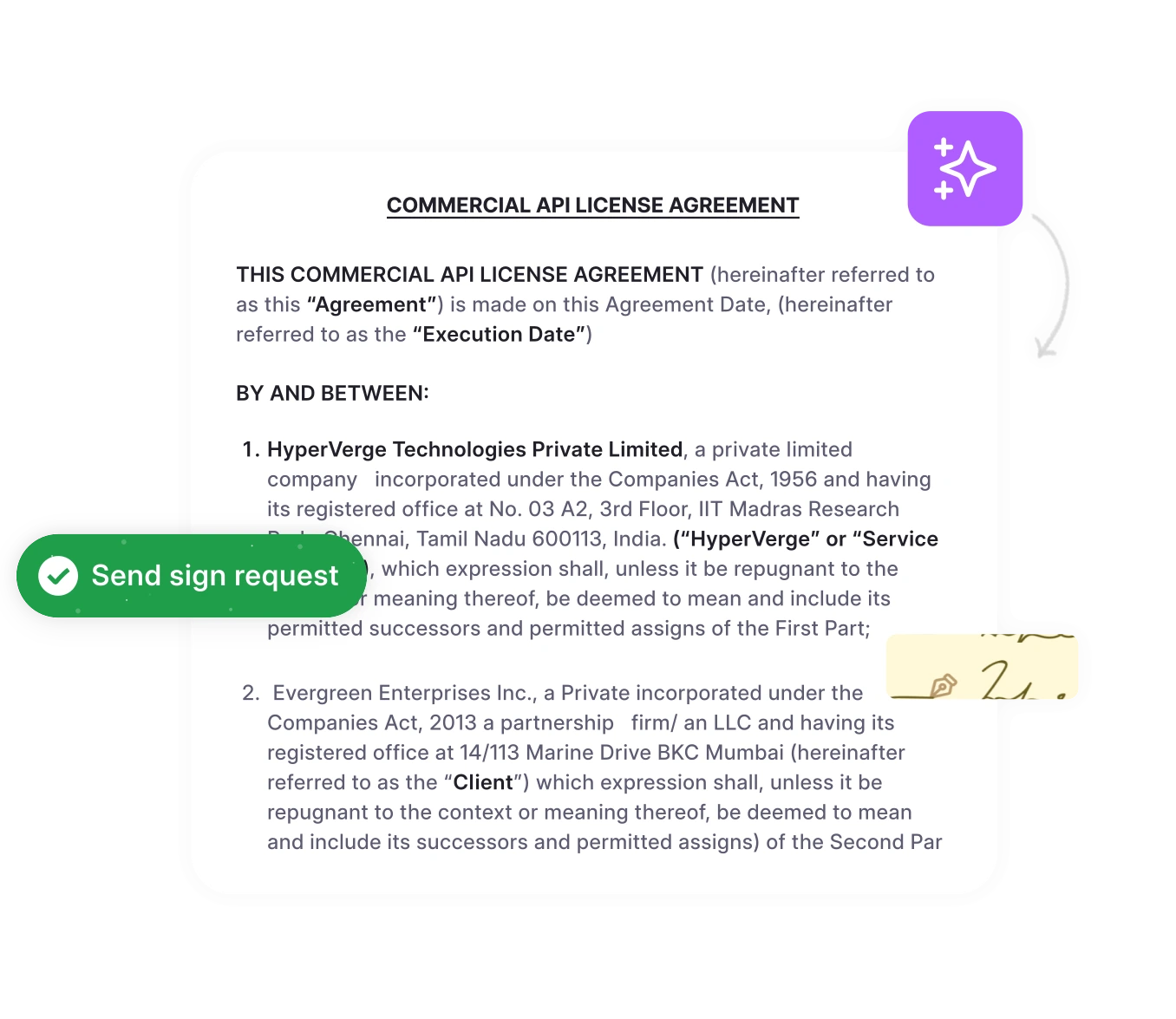




Most organizations still rely on manual processes that take months to complete. These teams review 1,000+ contracts scattered across email, shared drives, anhd filing cabinets while frequently missing critical obligations buried in lengthy documents. Performing due diligence on a company before major transactions shouldn’t mean weeks of legal teams drowning in paperwork.
This comprehensive guide covers essential due diligence types, the step-by-step investigation process, key business contexts, and common challenges teams face. Learn how AI-powered contract management software accelerates contract-heavy investigations while reducing risk.
What is due diligence?
Due diligence is the investigation process conducted before major business transactions to verify information accuracy, assess risks, and validate claims. The due diligence meaning originates from the Securities Act of 1933, which established “reasonable investigation” as a legal standard for broker-dealers to avoid liability for inadequate disclosure.
At its core, due diligence enables informed decision-making by uncovering potential issues before deals close. An M&A buyer might review a target company’s 5,000+ contracts, financial records, legal obligations, and operational processes to identify hidden liabilities.
Similarly, a venture capital investor evaluates a startup’s customer contracts, intellectual property ownership, and cap table before committing Series B funding. Both scenarios require systematic investigation across financial, legal, and operational areas, with contract management often representing the most time-intensive workstream.
Drowning in contract audit chaos?
AI-powered contract management extracts metadata from 1,000+ contracts in minutes. Get complete visibility into obligations, renewals, and key terms.
Book a DemoWhy is due diligence important?
Due diligence helps businesses avoid costly mistakes before making major decisions. Each reason below explains what due diligence protects you from and why it matters in practice.
1. To identify risks before they become liabilities
Due diligence helps uncover hidden financial, legal, and operational risks that are not always visible during negotiations. These risks often exist inside contracts, such as unfavorable renewal terms, undisclosed obligations, or pending disputes.
Identifying these issues early prevents post-deal surprises that can lead to financial loss or legal action.
2. To make decisions based on verified facts
Sellers and counterparties present information in the best possible light. Due diligence verifies whether those claims are accurate.
By reviewing contracts, records, and compliance data independently, decision-makers rely on evidence rather than assumptions. This reduces reliance on incomplete or biased disclosures.
3. To protect the deal value and pricing
Undisclosed liabilities directly affect valuation. Poor due diligence can result in overpaying for a business or asset.
Discovering contract risks, revenue dependencies, or compliance gaps allows buyers to renegotiate terms, adjust pricing, or walk away from high-risk deals.
4. To meet legal and regulatory expectations
Many laws and regulations require businesses to conduct a “reasonable investigation” before completing transactions.
Proper due diligence supports regulatory compliance and reduces exposure to penalties, lawsuits, and enforcement actions after closing.
“Due diligence is the lifeblood of any financial or legal dealing, as it forms the bedrock for informed decision-making and risk management.”
5. To avoid high-profile and costly failures
The risks of inadequate due diligence are well documented. HP’s $8.8 billion Autonomy write-down resulted from accounting issues that a deeper investigation could have identified.
Research from the CFA Institute shows that poor due diligence contributes to M&A failure rates between 70% and 90%.
6. To prevent long-term contract-related losses
Contracts often carry ongoing obligations that survive closing. Missed renewal dates, unfavorable auto-renewals, or hidden termination clauses can cost businesses.
Ensuring strong contract compliance during due diligence protects organizations from recurring financial leakage and operational disruption.
What are the different types of due diligence?
Business due diligence takes different forms depending on transaction type, industry, and specific risks. Most complex deals require multiple due diligence types working together for a comprehensive evaluation. Here’s how each type contributes to informed decision-making:
| Due Diligence Type | Primary Focus | Key Stakeholders | Contract Emphasis |
| Financial | Statements, cash flow, and debt | CPAs, analysts | Revenue contracts, payment terms |
| Legal | Contracts, litigation, compliance | Attorneys, specialists | All agreements (1,000+ documents) |
| Operational | Processes, supply chain, facilities | Operations consultants | Supplier contracts, SLAs |
| Commercial | Market position, customers, growth | Strategy consultants | Customer agreements, partnerships |
| IT/Technology | Infrastructure, security, systems | IT consultants | Software licenses, vendor contracts |
| HR | Employees, compensation, culture | HR consultants | Employment agreements, non-competes |
| Vendor/Supplier | Vendor stability, performance | Procurement teams | Vendor agreements, guarantees |
| M&A | Comprehensive multi-faceted | Cross-functional team | Complete portfolio review |
Type 1: Financial due diligence
Financial due diligence examines financial statements, revenue trends, profit margins, cash flow patterns, and debt obligations to verify a company’s economic health. Due diligence finance teams, typically CPAs and accounting firms, focus on validating numbers presented in confidential information memorandums while identifying financial red flags.
Key focus: Tax due diligence ensures compliance with tax regulations and uncovers potential liabilities.
Contract considerations: Reviewing revenue contracts to confirm reported income, analyzing payment terms that affect cash flow, and identifying outstanding financial obligations that impact valuation.
Type 2: Legal due diligence
Legal due diligence covers contracts, licenses, litigation history, regulatory compliance, intellectual property rights, and corporate documents to identify legal risks. Legal counsel and contract specialists conduct this investigation, which represents the most document-intensive workstream in most transactions. The focus includes pending lawsuits, contract disputes, and compliance gaps that create liability exposure.
Key challenge: Organizations typically face 1,000+ documents requiring weeks of manual review without a centralized contract repository.
Contract considerations: Effective legal contract management becomes critical when reviewing all customer agreements, vendor contracts, leases, partnership deals, and employment contracts. Regulatory due diligence within this category ensures adherence to industry-specific requirements.
Type 3: Operational due diligence
Operational due diligence evaluates business processes, supply chain management, production facilities, and operational efficiency to assess execution capability. Operations consultants and industry experts identify operational risks, integration challenges, and process inefficiencies that could impact post-transaction performance.
Key focus: Scalability limitations, technology dependencies, and resource constraints.
Contract considerations: Examining supplier contracts for dependency risks, service level agreements defining operational commitments, and facility leases affecting operational flexibility.
Type 4: Commercial due diligence
Commercial due diligence investigates market position, competitive landscape, customer base composition, and realistic growth potential beyond management projections. Strategy consultants and market analysts validate growth assumptions while assessing market opportunity and competitive threats.
Key activities: Due diligence research includes customer interviews, market sizing analysis, and competitive positioning studies.
Contract considerations: Customer contracts to validate revenue sustainability, assess customer concentration risks, and evaluate partnership agreements that enable market access.
Type 5: IT/Technology due diligence
IT due diligence examines information technology infrastructure, cybersecurity posture, data management practices, technical debt accumulation, and system integration requirements. PwC research reveals that 80% of dealmakers uncovered data security issues in their acquisition targets. IT consultants and security experts identify technology risks, assess integration complexity, and evaluate security vulnerabilities that could compromise operations.
Key concerns: Legacy system limitations, cybersecurity gaps, and scalability constraints.
Contract considerations: Software licenses to confirm compliance, SaaS agreements that represent ongoing commitments, technology vendor contracts affecting operational continuity, and data processing agreements governing information security.
Type 6: Human resources due diligence
Human resources due diligence reviews organizational structure, compensation programs, benefits packages, employee contracts, labor law compliance, and workplace culture fit. HR consultants and employment lawyers assess key person dependencies, compensation liabilities, retention challenges, and cultural compatibility.
Critical areas: Executive compensation arrangements, union relationships, and benefits obligations.
Contract considerations: Employment agreements for retention risks, change-of-control provisions, non-compete clauses that protect intellectual property, and severance obligations that impact transaction costs.
Type 7: Vendor/Supplier due diligence
Vendor due diligence assesses third-party vendor financial stability, historical performance, compliance status, and reliability for ongoing business relationships. Procurement teams and supply chain specialists focus on supply chain risks, vendor dependency exposure, contract performance history, and business continuity planning.
Critical focus: This investigation becomes essential when key suppliers represent single points of failure.
Contract considerations: Strong vendor contract management practices enable systematic evaluation of vendor agreements, service contracts with defined deliverables, performance guarantees protecting the buyer, and penalty clauses incentivizing compliance.
Type 8: M&A-specific due diligence
M&A due diligence represents the most comprehensive investigation type, combining financial, legal, operational, commercial, and cultural assessments before mergers or acquisitions. Cross-functional teams, including internal stakeholders and external advisors, collaborate on deal valuation, integration planning, synergy identification, and comprehensive risk assessment.
Complexity factor: This holistic approach requires coordinating multiple workstreams simultaneously while maintaining aggressive deal timelines.
Contract considerations: Complete contract portfolio review covering revenue agreements, vendor commitments, real estate leases, IP licenses, and employment contracts that collectively define the target company’s obligations and opportunities.
What is the due diligence process?
The due diligence process follows structured steps that vary by transaction complexity and industry. Understanding these due diligence process steps helps organizations conducting due diligence avoid common pitfalls while maintaining comprehensive coverage.
Most transactions require 30-90 days for thorough investigation, depending on company size and deal complexity.
Step 1: Planning and scoping
Objective: Define investigation scope, timeline, budget, and success criteria before work begins.
Execution: Leadership teams identify critical risk areas, prioritize investigation topics based on deal type, establish aggressive but realistic timelines, and create a comprehensive due diligence checklist.
The contract focus: Determining which agreement types require detailed review and identifying high-value contracts demanding immediate attention. Teams establish contract review criteria aligned with deal objectives.
Step 2: Team assembly
Objective: Build cross-functional due diligence teams with appropriate expertise for identified risk areas.
Execution: Organizations engage internal stakeholders across legal, finance, operations, and IT departments while retaining external advisors, including accounting firms, law firms, and industry consultants.
The contract focus: Assigning contract review responsibilities to legal specialists and designating contract management system administrators. Teams ensure adequate resources for high-volume document processing.
Step 3: Information request
Objective: Request comprehensive documentation from the target company covering all investigation areas.
Execution: Buyers submit detailed information request lists organized by functional area, specify required document formats and delivery timelines, and establish secure information exchange protocols.
The contract focus: Requesting complete contract portfolios covering all agreement types and demanding contract metadata spreadsheets with key terms. Buyers require copies of all amendments, exhibits, and related correspondence.
Step 4: Data room setup
Objective: Establish a secure virtual data room for confidential information sharing between parties.
Execution: Target companies organize documents into logical folder structures, upload requested materials with appropriate access controls, and maintain detailed activity logs tracking reviewer access.
The contract focus: Segregating contracts by type and materiality while leveraging contract data extraction technology to digitize legacy agreements. Teams implement searchable contract repositories, enabling efficient due diligence investigation.
Step 5: Document review
Objective: Systematically analyze all provided documentation to identify risks, validate claims, and assess opportunities.
Execution: Teams review financial statements, legal documents, operational reports, and customer data while documenting findings in centralized databases.
The contract focus: Thorough contract review examining key terms, including pricing, renewal dates, and termination provisions. Teams analyze liability caps and change-of-control clauses that directly impact transaction value.
Step 6: Financial analysis
Objective: Validate financial performance, assess working capital requirements, and identify potential adjustments to purchase price.
Execution: Financial analysts reconstruct earnings before interest, taxes, depreciation, and amortization (EBITDA), analyze historical financial trends, validate revenue recognition practices, and quantify one-time expenses.
The contract focus: Analyzing revenue contracts to validate reported income and reviewing vendor contracts affecting cost structure. Teams utilize contract analysis to identify pricing trends and renewal patterns impacting future performance.
Step 7: Legal assessment
Objective: Identify legal risks, including litigation exposure, regulatory compliance gaps, and problematic contract terms.
Execution: Legal teams review litigation history, assess intellectual property ownership, evaluate regulatory compliance status, and identify material legal issues requiring disclosure or remediation.
The contract focus: Examining contract enforceability under applicable law and identifying unfavorable terms requiring renegotiation. Teams assess change-of-control provisions that could terminate valuable customer relationships.
Step 8: Operational evaluation
Objective: Assess operational capabilities, identify integration challenges, and validate scalability assumptions.
Execution: Operations experts evaluate production facilities, assess supply chain resilience, review technology infrastructure, and identify operational improvement opportunities.
The contract focus: Covering supplier contracts to assess supply chain dependencies and facility leases affecting operational flexibility. Teams review service level agreements defining performance obligations that must continue post-transaction.
Step 9: Risk identification and mitigation
Objective: Systematically document identified risks, quantify potential financial impact, and develop mitigation strategies.
Execution: Teams categorize risks by severity and likelihood, estimate potential financial exposure for material issues, propose risk mitigation strategies including purchase price adjustments, and identify deal-breaker issues requiring resolution before closing.
The contract focus: Implementing contract tracking systems, monitoring critical obligations, and establishing processes for ongoing compliance monitoring. Teams develop transition plans for problematic agreements requiring immediate attention post-acquisition.
Step 10: Final report and recommendations
Objective: Synthesize findings into a comprehensive due diligence report supporting an informed investment decision.
Execution: Teams prepare an executive summary highlighting critical findings, document detailed investigation results organized by functional area, quantify identified risks with estimated financial impact, and provide clear proceed/renegotiate/abandon recommendations.
The contract focus: Summary schedules listing all material contracts by type and highlighting problematic agreements requiring renegotiation. Teams quantify unfavorable contract terms impacting valuation and recommend post-closing contract management improvements for the acquired entity.
Buried in contract chaos during due diligence?
AI-powered contract management platforms centralize all agreements, extract key terms automatically, and provide instant visibility across your entire contract portfolio.
Book a DemoHow does due diligence apply in different business contexts?
Due diligence applications vary significantly across different business scenarios, each requiring tailored approaches addressing specific risk profiles. Understanding context-specific requirements helps organizations allocate resources effectively while maintaining appropriate investigation depth.
Context 1: M&A transactions
Acquisition due diligence represents the most comprehensive investigation when companies evaluate merger or acquisition targets. Buyers conducting business due diligence on a company face compressed timelines, typically 30-90 days, while analyzing financial performance, legal compliance, operational capabilities, and cultural fit simultaneously.
Key challenge: M&A due diligence teams coordinate multiple workstreams, including financial audits, legal reviews, and operational assessments, to build complete target profiles.
Contract considerations: Reviewing hundreds or thousands of customer agreements, vendor contracts, and employment contracts that transfer with the acquisition. Effective sales contract management becomes critical when evaluating customer portfolios, assessing revenue quality, and validating growth projections, justifying acquisition premiums.
Context 2: Startup funding and investment
Venture capital and private equity investors perform focused due diligence, emphasizing growth potential, market opportunity, and management team capability over exhaustive operational reviews. Investment due diligence typically spans 2-4 weeks with emphasis on financial projections, intellectual property ownership, and existing investor rights.
Key focus: Investors scrutinize customer contracts to validate revenue sustainability, review vendor agreements to assess cost structure, and examine employment contracts to evaluate key person dependencies.
Common challenge: Early-stage companies often lack sophisticated contract management systems. Startups preparing for fundraising benefit from organizing contract portfolios proactively and maintaining current contract metadata to accelerate investor due diligence.
Context 3: Vendor selection and management
Organizations evaluating new vendors or renewing existing relationships conduct vendor due diligence, assessing financial stability, operational capability, compliance status, and business continuity planning. Procurement contract management teams focus on vendor financial health, service delivery track records, and cybersecurity practices when critical operations depend on third-party suppliers.
Investigation intensity: Due diligence scales with vendor criticality and spend volume, ranging from basic financial checks for low-risk suppliers to comprehensive assessments for strategic partnerships.
Contract considerations: Service level agreements defining performance expectations, liability provisions protecting the buyer, termination rights enabling flexibility, and data security requirements ensuring information protection.
Context 4: Real estate transactions
Real estate due diligence examines property condition, title clarity, zoning compliance, environmental contamination, and financial performance when buyers evaluate commercial property investments. The due diligence period, typically 30-60 days following offer acceptance, allows buyers to inspect properties, review documentation, and negotiate price adjustments before closing.
Investigation scope: Property inspections, title searches, environmental assessments, and lease reviews for income-producing properties.
Contract considerations: Existing tenant leases affecting property cash flow, service contracts that transfer with property ownership, and seller representations defining recourse for undisclosed issues. Commercial investors analyze lease expiration schedules and tenant creditworthiness to validate property valuations.
“Carrying out proper due diligence before signing off on key transactions may protect firms from the potential for financial losses and reputational harm.”
What are the common challenges in due diligence?
Organizations conducting due diligence encounter recurring obstacles that delay timelines, increase costs, and compromise investigation quality. Understanding these contract management challenges enables proactive mitigation strategies that streamline the entire process.
Challenge 1: Document chaos and scattered repositories
Contracts scattered across email, SharePoint, file servers, and physical filing cabinets create immediate due diligence obstacles. Teams waste valuable time hunting for agreements, struggle to confirm they have complete documentation, and risk overlooking critical contracts entirely during compressed investigation timelines.
Solution:
Implementing centralized contract organization systems before transactions begin. Organizations benefit from migrating contracts to unified repositories with consistent folder structures, standardized naming conventions, and comprehensive indexing, enabling rapid document retrieval.
Challenge 2: Time constraints and aggressive deadlines
Due diligence timelines compress as deal competition intensifies, leaving teams 30-45 days to complete investigations requiring 90+ days under normal circumstances. Compressed schedules force incomplete reviews, increase error risk, and create pressure to accept target company representations without adequate verification.
Solution:
Prioritizing investigation areas by risk and materiality while leveraging technology for high-volume document processing. Teams focus limited time on the highest-risk areas first, deploy contract review tools to accelerate analysis, and establish clear criteria for acceptable documentation gaps versus deal-breaker issues.
Challenge 3: Manual contract review bottlenecks
Legal teams reviewing hundreds or thousands of contracts manually create critical path bottlenecks that delay entire transactions. Manual processes struggle to scale with contract volume, introduce inconsistency across reviewers, and fail to capture data systematically for analysis.
Solution:
Deploying AI contract review technology that processes agreements in hours rather than weeks. AI systems extract key terms consistently, flag non-standard provisions automatically, and generate structured data enabling rapid analysis of contract portfolios at scale.
Challenge 4: Incomplete or missing documentation
Target companies frequently lack complete contract documentation, missing signed agreements, amendments, or exhibits that materially affect deal terms. Missing documents create valuation uncertainty, expose buyers to unknown risks, and trigger purchase price disputes when issues surface post-closing. Incomplete records also prevent accurate tracking of missed renewal dates that could result in unfavorable automatic renewals.
Solution:
Establishing comprehensive document request lists early and following up persistently on missing items. Buyers implement systematic tracking of document completeness, escalate gaps to executive sponsors, and prepare thorough due diligence reports documenting all findings. Consider purchase price holdbacks protecting against undisclosed obligations from incomplete documentation.
Challenge 5: Data extraction from legacy contracts
Paper contracts and scanned PDFs resist efficient data extraction, forcing manual review even when organizations have centralized repositories. Legacy agreement formats lack searchability, prevent automated analysis, and require expensive attorney time for basic information gathering.
Solution:
Utilizing AI-powered contract data extraction technology that digitizes legacy agreements and captures key terms automatically. Modern platforms process paper and PDF contracts with 99% accuracy, building searchable databases from historical agreements and enabling rapid due diligence investigation.
Challenge 6: Lack of standardization
Contract format variations across departments, time periods, and counterparties complicate systematic review and comparison. Non-standard agreement structures hide critical terms, prevent efficient analysis, and increase the risk of overlooking unfavorable provisions during compressed due diligence timelines.
Solution:
Implementing contract templates and playbooks that standardize future agreements while flagging non-standard provisions in existing contracts. Organizations benefit from documented fallback positions, automated deviation tracking, and systematic escalation processes ensuring appropriate review for non-standard terms.
What are due diligence best practices?
Successful due diligence execution requires systematic approaches that balance thoroughness with efficiency. These contract management best practices help organizations maximize investigation quality while minimizing timeline and cost overruns.
1: Establish centralized contract repositories early
Organizations benefit enormously from centralizing contract repositories before transaction announcements rather than scrambling during compressed due diligence timelines. Proactive migration consolidates agreements from scattered locations into unified systems with consistent organization, standardized metadata, and comprehensive indexing. Early centralization enables instant data room population when transactions arise, eliminates weeks of document hunting during due diligence, and demonstrates operational maturity that increases buyer confidence.
2: Implement AI-powered contract automation
AI contract management platforms transform due diligence from manual, weeks-long processes into automated, hours-long workflows that scale with transaction complexity. AI systems extract key terms from thousands of contracts automatically, identify non-standard provisions requiring attention, and generate structured data enabling rapid portfolio analysis. Organizations deploying contract automation before transactions accelerate due diligence timelines dramatically, reduce legal review costs significantly, and improve data accuracy compared to manual extraction processes.
3: Maintain comprehensive contract metadata
Current, accurate contract metadata transforms due diligence from document review exercises into data analysis projects that provide genuine insights. Organizations maintaining structured data covering counterparties, effective dates, renewal terms, payment obligations, and liability provisions enable rapid filtering, sorting, and analysis during compressed investigation timelines. Comprehensive metadata allows instant responses to buyer questions, facilitates risk identification through portfolio analysis, and supports data-driven negotiation positions backed by concrete evidence.
4: Conduct regular contract audits
Periodic contract audits before transactions ensure documentation completeness, identify missing agreements or amendments, and surface problematic terms requiring remediation. Regular reviews validate that contract repositories contain current versions, all amendments are properly filed, and metadata accuracy remains high. Organizations conducting quarterly audits discover issues with time for correction rather than explaining gaps under transaction pressure, maintain investor-ready contract portfolios continuously, and reduce due diligence preparation time dramatically.
5: Standardize contract review processes
Documented contract review processes with clear escalation criteria, defined approval authorities, and standardized deviation handling create consistency that accelerates due diligence. Process standardization ensures contracts follow predictable formats that buyers understand quickly, reduces non-standard provisions that trigger extended review, and maintains audit trails documenting approval rationale. Organizations with mature contract processes demonstrate operational sophistication that differentiates them from competitors and commands premium valuations.
6: Prepare transaction readiness materials
Transaction-ready organizations maintain current contract summaries, pre-prepared data room structures, and documented responses to common due diligence questions. Preparation includes executive contract summaries highlighting material terms, organized folders matching buyer expectations, and FAQ documents addressing predictable questions. Readiness materials enable rapid due diligence responses, reduce management distraction during transactions, and signal operational maturity that builds buyer confidence throughout the negotiation process.
Streamline due diligence with HyperStart
Due diligence success depends on efficient contract management processes that provide instant visibility, accurate data, and comprehensive documentation. Organizations conducting frequent transactions or preparing for fundraising, acquisitions, or exits benefit enormously from AI-powered contract automation that transforms weeks-long manual reviews into hours-long automated workflows.
HyperStart’s AI-powered contract lifecycle management platform centralizes scattered agreements, extracts key terms automatically with accuracy, and provides instant searchability across entire contract portfolios. Our technology eliminates document hunting, accelerates due diligence timelines dramatically, and delivers the organized contract intelligence buyers demand during compressed investigation periods.
Transform contract chaos into organized operations. See how HyperStart streamlines your due diligence process.
Ready to accelerate your next transaction?
Modern AI-powered contract management eliminates weeks of manual document review, providing instant visibility across your entire agreement portfolio for faster, more confident due diligence.
Book a Demo