


If you’re a lawyer still spending six hours reviewing a single contract, we need to talk. If you’re in the critical mass that thinks GenAI cannot do everything you thought it would do, this blog is for you too.
The difference between a mediocre AI output and one that actually saves you hours, is prompt engineering.
In this guide, we’re breaking down the practical AI prompts that are transforming how legal teams handle everything from contract drafting to ediscovery. We’ll show you how to move from manual drudgery to meaningful strategic work and reclaim hours of your day in the process.
Key takeaways
- Automate contract lifecycle management (CLM) and streamline matter management, ediscovery, and routine legal workflows
- Master prompt engineering techniques that reduce review time from hours to minutes
- Build repeatable AI playbooks that scale across your entire legal team
- Navigate AI limitations responsibly while maintaining data security and compliance
Why prompt engineering is the new essential legal skill
Lawyers are not necessarily in a hurry to embrace technology. But AI has changed the game so dramatically that ignoring it isn’t an option anymore. The lawyers who understand how to engineer effective prompts are the ones who’ll thrive in the next decade.
Think about it this way: You wouldn’t walk into court unprepared, right? You’d have your facts organized, your arguments structured, and your questions ready. Prompting AI works best when you can cross-examine safely with material only you are privy to. The quality of what you get out depends entirely on what you put in. Garbage in, garbage out.
Moving beyond drafting
Generic prompts lead to generic (and risky) results. Period.
When you ask AI to “draft an agreement,” you’re basically asking it to guess what you need. What jurisdiction? What industry? What specific risks are you trying to mitigate? Without that context, you’re getting boilerplate garbage that could expose your client to unnecessary liability.
Prompting better means being specific about:
- Jurisdiction: Are we talking Delaware corporate law or California employment regulations?
- Use case: Is this a vendor agreement, employment contract, or licensing deal?
- Scope of research: Do you need case law from the past five years or the past decade?
- Terms, synonyms, and NLP keywords: The more precise your language, the better the output
- Sources and knowledge docs: Reference specific regulations, your company’s playbook, or industry standards
Best practices for a powerful prompt
Imagine it as a witness you’re cross-examining. Ask the right questions with the right context, and you’ll get exactly what you were looking for. Context really matters, and you’re never “divulging” too much or being too verbose.
Here’s what separates good prompts from great ones:
- Specify a role or persona. “Act as a senior M&A attorney with 15 years of experience in SaaS acquisitions” gives AI a framework for the type of analysis you need.
- Establish context and purpose. Don’t just ask for a clause. Explain why you need it, what risks you’re addressing, and how it fits into the broader agreement.
- Declare conditions, precedents, and presuppositions. If your client operates in a regulated industry or has specific risk tolerances, state that upfront.
- Privacy first. Don’t enter confidential information, client names, or anything that could waive privilege. This isn’t negotiable.
- Precision over training. Keep models from training on your data. Prioritize tools that encrypt, and remove sensitive info from prompts before hitting enter.
- Combat hallucinations. Break complex requests down by steps. AI performs better when you give it a clear roadmap rather than one massive, ambiguous question.
- Set the tone of voice. Specify whether you need formal contract language, plain English for clients, or persuasive brief-writing.
- Test and refine. Prompting isn’t one-and-done. Follow up, iterate, and refine until the output matches your standards.
Pitfalls to avoid
- Don’t drown AI in verbose, inconsequential information. More isn’t always better. Focus on the details that actually matter to the legal analysis.
- Watch out for biases. Primacy bias (over-relying on the first result), recency bias (only considering recent case law when older precedents matter), majority bias (assuming the most common approach is the best), and topic clustering (lumping unrelated issues together).
- Question assumptions. Just because AI suggests something confidently doesn’t mean it’s right. Always validate.
The economics of efficiency: From 6 hours to 1 minute
Here’s a real-world example that should make every in-house counsel sit up and pay attention.
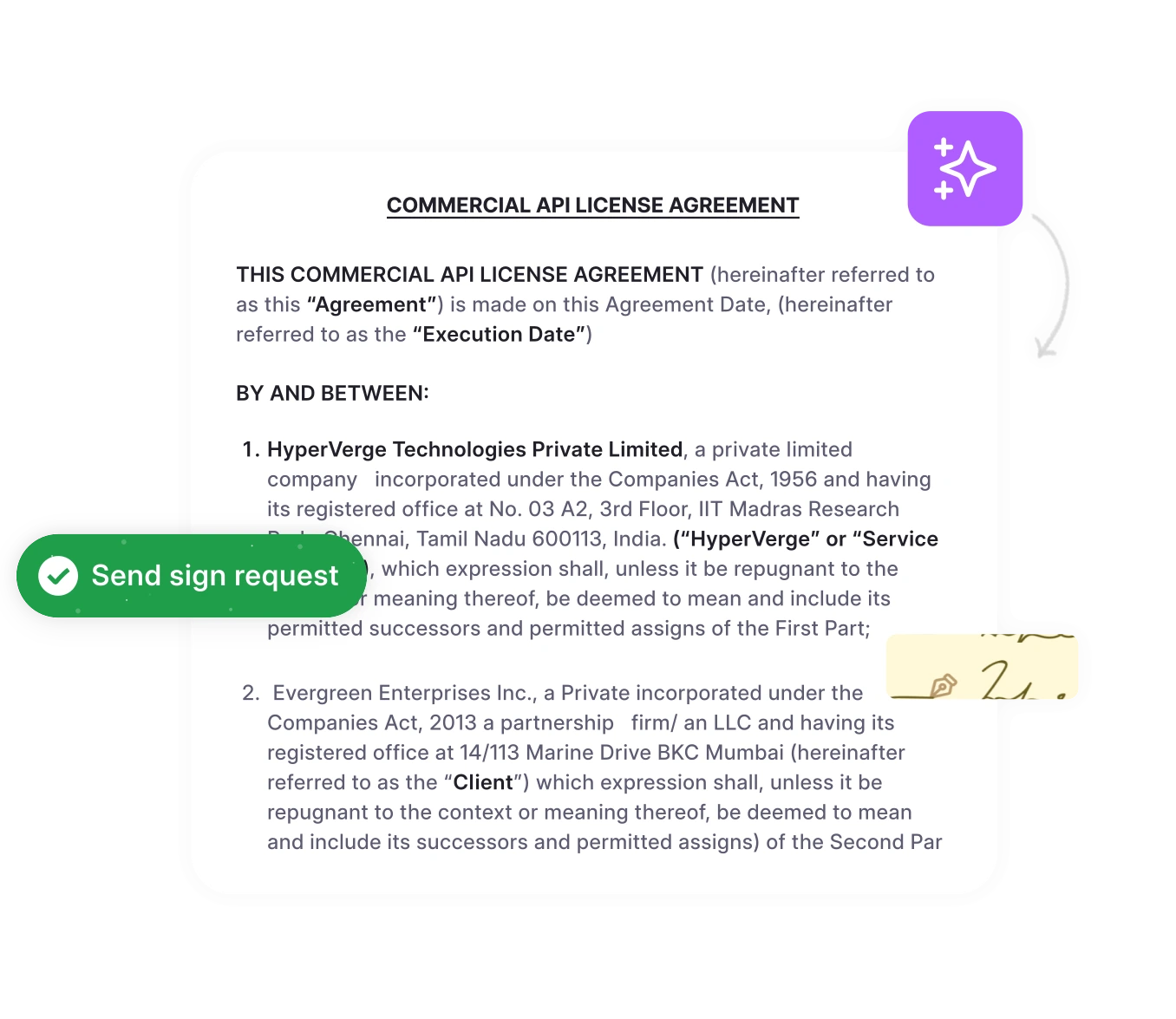
Traditional contract review for a complex vendor agreement might take a senior attorney six hours, reading every clause, cross-referencing your company’s playbook, flagging deviations, and drafting redlines. With targeted AI prompting and AI-redlining tools, that same first-pass review takes under a minute.
You’re eliminating the tedious parts so that attorneys can focus on strategic counsel, risk assessment, and high-stakes negotiations. That’s the difference between spending your day as a human contract reader and actually practicing law.
The AI super-prompt framework for legal professionals
Now let’s get tactical. Here’s the framework that consistently produces high-quality legal outputs.
1. Context is king: Assigning a role to the AI
Start every prompt by telling AI exactly who it should be: “Act as a senior legal counsel for a Fortune 100 firm specializing in data privacy compliance…”
Pro tip: If you’ll need to use the same context multiple times, add this information to your model settings so it applies to future questions automatically. Most enterprise legal automation platforms let you save custom instructions.
2. Defining the output: IRAC and structured summaries
Lawyers think in frameworks. So should your AI.
Ask AI to follow IRAC (Issue, Rule, Application, Conclusion) formats for legal analysis. This ensures you get structured, logical outputs instead of rambling paragraphs.
Pro tip: The industry is moving from non-specialized AI to AI trained on legal materials, designed to tackle specific, complex legal problems. If legal-specific AI isn’t on your org budget, free models designed for coding perform very well in deductive legal reasoning, though the writing style may have less finesse.
Practical AI prompts for lawyers: core use cases
Create a shared prompt library with your team’s best prompts to boost collective learning and efficiency. When someone cracks the code on a particularly effective prompt, everyone benefits.
Even though AI-generated citations can be wrong, ask for them anyway to help you validate the model’s output. It’s easier to fact-check a citation than to research from scratch.
Ready to go from manual to meaningful?
Accelerate your contract reviews and reclaim your strategic impact.
Book a DemoContract management
Streamline intake to AI contract drafting to renewal tracking and strategy.
Drafting and clause generation
- Draft and cite compliant terms in current context
- De-jargonize legalese for non-legal stakeholders
- Draft legal briefs with proper formatting and citations
- Draft direct examination questions based on case facts
First-pass contract review and redlining
Prompt examples:
1️⃣ Legal Intake / Matter Scoping
# Act as senior in-house counsel for a [industry] company operating in [jurisdiction].
# Review the following contract request: [insert summary].
# Identify legal issues, risk level, required stakeholders, missing information, and recommended next steps. Provide a structured intake assessment.
2️⃣ Drafting & Clause Generation
# Act as senior commercial counsel for a [industry] company in [jurisdiction].
# Draft a [clause type] for a [agreement type].
# Must align with market-standard terms, protect the company as [customer/vendor], and address [specific risks].
# Include bracketed fallback language for negotiation.
3️⃣ Compliant Clause with Citations
# Act as regulatory counsel in [jurisdiction].
# Draft a compliant [clause type] addressing [regulatory requirement].
# Cite applicable statutes/regulations and ensure alignment with current law.
4️⃣ Plain-English Version for Business Teams
# Act as legal operations counsel.
# Rewrite the following clause in plain English for non-legal stakeholders while preserving legal effect.
# Highlight business impact and operational obligations.
AI excels at this type of first-pass review:
- Playbooks with your memory in living contracts
- Test, try, and ratify better terms for better deals
- Conclude and close without risk or delay
- Summarize complex regulations and statutes
Modern AI contract negotiations platforms can highlight critical items in seconds, letting you focus on the provisions that actually matter.
Prompt examples:
1️⃣ AI-Redlining Against Playbook
# Act as contracts counsel applying our internal playbook.
# Review this contract against our playbook. Redline anything outside our standards. Flag red flags. Suggest compromises for negotiables. List all changes in a summary table.”
2️⃣ First-Pass Contract Review (Risk-Focused)
# Act as senior contracts counsel.
# Identify 20 critical items and deviations from our standard indemnification clause in the attached vendor agreement. Flag any unlimited liability exposure and payment terms exceeding Net 60.
2. Strategy and analytics
- Configure charts for contract performance then, now, and forever
- Command your entire contract universe with natural language queries
- Recapture downtimes and dollars before auto-renewals bite you
- Unloophole strategy, uncomplicate logic—what are the benefits and risks of pursuing this legal strategy?
Prompt examples:
1️⃣ Risk Strategy Evaluation
# Act as general counsel advising executive leadership.
# Scenario: [insert facts].
# Review this contract for: vague terms, missing definitions, unilateral rights, escape clauses, conflicting provisions, legal risks, regulatory exposure, reputational risk, financial impact of pursuing this strategy, and liability gaps. List each issue with risk level and recommended fix. Provide a recommendation with risk mitigation options.
2️⃣ Litigation Exposure Analysis
# Act as head of litigation strategy.
# Based on these facts: [insert summary], assess likelihood of claim success, potential damages exposure, settlement posture, and early resolution strategy.
3️⃣ Contract Portfolio Risk Scan
# Act as legal operations lead.
# Analyze this contract portfolio summary.
# Identify concentration risks, renewal cliffs, unfavorable liability caps, termination constraints, and revenue-at-risk exposure. Provide executive-level insights.
4️⃣ Renewal & Revenue Risk Analysis
# Act as commercial strategy counsel.
# Review upcoming renewals.
# Identify contracts with pricing risk, auto-renew traps, termination notice deadlines, and renegotiation leverage opportunities.
5️⃣ Pattern & Trend Analytics (CLM Data)
# Act as legal analytics counsel.
# Analyze contract metadata (cycle time, redline frequency, fallback positions, approval bottlenecks).
# Identify inefficiencies, negotiation bottlenecks, and workflow improvements to reduce contract TAT.
Stop chasing signatures and start driving strategy.
See how HyperStart turns hours of review into seconds.
Book a DemoNavigating the limitations: What AI can and cannot do
Let’s be realistic here. AI is powerful, but it’s not likely to replace legal judgment.
1. AI as a rote-work engine, not a strategic advisor
AI excels at routing approvals, tracking metadata, drafting standard clauses, and comparing contract versions. What it doesn’t do? Replace contextual judgment, strategic decision-making, or the kind of nuanced negotiation that requires reading the room.
Think of AI contract management as your associate who handles the grunt work, not the partner who closes the deal.
2. Guardrails for responsible AI use
Maintaining data security and SOC2 compliance while prompting is table stakes.
Always use enterprise-grade AI platforms with robust audit logs, version control, and encryption. Generic consumer tools like standard ChatGPT don’t cut it for sensitive legal work. You need audit-ready workflows and automated approvals that maintain privilege and protect confidential information.
From “maverick” prompting to scalable systems
Individual lawyers getting better at prompting is great. But you know what’s better? Turning those individual wins into team-wide efficiencies.
1. Building AI playbooks for repeatable tactics
Transition from one-off prompts to standardized workflows. Document the prompts that work, create templates for common scenarios, and build a knowledge base that compounds over time.
When you systematize prompt engineering, you’re not just making one person more efficient. You’re scaling best practices across your entire legal department.
2. Integrated ecosystems: prompting where you work
The value of AI that works within Word and Outlook can’t be overstated. Context-switching kills productivity. The best contract AI tools integrate directly into your existing workflows so you never have to leave the document you’re working on.
Final thoughts: empowering legal to think bigger
AI prompts aren’t about replacing lawyers. They’re about liberating lawyers from work that doesn’t require a JD.
When you spend less time on first-cut reviews, drafting efficiency, and version control, you spend more time on what actually matters: strategic counsel, risk mitigation, and the kind of high-value work that makes a real difference for your clients or company.
The lawyers who master prompt engineering today are the ones who’ll lead their teams tomorrow.