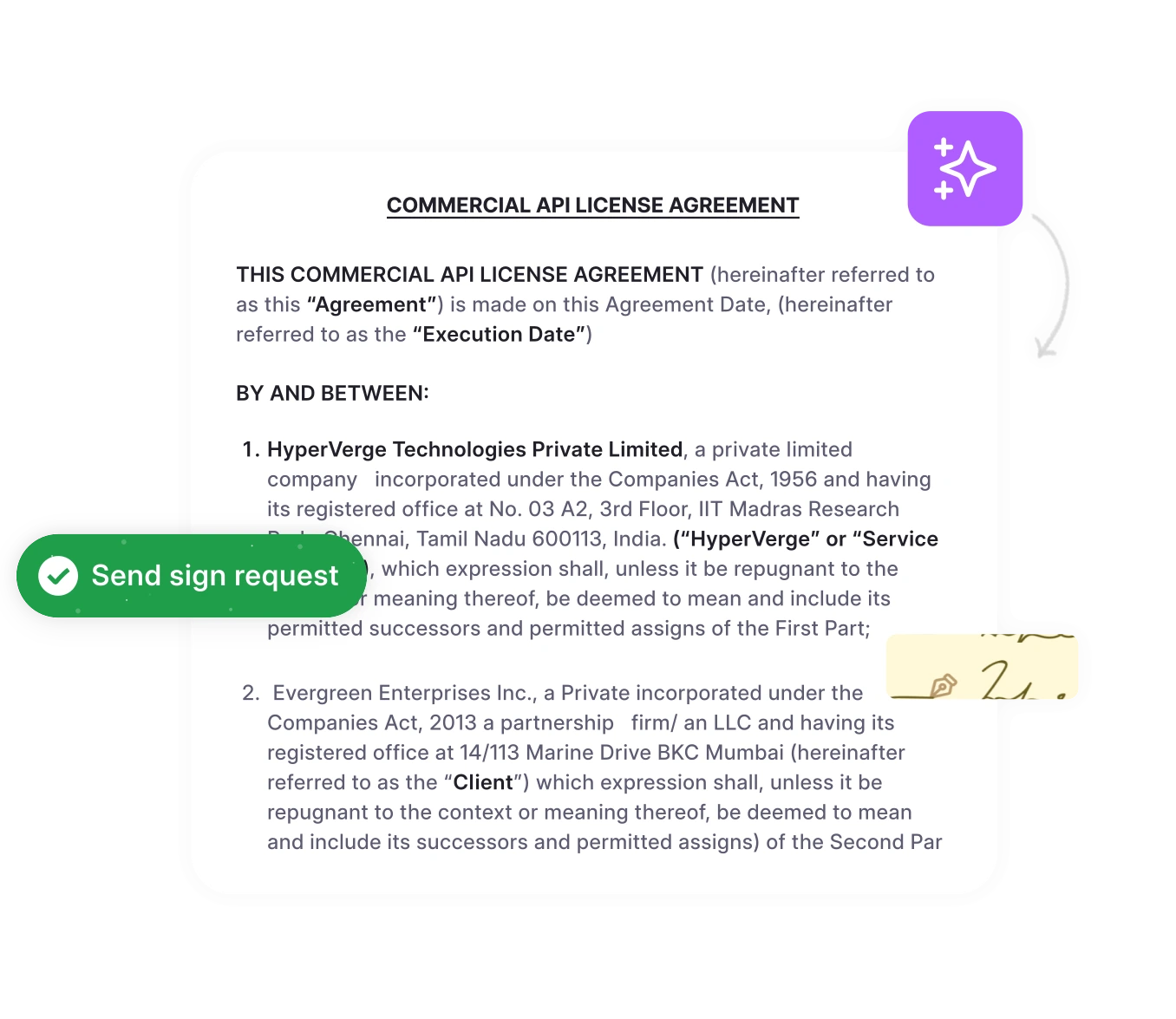




- A merger and acquisition contract is the legally binding document that governs deal terms, risk allocation, and post-close obligations between buyer and seller.
- Every M&A agreement must address 11 core components: purchase price, representations and warranties, covenants, indemnification, MAC clause, closing conditions, earn-out provisions, termination rights, regulatory approvals, merger clause, and confidentiality.
- A plan of merger is the statutory document filed with state authorities in a statutory merger. It is distinct from the commercially negotiated merger agreement and requires board and shareholder approval.
- Eight M&A transaction types each require a different agreement structure: horizontal, vertical, conglomerate, asset purchase, stock purchase, MBO, LBO, and tender offer.
Mergers and acquisitions represent one of the most consequential decision categories in corporate finance. Every transaction requires a merger and acquisition contract that governs how ownership transfers, how risk is distributed between parties, and what obligations persist after the deal closes.
Most deals fail contractually. Bain & Company’s 2025 M&A Midyear Report found that 83% of professionals involved in unsuccessful M&A transactions cite poor integration as the primary cause of failure. Poor integration begins with incomplete or ambiguous contracts, not with post-close execution gaps.
The financial exposure is substantial. In M&A, where contract portfolios from two companies must be merged, tracked, and managed simultaneously, that exposure compounds from the first day of closing.
This guide covers what a merger and acquisition contract is, the different types of M&A agreements and transaction structures, the plan of merger and its role in statutory transactions, what a standard M&A contract template includes, how to negotiate these agreements effectively, and how to manage M&A contracts from due diligence through post-merger integration.
What is a merger and acquisition contract?
A merger and acquisition contract is a legally binding agreement that documents the terms under which two companies combine or one company purchases another. The M&A contract defines the purchase price, payment structure, representations each party makes about their business, conditions that must be satisfied before the deal closes, and obligations that continue after closing.
In M&A, a merger agreement and an acquisition agreement describe structurally different transactions. In a merger, two companies combine to form a single surviving entity. In an acquisition, one company absorbs another, and the target ceases to exist as an independent legal entity. The specific contract type depends on the deal structure chosen, the tax preferences of both parties, and the liability profile the buyer is willing to accept.
A merger and acquisition agreement is the umbrella term for the full set of legal documents governing the transaction, including the definitive agreement, disclosure schedules, ancillary agreements, and any statutory filings such as the plan of merger. In common usage, “M&A agreement” and “merger and acquisition contract” refer to the same primary document.
A company acquisition agreement is the specific contract used when one company purchases another outright, rather than combining as equals. Unlike a merger agreement, a company acquisition agreement transfers ownership from seller to buyer while the acquiring company retains its existing legal structure. The most common forms are the stock purchase agreement (SPA) and the asset purchase agreement (APA), each with distinct liability and tax implications for both parties.
The contract acquisition process in M&A encompasses more than signing the primary agreement. It includes identifying, reviewing, and assuming all contracts held by the target company, obtaining necessary counterparty consents, and transferring those agreements to the new owner. Contract acquisition due diligence is a distinct workstream within M&A and is where most deal-critical risks are discovered or missed.
M&A contracts are distinct from standard commercial contracts. They govern transactions that transfer ownership of an entire business, involve regulatory approvals and shareholder votes, and create multi-jurisdictional compliance obligations. An enforceable contract in M&A requires precise allocation of every category of risk across the full deal lifecycle, not just mutual assent on deal price.
What is a plan of merger?
A plan of merger is the formal statutory document required to execute a legal merger under U.S. corporate law. While the merger agreement is the commercially negotiated contract between buyer and seller that governs deal economics and risk, the plan of merger is the legal instrument that effects the actual combination of the two entities under applicable state corporation law.
Under the Model Business Corporation Act and most state corporation laws, the plan of merger must include:
- The names and jurisdictions of all merging entities
- The name and legal structure of the surviving entity
- The share conversion formula — how target company shares convert into acquirer shares, cash, or other consideration
- Any amendments to the surviving entity’s articles of incorporation that take effect upon merger
- The effective date of the merger
- Rights and procedures for dissenting shareholders who reject the merger consideration
In practice, the plan of merger is typically attached as an exhibit to the definitive merger agreement and incorporated by reference. The two documents work together: the merger agreement governs the commercial deal between the parties, and the plan of merger governs the legal mechanics of the combination under state law.
The plan of merger requires approval from the boards of both companies and, in most cases, a shareholder vote from each company before it becomes legally effective. In bank mergers and acquisition agreements, the plan of merger must also be submitted to banking regulators — the OCC, Federal Reserve, or FDIC — for approval before the merger can be consummated. Missing this regulatory filing requirement is one of the most consequential errors in M&A documentation.
For companies operating across multiple states or countries, separate statutory filings equivalent to the plan of merger may be required in each jurisdiction where the merging entities are incorporated or operate.
Manage your M&A contract portfolios with AI.
AI-powered contract management streamlines due diligence, tracks obligations, and ensures nothing falls through the cracks.
Book a DemoWhat are the key components of a merger and acquisition contract?
The key components of a merger and acquisition contract are: purchase price and payment terms, representations and warranties, covenants, indemnification, MAC clause, closing conditions, earn-out provisions, termination rights and break-up fees, regulatory approvals, merger clause, and confidentiality provisions. Each one allocates a specific category of risk between buyer and seller.
| Component | What it allocates | Negotiation priority |
| Purchase price | Deal economics, payment structure, price adjustments | High |
| Representations and warranties | Disclosure accuracy and factual liability | Very high |
| MAC clause | Buyer’s right to exit if conditions materially worsen | Very high |
| Earn-out | Deferred consideration tied to post-close performance | High — primary source of post-close litigation |
| Indemnification | Who pays for post-close losses from breached reps | High |
| Closing conditions | Requirements each party must meet before ownership transfers | Medium |
| Break-up fee | Cost of deal termination by either party | Medium |
| Covenants | Operating restrictions between signing and closing | Medium |
| Merger clause | Defines the written contract as the complete agreement | Standard — rarely conteste |
While these components are present in most M&A agreements, several warrant closer examination due to their complexity and impact on deal success.
1. Purchase price and payment terms: how the deal is valued
The purchase price clause defines the total consideration the buyer pays and how it is structured. Payment can take the form of cash, stock, debt assumption, earn-out, or a combination. The method chosen affects tax treatment for both parties, post-close dilution risk, and the seller’s confidence in receiving full consideration. Purchase price adjustments based on working capital, net debt, or cash at closing are standard provisions in most M&A contracts.
2. Representations and warranties: what each party certifies
Representations are factual statements each party makes about their business at the time of signing. Warranties are ongoing promises that those statements remain accurate through closing. A buyer who discovers a seller’s representations were false has grounds for indemnification claims or deal termination. Contract clauses governing representations and warranties are among the most heavily negotiated provisions in any M&A agreement, because they define the scope of each party’s legal exposure after the deal closes.
3. Covenants: operating commitments before and after closing
Covenants define what each party agrees to do or refrain from doing between signing and closing. Pre-closing covenants restrict the seller from making material business changes, taking on new debt, or disposing of assets without buyer consent. Post-closing covenants cover non-compete restrictions, employee retention obligations, and transition service commitments. Breach of a covenant gives the non-breaching party grounds for termination or damages.
4. Indemnification: protection from undisclosed losses
The indemnification clause determines who pays if a representation proves false or a covenant is breached after closing. Buyers negotiate broad indemnification caps. Sellers negotiate narrow baskets, deductibles, and short survival periods. Fundamental representations covering title, authority, and capitalization carry higher caps and longer survival periods than operational representations.
5. MAC clause: the buyer’s right to exit on adverse change
A material adverse change (MAC) clause gives the buyer the right to terminate the acquisition agreement if a significant negative event materially impairs the target’s financial condition between signing and closing. MAC clauses were extensively litigated during the COVID-19 pandemic, with courts setting a high bar for what qualifies. Buyers should insist on objective, measurable triggers rather than subjective standards like “material adverse effect on business prospects.”
6. Closing conditions: requirements before the deal closes
Closing conditions are the requirements both parties must satisfy before the transaction can be completed. Common conditions include regulatory approvals, absence of a qualifying MAC event, shareholder consents, and financing commitments. If a closing condition is not met, the party it protects can walk away without penalty.
7. Earn-out provisions: deferred performance-linked payments
An earn-out is a deferred payment mechanism where the seller receives additional consideration if the acquired business meets specific performance targets after closing. Earn-outs bridge valuation gaps when buyer and seller disagree on the target’s future performance. They account for approximately 20% of M&A transactions and are the leading source of post-close litigation when performance metrics are not precisely defined at signing.
8. Termination provisions and break-up fees
Termination provisions define the conditions under which either party can exit the agreement before closing. Break-up fees are penalties paid by the party that causes the deal to collapse. Buyer break-up fees apply when financing falls through. Seller break-up fees apply when the board recommends a competing offer. Break-up fees typically range from 1% to 4% of deal value.
9. Regulatory approvals: antitrust and jurisdiction-specific clearances
Large M&A transactions require approval from antitrust regulators: the FTC and DOJ in the United States, the European Commission in the EU, and equivalent bodies in other jurisdictions. The merger agreement specifies which party is responsible for obtaining approvals, what filings are required, the timeline for clearance, and what happens if approval is denied.
10. Merger clause: the entire agreement provision
A merger clause, also called an integration clause or entire agreement clause, states that the written contract is the complete and final expression of the parties’ intent. It supersedes all prior negotiations, letters of intent, term sheets, and oral agreements. This clause prevents either party from arguing that side agreements or pre-contractual statements created additional obligations not reflected in the signed document.
11. Confidentiality and non-solicitation
Confidentiality provisions prevent either party from disclosing deal terms or using shared information outside the transaction. Non-solicitation clauses restrict the seller from approaching the buyer’s employees or customers for a defined period after closing. Both provisions typically survive deal termination and apply even if the transaction does not close.
What are the different types of M&A transactions?
The main types of M&A transactions are: horizontal mergers, vertical mergers, conglomerate mergers, asset purchases, stock purchases, management buyouts (MBOs), leveraged buyouts (LBOs), and tender offers. The type of transaction determines which agreement structure applies and directly affects the liability exposure, tax treatment, and regulatory obligations for both parties.
| Type | Definition | Real-World Example | Strategic Goal |
| Horizontal Merger | Competitors in the same industry combine | Two regional bank chains are merging | Market share growth, eliminate competition, economies of scale |
| Vertical Merger | The company acquires a supplier or distributor | Automaker buying parts manufacturer | Supply chain control, cost reduction, quality assurance |
| Conglomerate Merger | Unrelated industries combine | Tech company acquiring food brand | Diversification, risk reduction, and new market entry |
| Congeneric Merger | Same customers, different products | Cable company merging with streaming service | Cross-selling opportunities, bundled offerings, and customer retention |
Understanding these transaction types guides how acquisition contracts are structured and which risks require special attention during negotiations.
1. Horizontal merger: competitors combining operations
A horizontal merger joins two companies that compete in the same market. The primary goals are market consolidation, cost reduction, and elimination of competitive overlap. Horizontal mergers face the most intensive antitrust scrutiny because they directly reduce market competition. The merger agreement in a horizontal deal must address how overlapping operations, customer contracts, and employees will be consolidated post-close.
2. Vertical merger: integrating the supply chain
A vertical merger combines companies at different stages of the same supply chain, such as a manufacturer acquiring a key supplier. The contract in a vertical deal typically includes supply continuity clauses, pricing commitments, and transition service agreements governing how the integrated supply chain operates immediately after closing.
3. Conglomerate and congeneric mergers: diversification strategies
A conglomerate merger joins companies in unrelated industries. A congeneric merger joins companies in related but non-competing businesses. Both are driven by diversification rather than operational synergies, placing greater emphasis on governance and financial reporting structures than on operational integration clauses.
4. Asset purchase agreement: acquiring specific assets
In an asset purchase, the buyer acquires specific assets — equipment, intellectual property, customer contracts, inventory — rather than the company itself. The buyer specifies which liabilities to assume and which to exclude. APAs are common in distressed acquisitions and allow buyers to leave behind unwanted liabilities. Every asset being transferred must be explicitly listed in the agreement, making the contract acquisition inventory a critical pre-signing step.
5. Stock purchase agreement: acquiring ownership directly
A stock purchase agreement transfers ownership of the target company’s shares to the buyer. The buyer inherits all of the target’s assets and liabilities, including undisclosed ones. Stock purchases are simpler to execute than asset purchases but carry higher liability exposure. Most large corporate acquisitions use a stock purchase or statutory merger structure.
6. Management buyout (MBO): internal team acquisition
In a management buyout, the existing management team acquires the company from its current owners. MBOs typically involve significant debt financing and require a separate MBO agreement addressing equity allocation, financing terms, and governance changes post-acquisition. Management buyouts are common in private equity transitions and family business succession.
7. Leveraged buyout (LBO): debt-financed acquisition
A leveraged buyout uses substantial borrowed capital to acquire a target company, with the target’s assets serving as collateral. LBO agreements require provisions covering debt covenants, lender consent requirements, restrictions on post-closing dividends, and management incentive structures. Private equity firms use LBO structures across the majority of their portfolio acquisitions.
8.Tender offer: direct offer to shareholders
A tender offer is a direct offer by the buyer to the target company’s shareholders to purchase their shares at a specified price. Tender offers can bypass the target’s board and are governed by SEC regulations in the United States. They require a separate tender offer agreement and mandatory SEC disclosure filings. Hostile takeovers are typically executed through tender offers.
What does a merger and acquisition contract template include?
A standard merger and acquisition contract template includes: deal parties and recitals, definitions, purchase price mechanics, representations and warranties, covenants, closing conditions, indemnification, termination rights, the merger clause, and governing law provisions. It serves as a starting framework that must be customized for deal-specific terms and transaction complexity.
A complete merger and acquisition contract template covers the following sections:
- Parties and recitals — identification of buyer, seller, and target company, with the transaction structure and deal rationale briefly stated
- Definitions — precise definitions of all material terms, including “material adverse change,” “business day,” “knowledge,” and “permitted encumbrances”
- Purchase price and payment mechanics — consideration structure, closing payment, escrow arrangements, and purchase price adjustment methodology
- Representations and warranties — seller representations covering financial statements, material contracts, litigation, IP, taxes, employees, and regulatory compliance; buyer representations covering authority and financing capacity
- Covenants — pre-close operating restrictions on the seller and post-close obligations for both parties
- Closing conditions — mutual conditions (regulatory clearance, absence of MAC) and party-specific conditions (financing, shareholder approval)
- Indemnification — caps, deductibles, baskets, survival periods, and claim procedures
- Termination rights and break-up fees — conditions under which either party may exit and the applicable fee structure
- Merger clause — the integration provision confirming the written contract supersedes all prior agreements
- Governing law and dispute resolution — jurisdiction, governing law (typically Delaware for U.S. transactions), and arbitration or litigation procedures
When is an M&A contract template sufficient?
| Transaction Type | Template sufficient? | Why / why not |
| Simple domestic deal, single jurisdiction | Yes, with customization | Standard provisions apply; deal-specific terms can be layered in |
| Cross-border acquisition | No | Multiple regulatory regimes require jurisdiction-specific provisions |
| Bank mergers and acquisition agreements | No | Banking regulatory approval and specific disclosure requirements apply |
| Distressed acquisition | No | Complex liability selection and creditor consent requirements exceed standard scope |
| IP-heavy acquisition | No | Specialized IP representations, assignment mechanics, and third-party consent chains required |
| LBO or MBO transaction | No | Separate debt financing agreements and management equity documents must be integrated |
AI-powered contract drafting tools allow legal teams to build on standard templates while automatically flagging deviations from market-standard terms. Contract drafting software with M&A clause libraries reduces drafting time and the risk of omitting critical provisions in complex transactions.
How is a merger and acquisition contract structured?
A merger and acquisition contract is structured in five stages: (1) letter of intent to establish preliminary terms, (2) due diligence to surface all contract risks, (3) drafting the definitive merger agreement, (4) negotiating key deal terms, and (5) signing and closing to transfer ownership.
Step 1: Set preliminary terms with a letter of intent
The letter of intent (LOI) is a preliminary document outlining the key deal terms both parties have agreed to in principle: purchase price, deal structure, exclusivity period, and due diligence timeline. While the LOI is not binding on deal terms, its confidentiality and exclusivity provisions typically are. The LOI sets expectations before either party invests significantly in legal fees and due diligence costs.
Step 2: Conduct due diligence on the target company
Due diligence is the structured review of the target’s financial, legal, operational, and commercial position. From a contracts perspective, due diligence means reviewing every material agreement the target holds: customer contracts, supplier agreements, IP licenses, employment agreements, and financing arrangements. The contract acquisition review process in a typical mid-market deal involves 500 to 2,000 agreements. On average, 30 to 40% of those contracts contain change-of-control provisions that require counterparty consent before the deal can close.
Step 3: Draft the definitive merger agreement
The definitive merger agreement (DMA) is the binding contract that replaces the LOI and governs the transaction. It incorporates all negotiated terms plus disclosure schedules documenting exceptions to the seller’s representations. AI-powered contract drafting accelerates this stage by surfacing market-standard provisions and flagging deviations. Drafting the DMA for a mid-market acquisition typically takes two to four weeks once due diligence is complete.
Step 4: Negotiate and finalize key deal terms
Negotiation focuses on risk allocation between buyer and seller. The most contested provisions are representation and warranty scope, indemnification caps, MAC clause definitions, and earn-out metrics. Contract negotiation at this stage requires M&A deal experience. PE firms spend an average of $353,000 per transaction on external counsel (Apperio). Reducing external counsel time on routine contract review directly reduces deal costs.
Step 5: Sign and close the merger agreement
Signing creates binding obligations. Closing transfers ownership. In some transactions, signing and closing occur simultaneously. In others, where regulatory approvals or financing are required, there is a gap between signing and closing lasting weeks or months. During this period, all pre-closing covenants are operative, the MAC clause is active, and contract reminder software is essential to track every condition, consent, and filing deadline.
What are the best M&A contract negotiation strategies?
The four most important M&A contract negotiation strategies are: defining MAC clause triggers with objective thresholds, using representation and warranty insurance (RWI) to reduce holdback risk, structuring earn-out metrics with unambiguous definitions, and aligning indemnification caps with the deal’s risk profile.
1. Define MAC clause triggers with objective, measurable thresholds
Vague MAC clause language creates deal uncertainty and invites litigation. Courts have set a high bar for what qualifies — a general market downturn or industry-wide disruption rarely meets the threshold. Buyers should insist on objective triggers, such as a defined percentage decline in EBITDA or revenue over a specified measurement period, rather than subjective standards. Precise MAC clause drafting is the only reliable protection when conditions deteriorate before closing.
2. Use representation and warranty insurance to reduce holdback risk
Representation and warranty insurance (RWI) transfers liability for breached representations from the seller to an insurer. RWI has become standard in PE-backed transactions and is increasingly common in corporate M&A. It allows sellers to distribute deal proceeds at closing without post-close holdbacks and reduces disputes between parties after the deal closes. RWI premiums typically run 2 to 4% of the coverage amount.
3. Structure earn-out metrics with unambiguous definitions
Earn-outs are a leading source of post-close litigation because performance metrics are rarely defined with sufficient precision at signing. Protect against disputes by specifying: the exact accounting standard used to measure earn-out performance, who controls business decisions during the earn-out period, how accounting changes or extraordinary items are treated in the calculation, and what reporting obligations the buyer owes the seller during the earn-out term.
4. Align indemnification structure with the deal’s risk profile
Buyers typically negotiate indemnification caps at 10 to 20% of deal value for general representations, with separate higher caps for fundamental representations covering title, authority, and capitalization. Sellers negotiate survival periods that limit exposure duration. Distressed or early-stage acquisitions warrant broader indemnification coverage than acquisitions of stable, audited businesses.
Why are M&A contracts critical for deal success?
With billions of dollars and thousands of jobs at stake in major mergers and acquisitions, properly structured contracts form the foundation determining whether deals succeed or fail.
1. Financial risk mitigation
Effective contract risk management in M&A strategy protects against undisclosed liabilities, inaccurate valuations, and hidden debts. Representations about financial condition, working capital adjustments, and indemnification caps limit buyers’ exposure to seller misrepresentations discovered after closing. According to Aon’s research on M&A transactions, 53% of business executives report critical cybersecurity issues as a major risk during deals, and 65% experienced buyer’s remorse due to cybersecurity concerns after closing.
2. Legal and regulatory compliance
Merger and acquisition strategies require robust contract compliance frameworks, ensuring antitrust approval, securities regulations, and industry licensing requirements are satisfied. Well-drafted dispute resolution clauses prevent minor disagreements from derailing deals.
3. Operational clarity
Contracts create clarity by documenting every obligation, timeline, and deliverable, preventing misunderstandings between parties with different cultures. They address contract management challenges by mapping post-merger integration requirements for systems, processes, and personnel. For shareholders, agreements specify exactly what compensation they’ll receive and under what conditions.
4. Strategic value capture
Well-structured contracts enable companies to capture merger and acquisition opportunities quickly while competitors hesitate. Beyond closing deals, these agreements establish governance structures and success metrics that guide merged entities for years.
“Companies that leverage strength to continue M&A outperform those who stand still. The best companies are keeping a lookout for the second- and third-order impacts of tariffs and how that could alter their portfolios, M&A roadmaps, and deal pipelines.”
Read
Drowning in contracts during due diligence?
Smart CLM platforms automatically extract metadata from thousands of contracts, flag risks, and create organized repositories in days, not months.
Book a DemoWhat are the most common mistakes in merger and acquisition contracts?
The five most common mistakes in merger and acquisition contracts are: using vague language in MAC clauses and earn-out definitions, conducting inadequate due diligence on the target’s existing contracts, overlooking change-of-control provisions in customer agreements, setting insufficient indemnification protections, and failing to plan for post-merger contract integration.
1. Using vague or ambiguous language in critical clauses
Ambiguous terms, such as “reasonable efforts,” “material adverse change,” or “ordinary course of business,” in M&A agreements can lead to disputes when parties interpret the language differently.
Solution: Define every subjective term precisely. Specify dollar thresholds for materiality, list examples of ordinary course activities, and establish objective measurement criteria rather than relying on general language.
2. Conducting inadequate due diligence on existing contracts
Insufficient contract review during due diligence can lead to the discovery of problematic obligations or unfavorable terms only after closing, when recourse options are limited.
Solution: Systematically review every material contract for change of control clauses, termination rights, price escalations, and liability exposures. Use AI-powered contract analysis to process thousands of agreements quickly and identify high-risk provisions requiring renegotiation before closing.
3. Overlooking the change of control provisions in customer contracts
Overlooked change of control clauses in customer contracts can trigger termination rights after merger contracts close, destroying deal value through customer losses.
Solution: Identify all contracts with change of control provisions during due diligence, quantify revenue at risk, obtain customer waivers pre-closing, and adjust purchase prices for contracts where consent seems unlikely.
4. Setting insufficient indemnification protections
Inadequate indemnification terms, including short survival periods, high baskets, or low caps, leave buyers exposed when misrepresentations or undisclosed liabilities emerge post-closing.
Solution: Negotiate survival periods that match risk discovery timelines (12-24 months for general representatives, longer for tax matters), set reasonable baskets at 0.5-1% of the purchase price, and establish caps at 25-50% for general representatives, with unlimited caps for fundamental representations.
5. Failing to plan for post-merger contract integration
Poor post-merger planning leads to duplicate vendor contracts, conflicting terms, missed renewals, and compliance failures. Problems multiply when acquired companies lack centralized contract repositories. According to Bain & Company’s 2025 M&A Midyear Report, 83% of professionals involved in unsuccessful transactions cite poor integration as the primary reason for failure.
Solution: Create integration roadmaps before closing the address contract harmonization. Establish unified contract tracking systems immediately, identify duplicate vendors for consolidation, and assign responsibility for monitoring inherited obligations and renewal dates.
Why does manual M&A contract management fail at scale?
Manual M&A contract management fails at scale because due diligence volume (500 to 2,000 contracts per deal) exceeds what manual review can handle cost-effectively, post-close integration creates an unmanageable contract backlog across two merged portfolios, and fragmented contract storage creates compliance exposure that manual retrieval cannot resolve under regulatory time pressure.
1. Due diligence volume exceeds what manual review can handle
A mid-market acquisition requires reviewing 500 to 2,000 contracts before closing. At $300 to $600 per hour in external counsel costs, manual review is prohibitively expensive and introduces inconsistency across high-volume contract acquisition sets. The average PE firm spends $353,000 per transaction on external legal costs (Apperio). AI-powered contract review automation reduces this spend without sacrificing coverage or accuracy.
2. Post-close integration creates an unmanageable contract backlog
After closing, the combined entity must track obligations from both companies’ contract portfolios simultaneously. Missed renewal dates, unmonitored post-close covenants, and overlooked earn-out payment triggers are direct financial consequences of inadequate post-merger contract management. Contract management challenges peak in the first 90 days post-close, when earn-out measurement periods begin, transition service agreements activate, and post-closing covenants all come into effect simultaneously.
3. Fragmented contract storage creates compliance exposure
Contracts stored across email, shared drives, and legacy systems cannot be searched, audited, or monitored at scale. When regulators or counterparties require contract documentation post-close, fragmented storage means hours of manual retrieval. Contract organization software that centralizes both entities’ contracts at close is a prerequisite for compliant post-merger operations.
“Take an ecosystem with thousands and thousands of moving parts and then blend it into another ecosystem with similar complexity of parts, and there are literally a million things that can go wrong. You have to look at all of them.”
How to manage M&A contracts from due diligence to integration
M&A contracts should be managed across three phases: pre-merger due diligence (identify all contract risks before closing), execution phase management (monitor covenants and obtain consents between signing and closing), and post-merger integration (consolidate both entities’ contracts into a unified repository with automated obligation tracking).
1. Pre-merger: Due diligence contract review
Target companies often have contracts scattered across departments and outdated systems. Creating comprehensive contract lifecycle management inventories requires systematic searches across various departments, including legal, procurement, sales, HR, and IT.
Due diligence teams must flag contracts with change-of-control provisions, termination clauses, price escalations, or onerous liability terms. Mapping future obligations, including renewal dates, payment schedules, and performance requirements, prevents costly surprises after closing.
2. During merger: Execution phase contract management
Managing closing conditions across multiple agreements requires coordinated tracking of regulatory filings, third-party consents, and financing commitments. Missing deadlines for minor conditions can trigger termination rights.
Many mergers and acquisitions services include specialized support for counterparty notifications and consent management, ensuring systematic processes maintain relationships during ownership transitions.
3. Post-merger: Integration and ongoing management
Post-merger integration involves consolidating contract portfolios using contract organization software that standardizes formats, extracts metadata, and enables searchability. Identifying duplicate vendors and conflicting terms creates immediate cost savings.
Tracking inherited obligations requires contract reminder software that alerts teams about upcoming deliverables and compliance deadlines. Contract tracking software prevents unintended lapses in critical coverage or auto-renewals at unfavorable terms while identifying renegotiation opportunities that leverage enhanced bargaining power.
Manage M&A contracts efficiently with HyperStart
HyperStart is an AI-powered contract lifecycle management platform built to handle the contract volume and complexity that M&A transactions generate.
During due diligence, HyperStart’s AI extracts metadata from legacy contracts (MAC clauses, change-of-control provisions, earn-out terms, renewal dates, and financial obligations) with 94% accuracy. What a legal team reviews manually in three to four weeks, HyperStart processes in days, giving deal teams faster access to the contract intelligence that drives negotiation decisions.
Post-close, HyperStart centralizes contracts from both entities into a single searchable repository. The platform tracks every obligation and renewal date, sends automated alerts before deadlines, and gives legal, finance, and procurement teams unified visibility into the combined contract portfolio.
HyperStart deploys in 4 weeks with a 100% implementation success rate. For legal teams managing their first acquisition or their fiftieth, a contract management platform that scales with deal volume is the operational foundation for integration success.