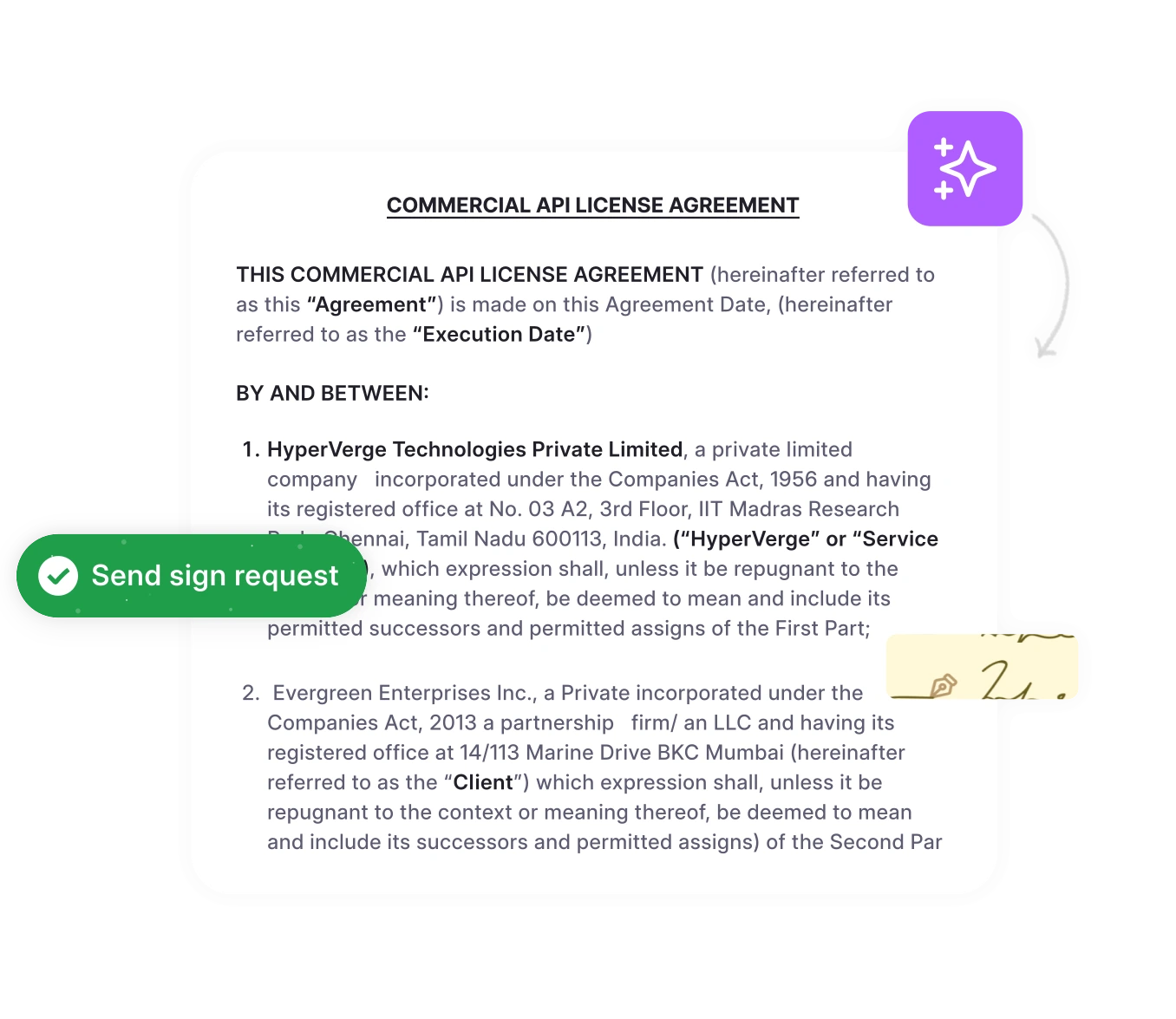



AI contract negotiation software is changing how legal, procurement, and sales teams handle one of the most time-intensive parts of the contract lifecycle. What once took days of back-and-forth redlining, manual clause comparison, and scattered email approvals can now be completed in a fraction of the time, with greater consistency and fewer risks.
But not all AI contract negotiation tools work the same way. Some automate redlining. Others enforce playbooks, score clause-level risk in real time, or integrate directly into Microsoft Word. Choosing the right approach depends on where your team is losing the most time and where the highest risk currently sits.
This guide breaks down how AI contract negotiation works, where it adds the most value across legal, procurement, and sales teams, and what to look for when evaluating a solution — so you can make a confident, informed decision.
What is AI-powered contract negotiation?
AI contract negotiation is the use of artificial intelligence to review contract terms, flag risks, enforce negotiation playbooks, and automate redlining, reducing the time and effort needed to close agreements.
AI-powered contract negotiation platforms assess terms at the clause level, flag deviations from company playbooks, and suggest modifications based on predefined preferred positions. As a result, legal teams, procurement managers, and sales professionals can use AI negotiation tools to close deals more efficiently while ensuring compliance and risk mitigation.
Instead of manually reviewing contracts and going through every detail, AI helps speed things up, ensuring more informed decisions and better outcomes.
Now, let’s take a closer look at how AI processes contracts, flags risks, and helps you negotiate better, faster, and with more confidence.
Stop wasting time on back-and-forth edits
Let HyperStart cut contract turnaround by 70% with AI-powered negotiation
Common challenges with traditional contract negotiation
Before AI and negotiation technology entered the picture, businesses relied entirely on manual processes to finalize agreements. Traditional approaches create several persistent problems:
Slow, error-prone manual reviews. Legal teams manually review every clause, compare drafts through email, and track changes across dozens of document versions. One missed revision or overlooked clause can lead to significant downstream risk.
No centralized tracking or version control. Contracts bounce between stakeholders in email attachments and shared drives, with no single source of truth. Without a dedicated AI negotiation platform, teams waste hours reconciling conflicting versions instead of resolving substantive issues.
Inconsistent playbook enforcement. Without standardized guidelines, each negotiator handles terms differently. One lawyer might accept an aggressive indemnity cap while another rejects it, and neither approach is documented for future reference.
Disconnected stakeholders. Legal, procurement, sales, and finance all have a stake in contract terms, but traditional workflows keep them siloed. Without collaborative contract management, key approvals stall because the right person doesn’t see the contract at the right time.
These contract management challenges are exactly why negotiation AI has gained traction. Teams that invest in tools with AI for automated contract negotiation eliminate these bottlenecks and move from reactive, manual processes to proactive, data-driven workflows.
How AI works in contract negotiation
AI-driven contract negotiation tools operate through a combination of natural language processing (NLP), machine learning, and automation to optimize the negotiation process. The key steps involved include:
Step 1: AI playbook setup
Organizations define negotiation guidelines, preferred contract terms, and risk tolerance within a contract playbook. A well-structured deal desk uses these playbooks to keep every negotiation within approved boundaries, reducing legal escalations. The AI contract negotiation platform is then trained using historical contract data and company policies to align with standard negotiation practices — making it one of the most advanced legal AI tools in use by enterprise legal teams today.
Step 2: Contract ingestion & analysis
AI scans and processes uploaded contracts in various formats (Word, PDF, etc.), performing automated contract data extraction of key clauses, identifying missing provisions, and benchmarking against predefined negotiation playbooks. This automated contract negotiation step detects inconsistencies, ambiguous language, and potential compliance risks.
Step 3: Automated redlining & suggestions
AI detects complex contractual terms, suggests alternatives, and provides AI-driven contract negotiation insights based on past agreements and predefined risk thresholds.
Step 4: Real-time collaboration & approval
AI enables multiple stakeholders to review and negotiate contracts simultaneously by offering version control, approval workflows, and automated alerts for critical changes. This integration of AI in contract negotiation processes keeps every stakeholder aligned.
Step 5: Finalization & execution
AI ensures compliance checks, integrates eSignatures, and maintains a detailed audit trail to streamline contract closure, execution, and post-signature obligations.
Now, let’s compare AI-driven contract negotiation with traditional methods in terms of speed, accuracy, cost, and efficiency.
How AI negotiation playbooks enforce consistency
One of the most impactful applications of AI in contract negotiation is automated playbook enforcement. Rather than relying on each negotiator’s judgment, AI applies a structured framework to every agreement:
Preferred positions. The ideal clause language your organization wants in every deal. AI automatically applies these terms during first-pass review, ensuring every contract starts from your strongest position.
Fallback alternatives. Pre-approved alternative language that legal has vetted in advance. When a counterparty rejects a preferred term, AI suggests the next-best fallback rather than leaving the negotiator to draft new language under time pressure.
Escalation thresholds. Terms that exceed acceptable risk levels and require senior review before acceptance. AI flags these automatically and routes them through approval workflows so high-risk concessions always get the right level of oversight.
Without this structure, playbook enforcement depends on individual memory and discipline. With AI, every contract is reviewed against the same rules, every time, regardless of who handles the negotiation. This is how leading contract negotiation software platforms reduce inconsistency and protect organizations from unnecessary concessions.
AI contract negotiation vs. traditional contract negotiation: A side-by-side comparison
| Factor | Traditional Negotiation | AI-Driven Negotiation |
| Speed and Efficiency | Time-consuming, with manual reviews and back-and-forth emails. | AI contract negotiation platforms review contracts in minutes, automate workflows, and suggest edits instantly using playbook-driven rules. |
| Accuracy and Risk Mitigation | Prone to human errors; risk assessment depends on expertise and manual updates. | AI detects risks with clause-level scoring, ensures compliance, and updates contracts automatically based on negotiation playbooks. |
| Cost and Resource Allocation | High legal costs and time spent on repetitive tasks. | Automates routine work, reducing legal costs and freeing up resources. |
| Customization and Flexibility | High flexibility for unique contracts, requiring manual drafting and review. | AI automates standard agreements but may struggle with complex negotiations. |
| Relationship and Trust Factors | Relies on human interaction, persuasion, and negotiation style. | Ensures fair and consistent terms but lacks emotional intelligence. |
With the rise of AI-enabled contract negotiations, businesses are no longer stuck in cycles of manual reviews and redlines. AI-powered negotiations leverage AI negotiation tools to analyze terms, suggest edits, and streamline contract negotiation automation, helping teams close deals with greater speed and accuracy.
Let’s break down the specific ways AI takes contract negotiation from a slow, manual grind to a seamless, intelligent workflow.
AI isn’t just about making contract negotiation faster, it’s about making it smarter. So what are AI negotiation benefits in practice? By automating routine contract reviews and providing real-time insights, AI helps teams negotiate better deals with fewer risks and delays. Here’s how:1. Automated clause & term analysis
One of the biggest pain points in contract negotiation is reviewing and comparing clauses. AI simplifies this by:
Scanning contracts instantly to identify key terms and deviations from company policies.
Suggesting optimized language based on best practices and past negotiations.
Comparing clauses against standard templates to ensure consistency across agreements.
Instead of manually checking if an indemnity clause aligns with company standards, AI instantly highlights differences and suggests compliant alternatives.
2. Intelligent risk assessment & compliance checks
Legal and procurement teams spend hours ensuring contracts meet regulatory and business requirements. AI accelerates this by:
Flagging high-risk clauses and scoring them by severity so legal teams prioritize what matters most.
Ensuring compliance with industry regulations like GDPR, HIPAA, or SOC 2 standards through automated checks.
Providing clause-level risk scores based on historical contract data, helping teams make informed, data-driven decisions. This AI-based contract negotiation capability reduces the back-and-forth that slows down deal cycles.
AI can alert you if a vendor contract contains terms that conflict with your company’s data privacy policy.
3. AI-powered redlining & negotiation recommendations
Traditional contract redlining is labor-intensive and prone to human error. AI transforms this by:
Automatically suggesting edits that align with company standards.
Highlighting negotiation opportunities based on past successful deals.
Predicting counterparty objections and recommending alternative terms.
AI might suggest a revised payment term that’s more favorable to your company while still being acceptable to the counterparty.
4. Smart collaboration & workflow automation
Contract negotiation often involves multiple stakeholders from legal, procurement, sales, and finance. AI improves coordination by:
Centralizing contract discussions in a single platform, reducing endless email threads.
Automating approvals by routing contracts to the right people at the right time.
Tracking version history to ensure transparency and prevent miscommunication.
Built-in AI negotiation state tracking capabilities monitor every version, counteroffer, and approval status in real time. These negotiation state tracking AI systems ensure no change goes unlogged and no stakeholder falls behind.
AI can notify a sales manager when a pricing term has been updated, ensuring everyone is aligned before the contract is finalized.
5. Negotiation analytics and pattern recognition
AI doesn’t just speed up individual negotiations. It learns from every deal. By analyzing patterns across your entire contract repository, AI identifies the following:
Which clauses cause the most friction and back-and-forth with counterparties
Which concessions your team makes most often, and whether those concessions are necessary or habitual.
Where delays typically occur in the negotiation cycle, so teams can address bottlenecks before they stall deals.
Once you identify this data, you can turn every past negotiation into a competitive advantage for the next one. Legal and procurement teams walk into future discussions knowing what works, what to push back on, and where to focus their energy.
Best practices for AI-driven contract negotiation
Here are the top 5 best practices for AI-driven contract negotiation
1. Use AI for real-time risk analysis – AI-driven contract negotiation platforms can analyze contracts in real-time, identifying high-risk clauses and suggesting alternative terms based on predefined legal guidelines. This helps reduce legal exposure and ensures contracts align with company policies.
2. Integrate AI Tools with enterprise systems – AI-powered negotiation tools should integrate effortlessly with existing enterprise systems like CRM, ERP, and CLM platforms. This connectivity ensures contract data flows seamlessly between departments, reducing manual work and improving overall efficiency.
3. Prioritize security & compliance in AI solutions – AI contract management platforms must adhere to strict security and compliance standards to protect sensitive contract data. HyperStart, for example, offers SOC 2-certified infrastructure and automated compliance tracking, ensuring legal and regulatory adherence while mitigating security risks.
4. Enhance contract redlining with AI-powered automation – AI-driven redlining tools can automatically detect, highlight, and track changes in contracts, ensuring all modifications are visible and properly reviewed. This improves collaboration between negotiating parties and speeds up the contract finalization process.
5. Streamline contract approvals with AI-driven workflows – AI-driven workflows can streamline contract approvals by routing documents to the right stakeholders based on predefined rules. HyperStart’s smart approval routing automates this process, reducing delays and ensuring contracts move through approval stages efficiently.
6. Maintain human oversight on final decisions – AI handles the heavy lifting of contract analysis, risk scoring, and redlining, but final review and strategic decisions should always involve legal professionals. AI in contract negotiation works best as a force multiplier for your team, not a replacement. Human judgment remains essential for interpreting context, managing counterparty relationships, and making concessions that require business strategy.
What are the legal, ethical, and practical considerations for AI in contract negotiation?
AI contract negotiation tools deliver significant efficiency gains, but organizations should understand the legal, ethical, and practical considerations before deploying them at scale.
1. Bias in AI training data
AI models learn from historical contracts. If those agreements reflect biased negotiation patterns, unfavorable precedents, or outdated standards, the AI will replicate those patterns in future suggestions. Teams should audit training data regularly and update playbooks to reflect current legal standards and business priorities.
2. Enforceability and accountability
When AI suggests or auto-generates contract language, questions arise about who bears responsibility for errors. If an AI-drafted indemnity clause is poorly scoped and leads to a dispute, is the organization liable for relying on the tool? Legal teams should establish clear accountability frameworks and treat AI-generated terms as drafts that require human validation, not final language.
3. Regulatory and compliance landscape
Regulations like the EU AI Act are introducing transparency and explainability requirements for AI systems used in high-stakes decisions. Organizations using AI in contract compliance and negotiation should verify that their tools provide audit trails, explain why specific clauses were flagged, and meet evolving regulatory standards.
4. Fairness and transparency with counterparties
As AI becomes more common in negotiations, ethical questions emerge about disclosure. If one party uses AI to analyze and optimize terms while the other negotiates manually, the information asymmetry can raise fairness concerns. Some legal AI tools are beginning to address this by providing explainable outputs that both parties can review.
5. Data quality dependence
AI is only as good as the data it’s trained on. Incomplete or inconsistent historical contracts lead to inaccurate risk assessments and flawed clause suggestions. Organizations need clean, well-organized contract repositories before deploying AI.
6. Initial setup and training time
Configuring playbooks, training AI models on company-specific language, and integrating with existing systems requires upfront investment. The role of negotiation in AI-powered contract workflows is still evolving, and teams should plan for a learning curve.
7. Context and nuance gaps
AI can flag a non-standard indemnity clause, but it cannot fully understand the business relationship behind a concession. Complex, high-stakes negotiations still require human judgment for terms that carry strategic weight.
AI for negotiation works best when treated as an accelerator rather than a replacement for legal expertise.
Use cases of AI in contract negotiation
The impact of AI in negotiations is clear, but how does it apply to specific teams? Let’s explore.
1. Legal teams
Legal professionals spend hours reviewing contracts, checking compliance, and mitigating risks. AI makes this process faster and more precise by:
Automating contract analysis and AI contract review, flagging potential legal risks before they become issues.
Ensuring compliance by comparing clauses against regulatory frameworks and internal policies.
Reducing workload so legal teams can focus on strategy instead of manual document review.
2. Procurement teams
For teams handling negotiating SaaS contracts, AI tools can flag auto-renewal traps, pricing escalations, and non-standard SLAs before signing. AI tools for vendor contract negotiation assist procurement teams by:
Analyze supplier agreements to ensure pricing, terms, and SLAs are fair and competitive.
Standardize contract language to maintain consistency across vendor agreements.
Flag unfavorable clauses that might expose the company to risks.
3. Sales teams
For sales teams, time kills deals. AI accelerates contract negotiations by:
Auto-generating contracts with pre-approved terms to speed up closing.
Suggesting negotiation strategies based on past successful deals.
Reducing legal bottlenecks, allowing sales reps to finalize agreements quickly.
4. Large enterprises
Large enterprises deal with high volumes of contracts, making negotiation a time-consuming process. AI helps by:
Standardizing contract terms across departments to maintain compliance and consistency.
Automating redlining to identify risks and improve negotiation efficiency.
Enhancing business velocity by reducing contract turnaround time.
Stop losing weeks to contract back-and-forth
HyperStart’s AI-powered negotiation automates redlining, enforces your playbook, and closes deals with 94% AI accuracy.
How HyperStart CLM transforms AI-driven contract negotiation
HyperStart CLM is the only AI-powered contract lifecycle management platform purpose-built for mid-market companies. With 94% AI accuracy, a native Microsoft Word Add-In, and deployment in just 4 weeks, HyperStart makes contract negotiation faster, smarter, and more efficient, helping businesses reduce risk and close deals with confidence.
1. Intelligent redlining for precision and speed
Instantly reviews counterparty documents, highlighting risks and recommending optimal clauses.
Automates redlining in seconds, ensuring consistency and reducing unnecessary revisions.
Equips your team with strategic insights to negotiate from a position of strength.
2. Contract review in a fraction of the time
Speeds up contract analysis by 5x, accelerating approvals and execution.
Completes a first-pass review of contracts in under a minute—saving hours of manual effort.
Removes legal bottlenecks, keeping deals on track.
3. Faster negotiations, fewer delays
Reduces contract turnaround by 70% by automating routine edits and approvals.
Cuts review cycles from hours to minutes, minimizing back-and-forth revisions.
Enables teams to focus on high-value negotiations instead of repetitive tasks.
The future of AI in contract negotiations
AI-based contract negotiation software is already transforming legal operations, but what’s next?
AI-powered predictive analytics
Future AI systems will forecast negotiation success rates by analyzing past contracts and market conditions. With predictive analytics, contract AI renegotiation opportunities based on market changes become visible before renewal deadlines hit, allowing teams to adjust terms proactively. AI-driven pre-trade negotiation solutions are also emerging in financial services, where AI evaluates counterparty terms before a deal is even proposed.
2. AI-powered negotiation assistants
We could soon see an AI negotiator engaging directly with counterparties in real-time, functioning as an AI that finalizes deals with minimal human intervention. As more organizations negotiate AI-powered contracts, these assistants would:
Suggest real-time responses based on negotiation history.
Identify favorable terms for both parties.
Learn counterparty preferences to improve future deals.
AI contract negotiation is not just about automation; it’s about creating smarter, data-driven agreements that benefit all parties involved.